 When Paul, our 7th grade history teacher, handed out the assignment sheet titled “Revolutions”, I couldn’t help but smirk in amusement. Compared to our last project that flaunted the intimidating title, “Feudal Asia Medieval Europe”, “Revolutions” seemed so… diminutive. At first glance, a confident, bordering on cocky, individual like myself would indubitably see the assignment as straightforward and painless. Write a paper on the Industrial Revolution; make a map of the battles of the American Revolutionary War. Sounds easy enough. How wrong was I? Three weeks into the project, I haven’t only ignored multiple elements of “Revolutions” (such as the LIT packet), but I have also allowed myself to procrastinate this blog post until the evening before the due date! Only making matters worse, Super Bowl XLVI is on tonight, and trust me, trying to write a blog post while simultaneously jumping up whenever Eli Manning throws an unbelievable pass is asking for a cracked laptop screen. Currently at halftime, with Madonna’s singing on mute, I prepare to get started on the bulk of my blog post, the French Revolution. I don’t have the time or patience to write a detailed account covering the entire French Revolution. I will, however, highlight the causes for the French revolution and subsequently travel through specific events of the French Revolution from the Storming of the Bastille up to the execution of France’s absolute monarch.
Being the first one in the entire 7th grade class to blog, I feel as if I have the duty to set the bar high for my classmates. So, here it is, the French Revolution:
As regalia rung throughout the city of Reims, Louis-Auguste, receiving the anointment of the Holy Ampoule, transformed into King Louis XVI, the absolute monarch of France. The gathered thousands, in a state of utter jubilation at the time, were oblivious of how soon and how much they would come to loathe their King.
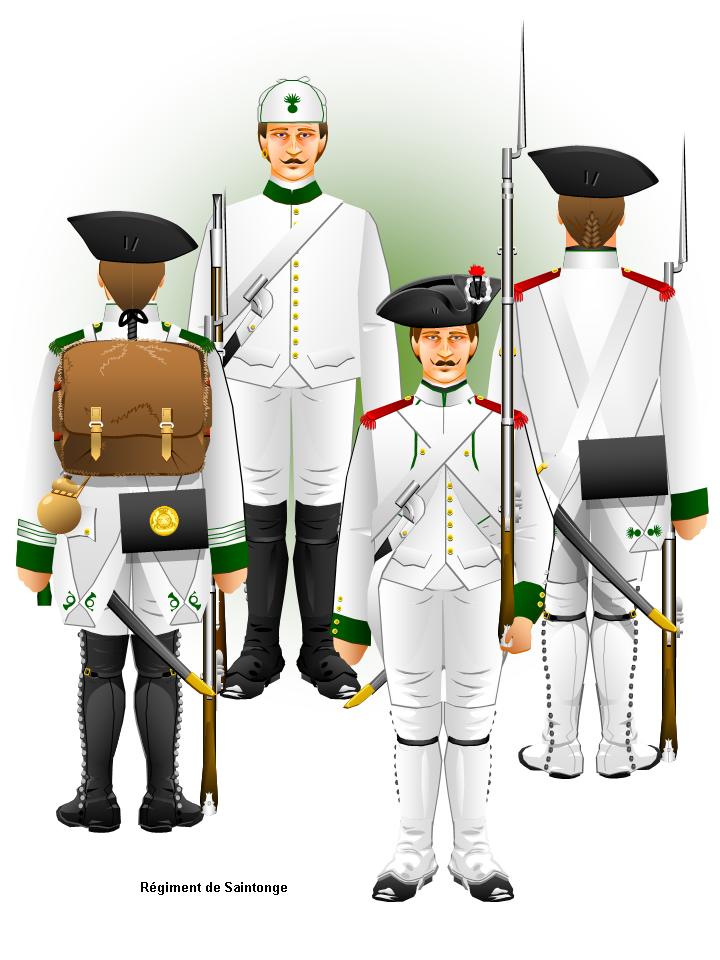 |
| French soldiers in the American Revolution |
Beginning in 1789, France would enter a ten-year battle against an enemy that surpassed all predecessors in strength and influence: Its own people. In a torrent of dominoing events, French society would be uprooted in a matter of three years, and the feudal beliefs that controlled France for centuries would be substituted with Enlightenment principles, valuing natural rights and equality. Through the chaos, one man, utilizing his uncanny ability with words, would rally a kingdom to rebel against their monarchs. The same man, ironically dubbed “the incorruptible”, once obtaining power over France, would veer the progressive path of the revolution to fulfill his own radical interests. The bloody era known as the Reign of Terror, and the French Revolution as a whole, concluded with the death of its institutor, Maximilien Robes-Pierre.
Following the American Revolution, the French debt crisis continued to worsen. Finally, King Louis XVI, after years of criticism for his ignorance of his people’s oppression, publicly addressed the nation’s financial struggle by calling a meeting of the Estates-General. In the May of 1789, 1,201 delegates comprised of nobles, clergy, and the Third Estate discussed the nation’s matters, in hope of eventually creating a solution to the debt crisis. For a month, the talks were stagnant, so on the 17th of June, the Third Estate made a radical move in hope of proceeding negotiations.
The Third Estate, making up the majority of the Estates-General, declared themselves the National Assembly, a group representing “the people”. King Louis XVI, in a halfhearted attempt to prevent the National Assembly from gathering, hastily closed the Salle des États, the meeting room of the National Assembly. This had no effect whatsoever on the persistent members of the National Assembly, and after moving their meeting to an indoor tennis court, swore the Tennis Court Oath, proclaiming that they wouldn’t stop meeting until France had a constitution. The Third Estate invited the other two estates to join them, and the majority of clergy representatives and a good fraction of the nobility joined the National Assembly. The royal court had no choice but to succumb to the rising political power. After receiving formidable recognition from King Louis, the National Assembly renamed themselves the National Constituent Assembly, stressing evermore their desire for a constitution. King Louis found himself in the worst possible position; he was the blame of the nations problems, and the National Constituent Assembly was the solution.
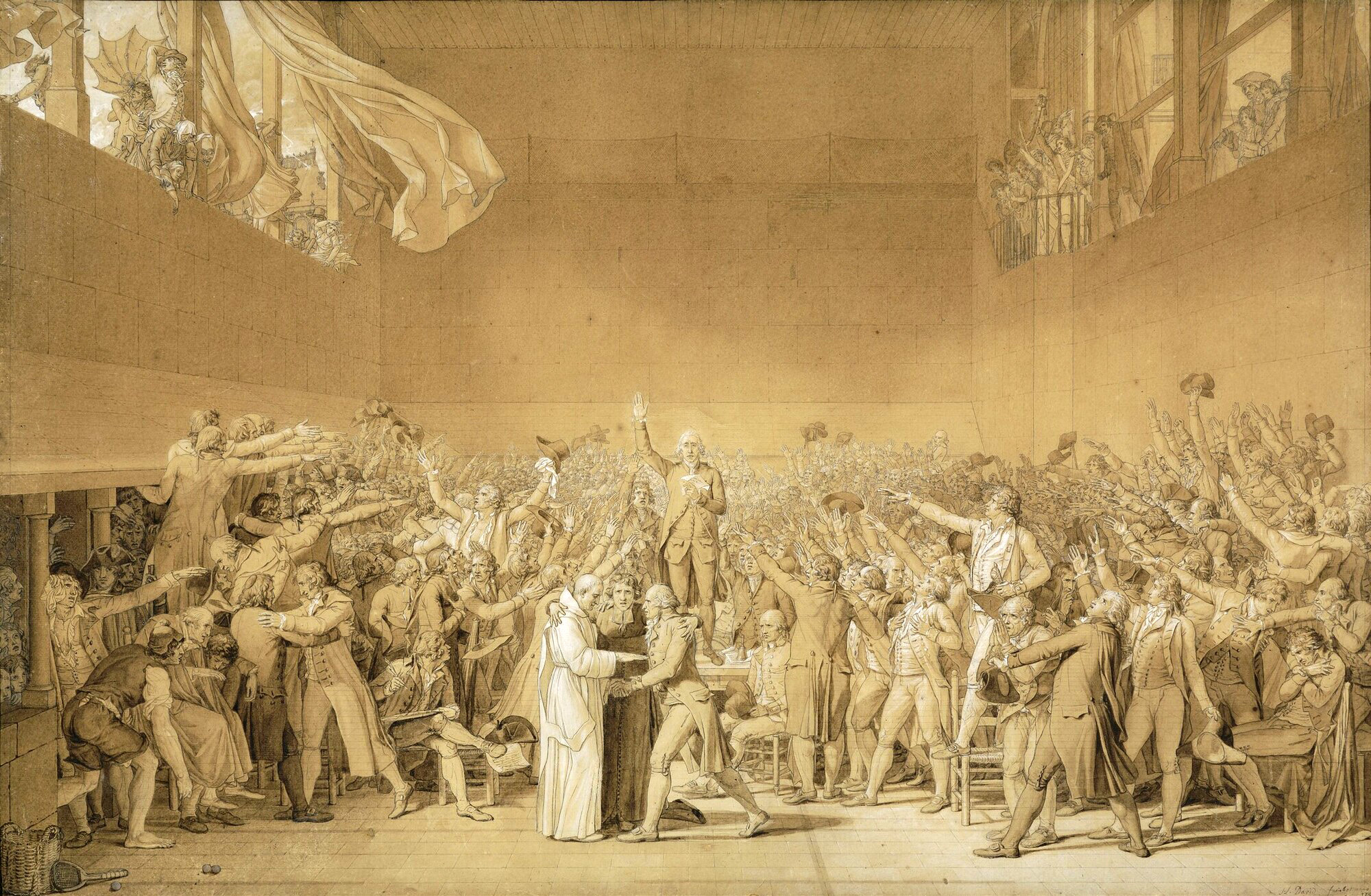 |
Tennis Court Oath
|
 |
| The Storming of the Bastille |
On August 4, 1789, the National Constituent Assembly, now holding true political authority, eradicated feudalism. Formally called the August Decrees, the nobles and clergy lost their privileges in a swift decision by the Assembly. Just twenty-two days later, the National Constituent Assembly released the Declaration of the Rights of Man and of the Citizen. The Assembly had fulfilled their original goal, but while being preoccupied with legislature matters, the National Constituent Assembly had yet to address France’s debt crisis. This failure to resolve the debt crisis most likely provoked the Women’s March on Versailles.
 |
| Women's March on Versailles |
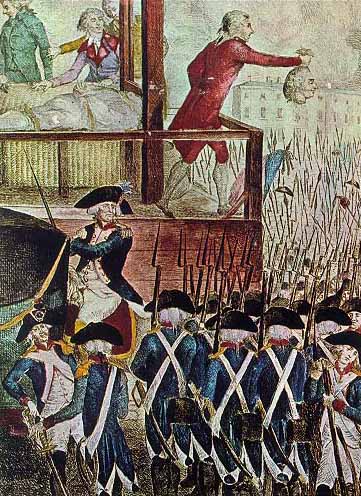 |
| Execution of Louis Capet (King Louis XVI) |
If you wish to obtain a deeper understanding of the French Revolution and learn aout the devastating era following the death of King Louis XVI, check out the movie below.
http://www.youtube.com/watch?v=B4BIlEK94fI
Thank you to "historyforall" for posting this in depth video on the French Revolution.
Photos courtesy of
http://upload.wikimedia.org/wikipedia/commons/5/5c/Palace_of_Versailles.jpg
http://www.rjgeib.com/thoughts/french/robes.jpg
http://upload.wikimedia.org/wikipedia/commons/6/6d/Le_Serment_du_Jeu_de_paume.jpg
http://www.historywiz.com/images/frenchrevolution/prisedelabastille.jpg
http://www.genreonline.net/Genre_files/FrenchRevLogo.jpg
http://reeseartofwars.com/images/AWIcombo.jpg
http://www.genreonline.net/Genre_files/FrenchRevLogo.jpg
http://reeseartofwars.com/images/AWIcombo.jpg

This comment has been removed by the author.
ReplyDeleteThis comment has been removed by the author.
DeleteAndrew,
ReplyDeleteWow! Your blog blew me away! I learned a lot about the French Revolution from this post. You clearly have shown that you have a large range of knowledge on the subject. My question, as hard as it is to find a chink in your vast explanation of the subject, how old was King Louis Carpet when he took the throne?
Andrew,
ReplyDeleteGreat post, I loved all the details, facts, and the french title you included. I also loved the movie although it lasts a long time. Although the movie and your post pretty much tells you everything one thing it didn't say was how old Maximilien Robes-Pierre was when he was executed?
Zachary