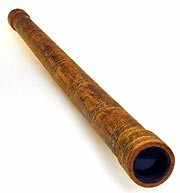
Who invented the telescope? Why is the telescope important to life as we know it? It is still unknown who invented the telescope, but the first person to apply for a patent for it was a Dutch eyeglass maker named Hans Lippershey (or Lipperhey), so he got the credit for it. One story goes that he got the idea of the telescope after watching two kids in his shop hold up two lenses that made a weather vane that was far away seem like it was closer. Others suspected, at the time, that he stole the design from another eyeglass maker named Zacharias Jansen.
Galileo had heard of the telescope and made one of his own with some improvements. He was the first person who decide to point it up at the sky to see what he could observe. It is thanks to these people that we have the technology we do today. Back then, before the telescope, we didn’t have solar panels, implantable heart monitors, water purification systems, and many more. It is simply the science of space that has improved our knowledge. 
It is thanks to these people that we have the technology we do today. Back then, before the telescope, we didn’t have solar panels, implantable heart monitors, water purification systems, and many more.
As technology evolved, scientists were able to see other stars. In the 19th century astronomers gathered information about the chemical composition and motions of celestial objects using a new instrument called a spectroscope. In the 1970’s people began to build what would later be known as the hubble telescope. On April 25th, 1990, the Telescope was launched into an orbit roughly 380 miles above the earth's surface.
Today we can use technology like this to observe other planets and moons, and other celestial objects. For me I don’t think life would be the same without the telescope. I would still think that there are only a few other planets. I would never be able to ask big questions, like what isn beyond the observable universe, how far can we travel, and most of all, is there other life somewhere out there? Without the invention of the telescope people like me would have never wondered about these questions because they thought they knew what was out there, but really they had no idea.
Sources Cited:
Dunbar, Brian. "Telescope History." NASA. NASA, 23 Dec. 2003. Web. 27 Jan. 2016.
Cox, Lauren. "Who Invented the Telescope? | The First Telescope." Space.com. N.p., July-Aug. 2013. Web. 27 Jan. 2016.