Showing posts with label Industrial. Show all posts

Monday, February 10, 2014

Coal and Steam Engines

coal mine
Before 1712, people had to use wood for fuel. The outburst of coal mining started the Industrial Revolution, and men driven by the idea of making profits started to invent steam engines. The first ever steam engine, designed by the Spanish inventor Jerónimo de Ayanz y Beaumont, was patented in 1606. This started a series of non-practical attempts to create steam engines.

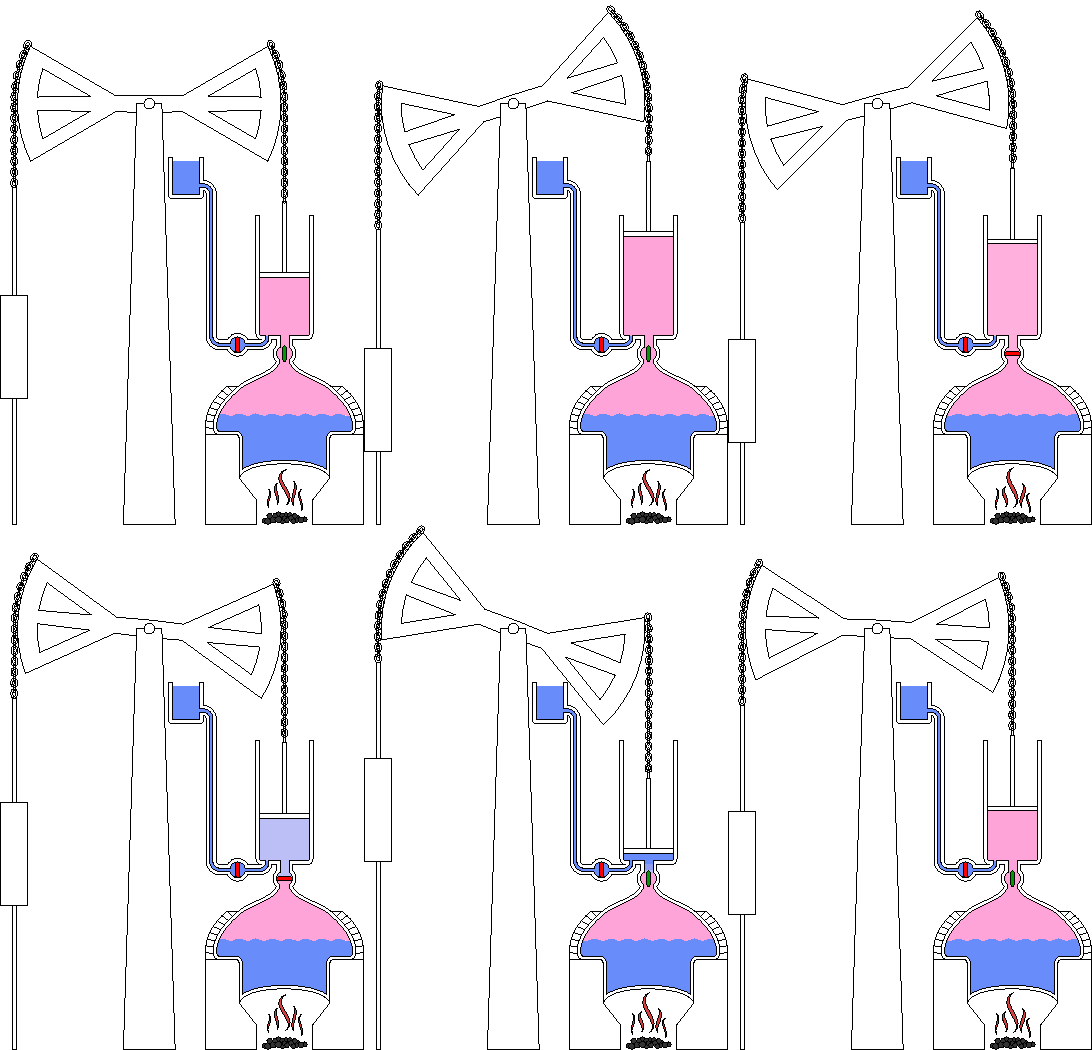
Newcomen atmospheric engine


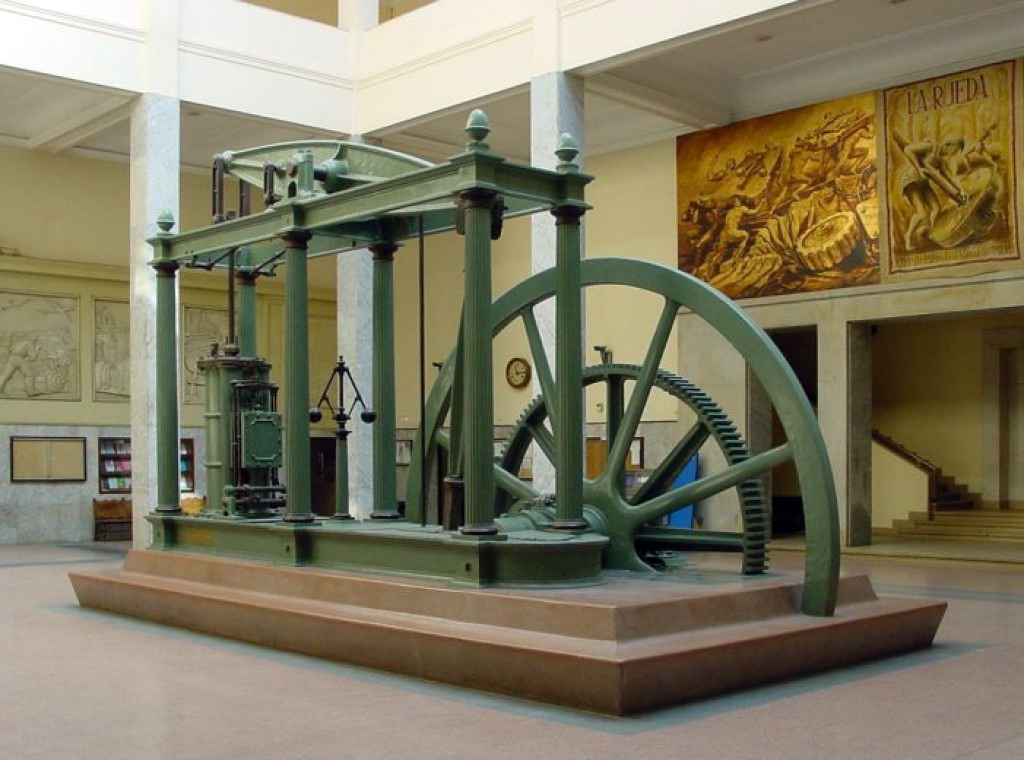
In 1712, the first commercially successful steam engine, Thomas Newcomen’s atmospheric engine, was invented. It was used mainly for pumping water out of mines, and did the work of 20 horses. Operating the Newcomen atmospheric engine was expensive, so James Watt improved on Newcomen’s engine. The Watt steam engine came to be more efficient, and is better known then the Newcomen atmospheric engine today.
Watt steam engine

sources:
http://www.bbc.co.uk/history/0/20979973
http://en.wikipedia.org/wiki/Industrial_Revolution
http://www.historylearningsite.co.uk/coal_mines_industrial_revolution.htm
http://en.wikipedia.org/wiki/Newcomen_atmospheric_engine
http://en.wikipedia.org/wiki/Watt_steam_engine
http://en.wikipedia.org/wiki/Steam_engine

Tuesday, February 19, 2013

Food in the Industrial Revolutions


Food: The differences between the industrial days and now

By: Lyssa Stevens

People in the industrial times needed a lot of long time carbohydrates, and lots protein to keep them functioning from dawn to night. Factory workers generally tended to eat gruel, bread, solidified porridge, mutton, seasonal fruits (apples and berries), and beer (even for the kids). These foods were loaded with the right kind of nutrients, and were relatively cheap to get for yourself and family. Foods that were uncommon back then for workers were tropical fruits, milk and dairy, and good meat. Tropical fruits were hard to find because they would have to be imported, raising the cost above what they could pay. Milk and dairy was less plentiful because all of the farmers were working in the factories, and it was hard to keep even if you somehow acquired it. Although loss of milk and dairy products can leave you with a disease called rickets. A disease that softens and weakens your bones. Nice meat was hard to keep and find if you were poor, often the best cuts went for a high price and generally sold to the richer upper class.
Nowadays, workers of low pay, and the poor in general, tend to eat cheap junk food. More of the poor rely less carbohydrates and protein and now on sugar, fat, and salt. People are more likely to go out to eat at a fast food restaurant. There are also a lot of cheap food like hot dogs, frozen burritos, ramen, and you can even get frozen personal pizzas for 99 cents. I went to New seasons and I looked around at all the food, I chose what I wanted for dinner, a pasta dish with a simple sauce of bacon, peas and onions. This cost me about 10 dollars for 8 servings. If the poor really wanted to, and had the right habits for healthy eating, then it would not be that hard to eat healthy for a relatively cheap cost.
Here is a recipe for a simple gruel, and old fashioned bread.
Gruel:
Potato Gruel

To feed 4:

4 small potatoes
8 pints of water
2 tsp salt
4 tbsp flour

Method:
Cut the potatoes into large thumb size dices.
Boil on medium heat for 10 minutes in 2 cups of water.
Add ½ teaspoon salt, pinch of white pepper.
Turn heat down to low.
While stirring, add 2 tablespoons of flour in a little at a time.
Keep stirring softly until all the flour is all dissolved and it makes thick sauce.
By now the potatoes will just be starting to loose their square shape and start to look more rounded, but still firm in the middle. The dish will turn out to be half sauce and half potatoes.

Bread:
4 3/4 cups flour
2 1/2 tsp. salt
2 cups water
3/4 tsp yeast

Not a lot to it. Bread making is 10% recipe and 90% technique. Sugar, oil, eggs and milk can cause breads to get stale faster, an old style country bread is the kind one might find in a paper bag or basket on the kitchen counter.
Lets get started on our technique. You will need to mix together the salt and the flour in a large mixing bowl. Then make a well in the middle of this mixture and put the yeast in it. Next you will need 2 cups of 75 degree water. This doesn't sound like it will be warm enough since you are used to 110-115 degrees for regular bread. This is just warm enough to activate the yeast and will make sure that your bread rises slowly. Next pour this water into the well and mix until the yeast dissolves,then start mixing in the rest of the flour. This will be sticky to the touch but don't add more flour or you won't get anything but heavy regular bread. The dough will be less sticky after it has been kneaded a bit. After you have the flour all mixed up, turn it out on a very lightly floured bread board. If you do not have a bread board, dampen your counter and sprinkle flour over it, then lightly smooth the excess flour to one side.
Kneading old style country bread is a bit different then regular bread in that you don't use the palms of your hands, instead you will stretch and fold the dough. This is best done by taking out any anger you might be harboring on your dough. Pick it up and throw it down, fold it over and slap it down on the counter some more. Keep doing this for about five minutes then cover the dough with a clean cloth and let it and your arms rest for five minutes. Repeat the kneading for another five minutes. The dough should be smooth and elastic by now. Cover up the dough and let rise for exactly forty-five minutes, no longer. After forty-five minutes have passed, knead the dough for five minutes again, then let it rise for forty-five minutes again. You will need to repeat this one more time. Make sure the room that you are rising the dough in is at least 70 degrees, and not nore then 75 degrees.
While waiting for the last rising, you will need to prepare a baking stone for the final loaf rising. If you don't have a baking stone, a baking sheet will do. Sprinkle some of the cornmeal on it. Then divide the dough in half and form into the desired loaf shape. Place the loaves on your baking sheet or stone and cover with a cloth to let rise for an hour and a half. You can make slits in the loaves just before baking.
While the loaves are rising, preheat the oven to 450 degrees. Put a shallow, empty roasting pan on the bottom rack of the oven when you preheat the oven. Put the loaves in the oven and add 1/2 cup of water to the roasting pan. Close the door quickly and bake for fifteen minutes, without peeking. The water will create steam that will keep the loaves from breaking open. After fifteen miutes, turn the temperature down to 425 degrees for thirty minutes or until hollow when tapped.
Remove the bread from the oven and cool completely. If you give in to the temptation to eat it hot from the oven, you will surely miss out on the flavor and texture that is formed from cooling the bread completely. Herbs and different flours can be used and enjoyed. You are only limited by your imagination. If your first try doesn't come out just right, please try again, you won't be disappointed. Good luck.

Watch the video of me making a simple potato gruel! : )


Thursday, February 14, 2013

Mason's Nikola Tesla blog post

Nikola Tesla


Nikola Tesla was born on July 10, 1856 in Austria to a Serbian prime minister. His father was very strict and wanted him to become a prime minister to but Tesla had a different plan. Nikola Tesla was a genius. When Tesla was a child, he had a photographic memory and could learn languages very quickly. By the age of 18, he learned how to speak six languages fluently. Since childhood Tesla's dream was to use the power of Niagara Falls in New York to create a hydropower plant. While he was a child Tesla suddenly became very sick and when he was lying in his bed very close to death, his father promised him that he would let him travel to New York to pursue his dream if he recovered from this sickness. It is rumored that Tesla recovered within days of his father telling him this. When he had fully recovered, Tesla’s father let him travel to New York.
Tesla arrived in New York with nothing but three cents in his pocket. This was not enough for Tesla to survive on, so he went to meet with Thomas Edison. When Edison read the proposal that Tesla gave to him, he was wowed by the talent that this boy had and hired him immediately. Edison had Tesla fix his broken machines and do other small tasks. He told Tesla that he would pay him 50,000 dollars when he finished all of his jobs, but when Tesla asked for the money Edison laughed and said, “Tesla you need to learn the ways of our American humor.” People that knew and worked with Edison said that he was not very grateful to his employees and only cared about how much money his inventions made. During his time of working with Edison, Tesla was secretly working on projects of his own. One of the projects that Tesla designed and built the very first rotary engine. Tesla would later show this invention to the world but Edison would try to steal some of the credit for it.
At this time, Edison was famous for inventing a form of electricity called direct current or DC current. DC current worked fine for transmitting electricity through short distances, but it could not travel very far it all. For Edison's DC current to work, he had to build electricity stations almost every two miles along the eastern coast to power the city of New York. This frequency led to a lot of children and adults getting electrocuted and dying. Tesla recognized this problem and wanted to come up with a way to solve it, so he invented a kind of current that he called alternating current or AC current. AC current could travel much farther than DC current and was also a lot safer, therefore, to most people this seemed like the obvious solution for the problem. Edison saw this coming and tried to use his fame and money to shut Tesla’s AC current down. Edison said that AC current mutated people and made them get very sick. People started to fear Tesla’s AC current and went back to using Edison’s DC current. This fight between the two inventors was called the “War of the Currents.” Eventually Tesla was able to convince New York City that AC current was the best option.

The “War of the Currents” between Tesla and Edison got so bad, it made them become arch enemies. This fight between the two men allowed neither of them to receive the Nobel Peace Prize in 1915 because neither wanted to receive it if the other was going to get it at sometime and it was not like they were going to share it. When Edison died, Tesla was interviewed for the obituary and of course Tesla wanted to make Edison sound like a terrible man so he said, “He had no hobby, cared for no sort of amusement of any kind and lived in a utter disregard of the most elementary hygiene.” Most people think that Edison was the king of the electric age, but really it was Tesla. Edison took advantage of having Tesla work for him and used a lot of his findings to make his inventions better. After the “War of the Currents” ended Tesla went off on his own to work independently.
After leaving Edison, Tesla had forty or more patents on various different things including many types of generators, transformers and motors all using his alternating current. During this time, Tesla had a mini laboratory in a tower. All of his inventions, notes, and blueprints were stored there. Tragically this building burned to the ground and all of his notes and blueprints were lost. This was one of the many devastating things that happened during his career. After this loss of most of his notes, he was noticed by a man named George Westinghouse. George bought all of Tesla's patents and they worked together to build a large laboratory for Tesla to work in. This laboratory was called, The Tesla Tower, and this would be the place where Tesla stored all of his work.
This period, when Tesla was working with Westinghouse, was when his work was the most noticed and he was the most famous. Tesla invented many great things while working for Westinghouse including the Tesla Coil. The Tesla Coil is one of Tesla's most famous inventions. It is a giant metal pole that shoots out high voltage volts of electricity. Tesla had built smaller versions of this when he was younger, but with the resources he was given from Westinghouse, he was able to built a giant Tesla Coil on top of his laboratory. If you can think of any invention around that time Tesla probably had something to do with it. He invented neon lights, remote controls, the radio, cellular communication, the rotary engine, microwaves, x-ray photography and many, many more. Tesla even had ideas for the invention of robots, a bath that can electrically kill all of your germs, missiles, nuclear fission, and the satellite. Tesla once bragged that he could build a earthquake machine that split the earth in two. Of course no one challenged him on that statement.
Tesla was known for coming up with something amazing, but forgetting to write it down. One may ask, “Where are Tesla's plans for all the things he invented but wasn't given credit for?” Well the truth is, there never were any written plans. Tesla kept complex 3D images in his head. Tesla was the true definition of genius. He spoke 8 languages fluently and he could recite entire books and documents from memory. He would never write anything down, so when scientists were trying to recreate his inventions, they had a hard time because all of his notes were either destroyed or not documented.
As Tesla got older, the stock market crashed and he started needing more and more money to buy parts. Sadly, he did not have this money so he had to stop building inventions. This caused Tesla to have a nervous breakdown and he starting acting very odd. He would take hurt pigeons into his hotel room and nurse them back to health. He was also reported for receiving messages from extraterrestrials. Of course this was not true, but it really scared the press and most people. Tesla was boasting to the press, that he was making a 60 million volt death beam that could vaporize a tank from 200 miles away. Tesla was a pacifist, so he was trying to end all war completely. The FBI got very concerned  when they heard this, so they confiscated Tesla’s lab and all of his inventions. Tesla lived his last three years of life in the 37th floor of the New Yorker Hotel, surviving off of only milk and crackers. Tesla died of heart failure in 1943 at the age of 86. When Tesla died, he had over 700 patents for various different inventions. Tesla was one of the most important inventors in U.S history and what was he rewarded with? Nothing. Tesla died alone and forgotten.

Tesla in his labratory

Thomas Edison
The Tesla Tower, Nikola Tesla with some of his inventions

Sources
http://en.wikipedia.org/wiki/Nikola_Tesla

http://theoatmeal.com/comics/tesla

http://inventors.about.com/od/tstartinventions/a/Nikola_Tesla.htm

http://www.neuronet.pitt.edu/~bogdan/tesla/