The Steam Engine
Will Harmon
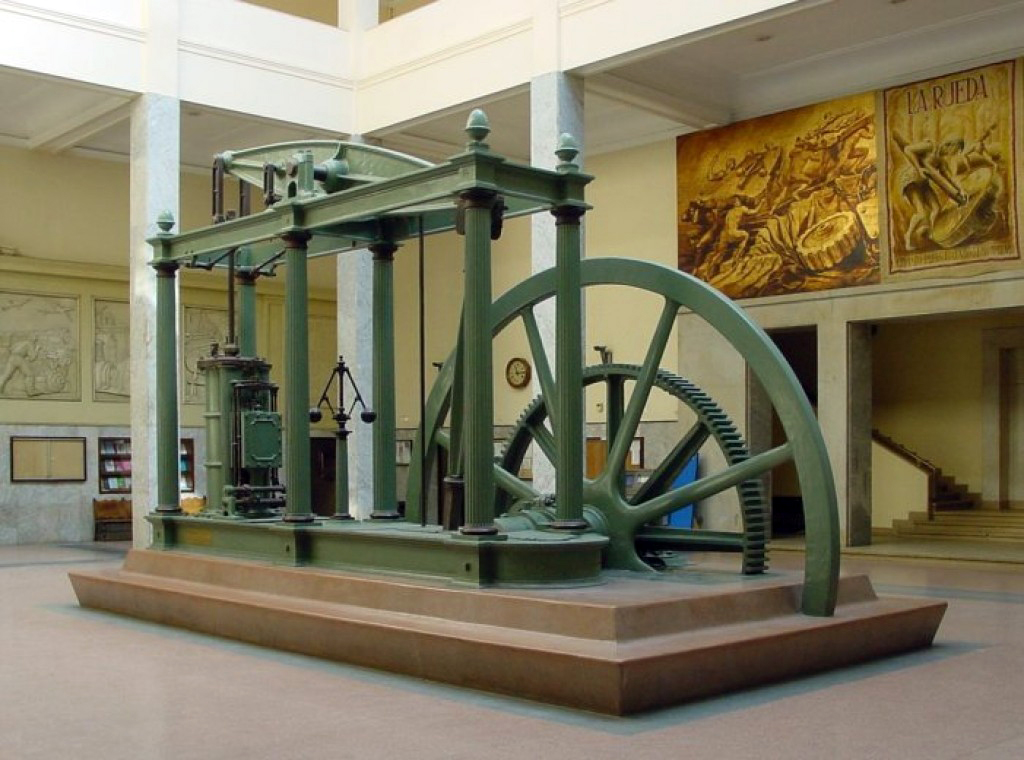
The steam engine was a very important invention. The steam engine powered many things that were important to the people at that time, such as the train, the mill, and the boat. The steam engine came before the combustion engine, which used the some of the same basic principles. The steam powered idea is actually still used in nuclear power plants today. The steam engine was an invention important to the evolution of engines.
Some people recognize inventions by how they looked and what they did, not what they were made of. The train, a very significant invention, is an invention most people look upon as one of the greatest inventions of its time. What most people don't realize, however, is that the train is powered by the steam engine, which is definitely an invention that greatly surpasses the train in importance. The steam engine used in the train and the boat helped people travel much easier and much faster. Without the steam engine, none of these inventions would have ever been invented.
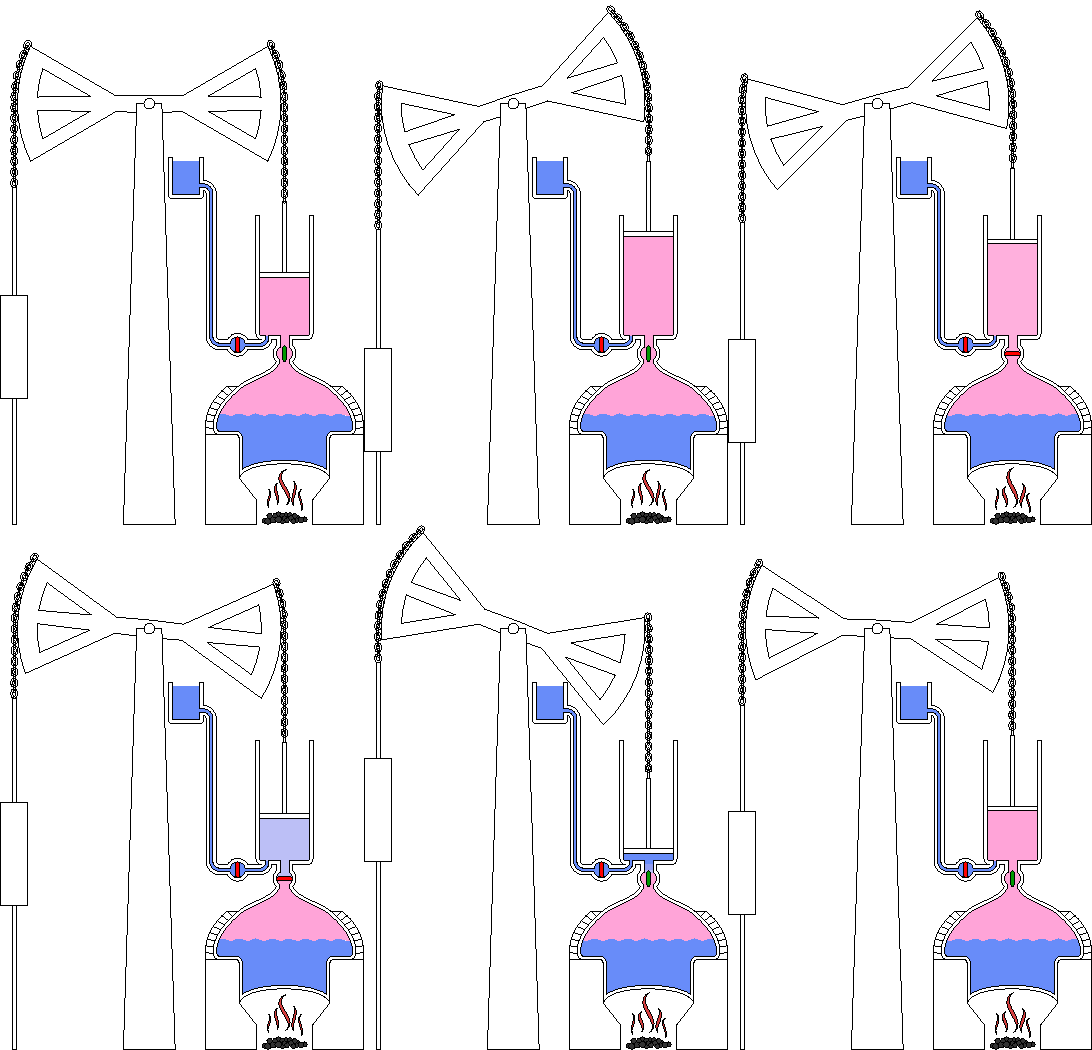
The steam engine was an advanced piece of machinery at its time. It consisted of two main parts: the steam-making device (the boiler) and the machinery. The boiler works by heating up the water so it turns into pressurized steam. The machinery is usually a piston or a turbine that uses the pressure of the steam to turn a shaft. Then, the turning motion of the shaft powers whatever it is connected to.
 |
| Here is a very simple diagram of how a steam engine in a train works. |
Before the useful version(s) of the steam engine, various people had done experiments with the idea of steam powering something. One of these was the aeophile, a device described by the Greek mathematician Hero of Alexandria, which used a ball filled with steam where the steam shot out of angled tubes, rotating the ball. One of the first commercial steam engines was the water pump, first used in the late 1600's. The main era of the steam engine, however, was between the 1800's and the 1900's, when they were mostly used in trains and boats. The steam engine had many important uses back then and even now, when efficient high-tech nuclear-heated engines are in use.
 |
| A more complex diagram of how a nuclear reactor uses steam power today. |
The steam engine changed how the world got around, used energy, and used resources. It was one giant step toward the way we are today. The steam engine sped up travel extremely fast, and it was a major convenience in many ways. Variations of the steam engine are even still in use today. Without the invention of the steam engine, the world would not be how it is today.
"External Combustion Engines." External Combustion Engine Lesson & Worksheet. N.p., n.d. Web. 12 Feb. 2013. <http://www.myschoolhouse.com/courses/O/1/142.asp>.
Gore, Albert. Our Choice: A Plan to Solve the Climate Crisis. Emmaus, PA: Rodale, 2009. Print.
"How Nuclear Power Works." HowStuffWorks. N.p., n.d. Web. 12 Feb. 2013. <http://science.howstuffworks.com/nuclear-power2.htm>.
"Steam Engine." Wikipedia. Wikimedia Foundation, 02 Oct. 2013. Web. 12 Feb. 2013. <http://en.wikipedia.org/wiki/Steam_engine>.