Showing posts with label science. Show all posts

Thursday, February 11, 2016

William Harvey's De Motu Cordis


       Published in 1628, De Motu Cordis was written by the British physician William Harvey. It was first made accessible to the public at a book fair in Frankfurt. De Motu Cordis established the circulation of blood and the function of the lungs and arteries. Before the book was published, it was widely believed that blood traveled between the ventricles of the heart by means of invisible pores, as proposed by Galen, another scientist who died in 216 AD. The lungs were thought to cool the blood by acting as bellows. However, Harvey denied the existence of capillaries, thinking they were unnecessary. The book also addressed the amount of blood that was circulated through the body.

      The discovery of the function of the lungs and arteries revolutionized science. Without these discoveries, we would not be able to treat diseases and injuries affecting these areas, since we wouldn't know their actual function. We probably would have treated many lung, heart, and blood or artery afflictions incorrectly. De Motu Cordis was an extremely important addition to anatomy that provided a foundation for other scientists in the same field.
Source:
https://en.wikipedia.org/wiki/Exercitatio_Anatomica_de_Motu_Cordis_et_Sanguinis_in_Animalibus
Image:
http://special.lib.gla.ac.uk/images/exhibitions/month/Hunterian_Y_7_13/DeMotuCordis_tp.jpg

Tuesday, February 2, 2016

a magnifying glass for the unknown


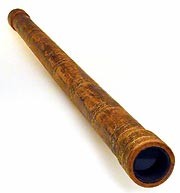
    Who invented the telescope? Why is the telescope important to life as we know it? It is still unknown who invented the telescope, but the first person to apply for a patent for it was a Dutch eyeglass maker named Hans Lippershey (or Lipperhey), so he got the credit for it. One story goes that he got the idea of the telescope after watching two kids in his shop hold up two lenses that made a weather vane that was far away seem like it was closer. Others suspected, at the time, that he stole the design from another eyeglass maker named Zacharias Jansen.
Galileo had heard of the telescope and made one of his own with some improvements. He was the first person who decide to point it up at the sky to see what he could observe. It is thanks to these people that we have the technology we do today. Back then, before the telescope, we didn’t have solar panels, implantable heart monitors, water purification systems, and many more. It is simply the science of space that has improved our knowledge.   
It is thanks to these people that we have the technology we do today. Back then, before the telescope, we didn’t have solar panels, implantable heart monitors, water purification systems, and many more.
As technology evolved, scientists were able to see other stars. In the 19th century astronomers gathered information about the chemical composition and motions of celestial objects using a new instrument called a spectroscope. In the 1970’s people began to build what would later be known as the hubble telescope. On April 25th, 1990, the Telescope was launched into an orbit roughly 380 miles above the earth's surface.
Today we can use technology like this to observe other planets and moons, and other celestial objects. For me I don’t think life would be the same without the telescope. I would still think that there are only a few other planets. I would never be able to ask big questions, like what isn beyond the observable universe, how far can we travel, and most of all, is there other life somewhere out there? Without the invention of the telescope people like me would have never wondered about these questions because they thought they knew what was out there, but really they had no idea.

Sources Cited:

Dunbar, Brian. "Telescope History." NASA. NASA, 23 Dec. 2003. Web. 27 Jan. 2016.
Cox, Lauren. "Who Invented the Telescope? | The First Telescope." Space.com. N.p., July-Aug. 2013. Web. 27 Jan. 2016.

Tuesday, February 17, 2015

The Telescope


The Telescope


The first recorded and working telescope was made in 1608. This is relatively new technology, and has increased rapidly since then. The first telescope is credited to a man named Hans Lippershey, although there is some speculation about this. Hans Lippershey made a refracting telescope, one of the earlier kinds. A refracting telescope uses a lens as the objective to form the image. This was the first kind of practical telescope.

In 1609, Galileo came out with the next new kind of telescope. It was based off the one Lippershey had made, but had about 3x magnification. Galileo later went on to make a 30x one. This is sort of how science works, someone making an invention, and then someone else taking their idea and making it better. Johannes Kepler did just this, in 1611, when he made a telescope that used a convex lens, unlike Galileo’s concave one.
Into modern times, the Hubble telescope was launched in 1990. It has a 2.4 meter mirror, and can see in the near infrared, near ultraviolet, and visible spectrum. It is still in use today, capturing more and more images. The Hubble space telescope was named after Edwin Hubble.

The age old wanting is for knowledge. What’s out there? How far can we go into the universe? Curiosity has ebbed its way into how we think and perceive the world, and the telescope is helping us understand a few things. There is always more to be discovered, always more missions to send to space, and always more things to see.


Works Cited:
"Hubble Space Telescope." Wikipedia. Wikimedia Foundation, n.d. Web. 16 Feb. 2015. <http://en.wikipedia.org/wiki/Hubble_Space_Telescope>.
"History of the Telescope." Wikipedia. Wikimedia Foundation, n.d. Web. 16 Feb. 2015. <http://en.wikipedia.org/wiki/History_of_the_telescope>.

"Telescope." Wikipedia. Wikimedia Foundation, n.d. Web. 16 Feb. 2015. <http://en.wikipedia.org/wiki/Telescope>.


Tuesday, February 4, 2014

Telescopes are Awesome

The Telescope


Hey you reading this you probably know what a telescope is? don’t you! It’s that thing you look out of to see things far away from you. You probably know the telescope best from movies with pirates in them. Those things are useful, right? Lets see where, who, and when they were made! The earliest telescope ever used was in 1609. There were many people that claimed they invented the telescope such as Hans Lippershey (who is mostly credited), Zacharias Janssen, and Jacob Metius of Alkmaar. The telescopes supposedly consisted of convex lens, and a concave eyepiece. Soon after that, Galileo used that design to make his own, it worked, and the telescope was born.

The telescope was known to have been invented somewhere in the Netherlands. The telescope has so many importances to it, pirates used to use it to see enemy ships far off the coast to ready for battle, while scientists use it to make amazing discoveries about our world.  Telescopes are now getting so advanced, that scientists are sending them up into space! Recently The Hubble was sent out into space to bring back astronomical research. This amazing, modern telescope can see space better than anything else.

Well, why are people even that interested in space objects? Because space objects allow you to see a world beyond the eyes. Now you probably use binoculars more than you use telescopes. But let me tell you, telescopes are way more amazing and have so many more features and history as explained above. Now get up from wherever you are and go make a discovery with a telescope.