Showing posts with label art. Show all posts

Thursday, February 28, 2019

Frida Kahlo: How She Made an Impact

Frida Kahlo was a Mexican Artist who lived from 1907 to 1954. Frida is important to me because first of all, she was Mexican and secondly, she had a big impact on Mexican artists. Since she was an artist in the 1900’s, it just feels to me that she was carrying on the Artistic Revolution through her drawings. Frida’s father came from Germany, but Frida claimed that he was Jewish and Hungarian. Frida’s mother was a Mexican Catholic.
As a child, Frida had suffered polio. Polio is a disease that causes an inability to move ad when she was a teenager, she almost died in a bus accident. She had multiple fractures in her spine, ribs, and collarbone. She also, broke her foot, dislocated her shoulder, and shattered her pelvis. Frida went through 30 operations and ended up in a body cast. Frida knew that at that point, she should focus on art. 
In Frida’s lifetime, she drew approximately 200 paintings, sketches, and drawings. Out of these 200 drawings of hers, 143 of them were paintings, and 55 of those were self portraits. Her first ever self portrait was in 1926 and she named it,”Self-Portrait in Red Velvet.” Frida felt that self portraits were something that she had to keep coming back to. She states,”I paint self portraits because I am so often lonely, because I am the person that I know the most.”
Frida’s love life didn’t go so well. She married Diego Rivera in 1929, when she was 22 years old. She then divorced Diego in 1939 (I couldn’t find out why) to later remarry a year later in 1930. Even then, they lasted until Frida passed away in 1954 at the age of 51. It didn’t take Diego long to find another partner, because it only took one year for him to marry once again to Emma Hurtado.
Frida Kahlo is an important artist to me because she went through really tough times in her life and she is a real inspiration. Her paintings show the rough things that she went through and it makes me feel more sympathetic to everyone who not only went through bad times, but just had to go through something bad in their life. For example, Frida’s,”The Two Fridas” is a drawing of two Fridas. The whole drawing represents how Frida married, divorced, and remarried to Diego. One Frida (the left) represents the Frida that loved Diego and would not leave his side and the other Frida (the right) shows the Frida that Diego wanted nothing to do with. This drawing shows that in her heart, she had a pain that was made by Diego when they divorced but also the love she still had for Diego. This painting makes me feel kind of sad for her because it seems like she is going through anger and in love at the same time which can be hard. I could not really relate to her but for me it seems like it is hard to go through mentally.
All in all, I think Frida Kahlo is a great artist that puts a lot of feeling into her drawings. She shows what she has been through in her drawings. I think that it is really cool that she puts a lot of emotion into her drawings and isn’t afraid to put out what’s on her mind or what she has been through.

Image 1
Image 2


Tuesday, February 19, 2019

Hard Work, Stress, and Muscle Relevant Gel


https://ica.smugmug.com/Camp/Music-2018/Intermediate-Music-2018/2018-Intermediate-Concert-Orchestra/i-HSqshXj
To be told that my pain is not validated that my hurt is fake because, I don't try hard enough. That I don't do anything, because I'm a musician, and that's what musicians do. Musicians also practice 4 hours a day, wake up at 5 am, and get arthritis when they are 12 years old, because being a musician isn't just a hobby, it's a full-time job. It takes up your whole life. We go to practices like an athlete does, we go to concerts like an athlete goes to games, and we train like an athlete does, but yet, we are not treated as one. We are treated as though we are weak, lazy, as if our hard work doesn’t amount to anything. Because although we work and practice the same or even more than athletes, there is still a large bias against committed musicians. I asked Lizbeth Carreno and Shin Young Kwon, violinists from the Oregon Symphony, and they said that many people don’t believe that being a full-time musician is an actual job. They also think that every time you pick up your instrument, you feel immense happiness. While it is very rewarding in the end, to get there you have to go through a lot. Practice long hours, sometimes on a single measure. You will get hurt a lot; your fingers usually are riddled with calluses and turn black from the combination of the fingerboard and sweat. There is also the daunting fear that something will happen to your wrist or fingers that could end your career. As for me, I am also a committed violinist. I attended Interlochen, an intense arts academy in Michigan this past summer, and I plan to apply to high school there. During last season, as I was preparing for the many auditions it took, I started to feel tingling in my fingers which then spread to my wrist and eventually to my whole arm, which was from the long hours and stress of the upcoming auditions and competitions.
https://ica.smugmug.com/Camp/Music-2018/Intermediate-Music-2018/2018-Intermediate-Concert-Orchestra/i-gS2Gk6N
I was not able to play as long, or as much as I would’ve liked, and every morning and night I slathered my arm with muscle relevant gel, in hopes that it would slow the process that might one day prevent me from pursuing something that I love. During that time of uncertainty, I felt like I didn’t have anyone but my teacher, Shin Young Kwon, who understood. I was scared, and my parents pushed and pushed me to keep practicing, even if I was hurting. My teachers didn’t care, or in some cases pushed me even harder, in classes like PE, I was constantly being compared to my brothers, who are division 1 tennis players. I feel as though if my peers and people close to me hadn’t of labeled me, and supported me more, I would have gotten through this time more successfully, and come out as a better violinist and overall person.

Friday, February 1, 2019

Colors of Music

Playing the piano isn’t just about how fast your fingers move, or how you can line up the notes to match the marching beat of a metronome. It’s not just about how long you’ve been playing, how many competitions you’ve won, or how much music theory you know. Sure, that’s important too. But what’s really important is the stories you tell as your fingers hit the keys. The emotions that cannot be portrayed in words or ink. The soaring harmonies from the first note to the last, all captured in one breath of song that seems to last an eternity and yet a second.


I’ve been playing piano for 8 years. Not that it counts, of course, but I am very familiar with the instrument. I started when I was just five, and I plan to keep music a part of my life until I grow old. Piano has its ups and its downs. Since it is one of my passions, it requires a substantial amount of my time. Every day, I must practice at least an hour of piano. This can be tight to fit in a schedule of homework, sports, and other extracurricular activities. But it is worth it. Even when it seems like you want to quit, if you really want music as a part of your life, you must persist.


Everybody has their different ideas of being “good” at a musical instrument. It could be judged it on how long someone has played, how many competitions they’ve won, and many other aspects of being a musician. I think a good pianist is able to transport the audience into a story, whether it be one full of joy and bright colors or one of painful loss and sadness.


a splatter painted horse that I did

Art is a lot like piano. Sometimes music is even considered an art. Art has so many different pathways to take, and each has its own techniques and challenges. All kinds of art are enjoyable, but painting with watercolor is one of my favorites. The way the colors mix together and run off the page can be difficult to handle, but can also be used to your advantage. When painting, there are no mistakes. There is no going back. If I feel like I have made a mistake, I form it into something else. We learn from our mistakes, and they give us experience in what we aim for. From my errors, I have learned many different methods of watercolor. One of my favorite techniques is splatter painting. Splatter painting is when you have paint on your brush and you knock the brush against another hard object, such as a pencil. The paint splatters onto the paper and creates many dots. This is great for capturing the speckled foliage of a tree. It is also excellent for any type of abstract art.


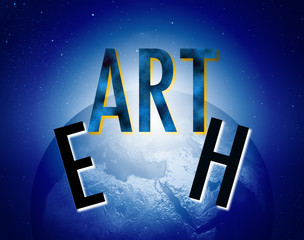
Image result for earth without art is just eh
Piano and watercolor painting bring challenges and creativity to my life. Sometimes they can be frustrating, but mostly I am left feeling satisfied. Playing a musical instrument or creating art doesn’t just benefit you, but also all of your community that listens and sees your work. Music and art can comfort people in a way no words can. As the saying goes, the Earth without “art” would just be “eh”!


Sources:

Friday, January 31, 2014

Throwing on the Wheel


Throwing on a pottery wheel: this is an activity that I partake in most friday nights at the Multnomah Arts Center. When I first heard that you threw on a pottery wheel., I was really confused, but I have since learned that “throwing” actually just means using the pottery wheel to shape clay.


Using the pottery wheel is a super fun activity that is artistic, but no so randomly abstract that you could be confused. Unlike other art forms, when I use the pottery wheel the things I make don’t have some hidden meaning or artistic secrets that only other throwers could recognize.

There are really only four basic things to do when using the pottery wheel, and one of them is optionable. Centering, shaping, trimming, glazing. Trimming is something that some people do, and others don’t.

The first step to throwing on the pottery wheel is centering. Centering is by far the most important part of using the wheel, because if you mess this up, the entire pot is messed up and will look bad. Centering is really nice because it requires you to be forceful, and push on the clay really hard. If ever there is something bugging at me, or I am annoyed by something, I use centering the clay as a perfect form of stress relief. To center the clay, what I do is I put my right hand flush up against the side of the clay and push on it. With my left hand I make a fist, then put it on the top of the clay, and push down. By pushing the clay both sideways and down at the same time, the clay is forced into the center of the wheel. If at any time during the throwing process I push the clay off-center, I have to push in on the entire pot and recenter it.


The next thing to do once the clay is centered is to shape it. To shape the clay you have to put the wheel at half speed, which means slow it down so it is not spinning as quickly. To shape the clay I first cup both my hands around it, then push my thumbs down into the center of it. I continue to push down with my thumbs until it is as deep as I want to go. Once I have the hole of my pot I put one hand inside of it, and the other on the outside. I put my hands in the same space on the clay, so that if there was no clay, they would be touching. To widen and heighten the pot, I push out with the inside hand, and move the outside hand upward. This forces the clay away from my inside hand, and then up with my outside hand. If I am trying to make a bowl or plate, I push more with my inside hand, but if I am trying to make a cup or vase, I push more with my outside hand.

After shaping the clay, I have to wait until the next friday to trim it. I have to wait until the next week to trim because the clay needs time to dry and harden before it can be trimmed. The clay need to harden, because when I trim pots, I stick them back on the wheel, but upside down, so they have to be able to hold themselves up. The reason that I turn the pots upside down is that the whole point of trimming is to make the bottom of the pot nicer, and maybe even give it a foot to sit on. When I trim, I make sure that the pot is in the center of the wheel, then I attach it to the wheel by sticking it with four small lumps of clay to the wheel head. Then I put my wheel at full speed to make sure that whatever trimming I do is even all the way around the pot. To trim the pot I use sharp metal trimming tools that are like ovals and rectangles of metal, but just the perimeter, and no inside. This is a good tool because then I can push them against the pot and they scrape excess clay off of it.

After trimming, I wait another week, then I glaze the pot. When I glaze pots, it is super important to paint the bottom of the clay with wax first, on every surface that will touch the kiln shelf. This is important because the glaze is actually liquid glass, and when it hardens it will stick to the pot, but if it is touching the kiln shelf it will stick to that too. It has not actually happened to me, but I have heard that if your pot sticks to the kiln shelf, they hit it with a hammer to break it off, because kiln shelves are a lot more expensive than that amount of clay and effort. After the wax on the bottom of the pot is dry, I dip the pot in the glaze. I like to dip my pots in two different colors, because I think it has a really cool looking effect.


I really love doing pottery, and ever since I discovered it this fall, I have loved it, and tried to go every friday.

These are most of the things that I have made on the pottery wheel, some other ones are around my house, but I wasn’t able to find them all.


This is my favorite vase that I have made because it is shaped really nicely.


This is the biggest thing I have made on the pottery wheel and it is just like a big tub.

This is the best bowl I have made on the pottery wheel, and it is big enough to hold a fruit or a small bowl of cereal.