Showing posts with label Galileo. Show all posts

Tuesday, February 2, 2016

a magnifying glass for the unknown


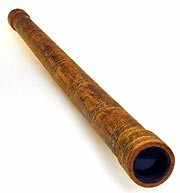
    Who invented the telescope? Why is the telescope important to life as we know it? It is still unknown who invented the telescope, but the first person to apply for a patent for it was a Dutch eyeglass maker named Hans Lippershey (or Lipperhey), so he got the credit for it. One story goes that he got the idea of the telescope after watching two kids in his shop hold up two lenses that made a weather vane that was far away seem like it was closer. Others suspected, at the time, that he stole the design from another eyeglass maker named Zacharias Jansen.
Galileo had heard of the telescope and made one of his own with some improvements. He was the first person who decide to point it up at the sky to see what he could observe. It is thanks to these people that we have the technology we do today. Back then, before the telescope, we didn’t have solar panels, implantable heart monitors, water purification systems, and many more. It is simply the science of space that has improved our knowledge.   
It is thanks to these people that we have the technology we do today. Back then, before the telescope, we didn’t have solar panels, implantable heart monitors, water purification systems, and many more.
As technology evolved, scientists were able to see other stars. In the 19th century astronomers gathered information about the chemical composition and motions of celestial objects using a new instrument called a spectroscope. In the 1970’s people began to build what would later be known as the hubble telescope. On April 25th, 1990, the Telescope was launched into an orbit roughly 380 miles above the earth's surface.
Today we can use technology like this to observe other planets and moons, and other celestial objects. For me I don’t think life would be the same without the telescope. I would still think that there are only a few other planets. I would never be able to ask big questions, like what isn beyond the observable universe, how far can we travel, and most of all, is there other life somewhere out there? Without the invention of the telescope people like me would have never wondered about these questions because they thought they knew what was out there, but really they had no idea.

Sources Cited:

Dunbar, Brian. "Telescope History." NASA. NASA, 23 Dec. 2003. Web. 27 Jan. 2016.
Cox, Lauren. "Who Invented the Telescope? | The First Telescope." Space.com. N.p., July-Aug. 2013. Web. 27 Jan. 2016.

Tuesday, February 17, 2015

The Telescope


The Telescope


The first recorded and working telescope was made in 1608. This is relatively new technology, and has increased rapidly since then. The first telescope is credited to a man named Hans Lippershey, although there is some speculation about this. Hans Lippershey made a refracting telescope, one of the earlier kinds. A refracting telescope uses a lens as the objective to form the image. This was the first kind of practical telescope.

In 1609, Galileo came out with the next new kind of telescope. It was based off the one Lippershey had made, but had about 3x magnification. Galileo later went on to make a 30x one. This is sort of how science works, someone making an invention, and then someone else taking their idea and making it better. Johannes Kepler did just this, in 1611, when he made a telescope that used a convex lens, unlike Galileo’s concave one.
Into modern times, the Hubble telescope was launched in 1990. It has a 2.4 meter mirror, and can see in the near infrared, near ultraviolet, and visible spectrum. It is still in use today, capturing more and more images. The Hubble space telescope was named after Edwin Hubble.

The age old wanting is for knowledge. What’s out there? How far can we go into the universe? Curiosity has ebbed its way into how we think and perceive the world, and the telescope is helping us understand a few things. There is always more to be discovered, always more missions to send to space, and always more things to see.


Works Cited:
"Hubble Space Telescope." Wikipedia. Wikimedia Foundation, n.d. Web. 16 Feb. 2015. <http://en.wikipedia.org/wiki/Hubble_Space_Telescope>.
"History of the Telescope." Wikipedia. Wikimedia Foundation, n.d. Web. 16 Feb. 2015. <http://en.wikipedia.org/wiki/History_of_the_telescope>.

"Telescope." Wikipedia. Wikimedia Foundation, n.d. Web. 16 Feb. 2015. <http://en.wikipedia.org/wiki/Telescope>.


Sunday, February 10, 2013

Galileo, The Father of Modern Science


Galileo, the father of modern observational astronomy, opened up revolutionary frontiers in what would become modern day astronomical study and research.  Our knowledge and understanding of science and astronomy would be unimaginably different
if Galileo had not developed the heliocentric
model of the solar system and validated, through telescopic viewing Venus, many constellations and several moons.  Galileo was a pioneer in the field of astronomy, and while many of his theories were considered controversial in his time, the impact which they have made in modern astronomy cannot be argued.


The heliocentric theory is one of the greatest discoveries Galileo has ever made.  The heliocentric model is a model showing that the Earth and the other planets revolve around a relatively stationary Sun at the center of the Solar System.  The word comes from the Greek words helios "sun" and kentron "center.”  Historically, heliocentrism was opposed to geocentrism, which placed the Earth at the center.  Although Galileo was not the first to support the heliocentric model of the solar system, he was entirely responsible for the idea that the
sun is the center of the universe.  Galileo was responsible for this discovery, but he had nothing but a telescope to validate his findings and it was Galileo’s findings through the telescope which supported heliocentrism stronger than at any other time in history .  Without Galileo’s research, measurement, validation and theory of heliocentric model, our beliefs and philosophies of space and time would be completely different from what they are today.   This is why I believe that Galileo could well possibly be one of the greatest scientists/astronomers the world has ever seen.


Galileo is also responsible for the discovery of Lo, Callisto, Europa and Ganymede, four of Jupiter’s moons.  The four moons were discovered sometime between 1609 and 1610 when Galileo made improvements to his telescope. Galileo’s innovative improvements to the telescope, enabled

him to observe celestial bodies more distinctly than had ever before. Galileo's discovery of Jupiter’s moons showed the importance of the telescope as a tool for astronomers by proving that there were objects in space that could not be seen by the naked eye.   More importantly, the incontrovertible discovery of celestial bodies orbiting something other than the Earth dealt a serious blow to the geocentric theory in which everything orbits around the Earth.  These were incredible discoveries at the time, and more proof of Galileo’s leadership in the research, and science of astronomy.


Part of Galileo’s contribution to astronomy were his many improvements to the mechanical devices utilized in astronomy.  The most important and impactful improvements  developed by Galileo were to the telescope.  Galileo made his first telescope in 1609, modeled after telescopes
produced in other parts of Europe at could magnify objects three times. He created a telescope later that could magnify objects twenty times.  With this telescope, he was able to look at the moon, discover the four satellites of Jupiter, observe a supernova, verify the phases of Venus, and discover sunspots.  These observations and discoveries could never have been made if it weren’t for Galileo’s amazing scientific research and beliefs.


In a time where opposing philosophies created tension in the scientific community, Galileo brought innovation, validation and discovery to his beloved astronomy.  It was his passion which enabled Galileo to persevere, despite the Spanish Inquisition, and bring never before seen technologies and discoveries to support his beliefs.  Galileo, the Father of Modern Observational Astronomy, was a scientist who supported his beliefs by creating new ways to make new discoveries, and, in the end, these discoveries supported all which Galileo believed.