Steam Power
Peter Singer once said, “The Internet, like the steam engine, is a technological breakthrough that changed the world.” Steam power was much like the internet nowadays. It greatly impacted our world. Factories powered by steam could be located everywhere and not just near water sources but they worried about freezing, dry spells, and the season itself because those were factors that could’ve caused a shortage in water supply. Steam power was then later adapted to many types of transportation. Three people were responsible for the major development of the steam engine. They were Thomas Savery and his steam pump, Thomas Newcomen and and the steam engine, and James Watt and his major improvements to the steam engine.
Thomas Savery started it all off with is basic steam pump. He invented it in 1698 and got a patent in London. The pump was used for pumping water out of mines. It worked by letting in 120 to 150 psi of steam into a cylinder. On the outside, a blast of cold water would condense the steam inside, creating a vacuum. Then the valve would shut off as the water came up. The valve was then opened again to force the water into a higher level pipe.
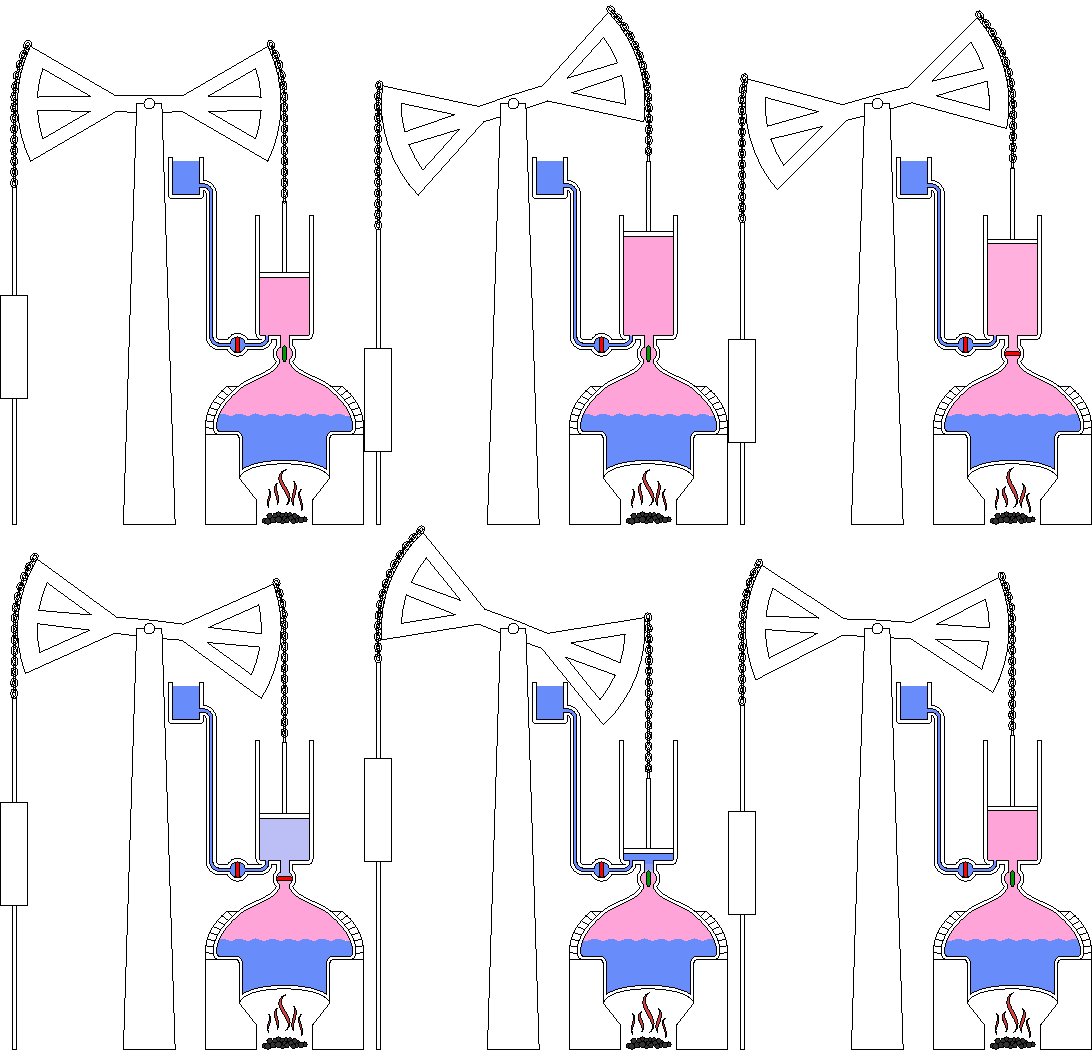
 After, Thomas Newcomen then developed the first steam powered machine. In 1712, Thomas newcomen invented another pump-like machine that was powered by steam. He wasn’t influenced by Thomas Savery but their ideas were similar. There would be a cylinder and a boiler under it with a valve in between them. The boiler would boil water and the valve would open to let the steam come through, pushing a piston in the cylinder that was connected to an arc head. this turns the other side pushing a piston down a cylinder that goes into the mine. A jet of cold water would then go directly into the steam cylinder causing the steam to condense creating a vacuum pulling the piston back down causing the other piston on the other side to come up drawing water with it. The valve of the boiler and the cylinder then opens letting the water in and then the whole process repeats again.
  After Newcomen, James Watt became very successful for the developments he made on the steam engine. James Watt worked very close with Matthew Boulton. In 1778, he officially completed perfecting his steam engine design. He had made very many improvements. He added a steam jacket around the steam cylinder to keep the temperature of the steam inside. More importantly, he put the condenser chamber a separate place. This made the machine improve by a factor of five saving 75 percent on coal costs because coal was what they used to boil the water. At the time, Newcomen’s engine could not be easily adapted to a wheel. This is not shown in the pictures but Watt developed his engine to have a centrifugal governor so he could control the amount of steam used, parallel motion so that a rod can move in a rotational direction without putting sideways strain on the horizontal rod, and a flywheel which stored energy through the torque given off by the rotating wheel.
They called the time period from 1760 to around 1840 the industrial revolution for a reason. Steam power became greatly developed during that time. It also became a much more efficient and a much more reliable source of energy thanks to Thomas Savery, Thomas Newcomen, and James Watt. Although it wasn’t the main source of energy, you have to remember, they were using coal, horses, and manpower to power things. Steam power opened up another possibility for newer and more efficient machines during the revolution.
Sources: