Showing posts with label scientific revolution. Show all posts

Thursday, February 11, 2016

William Harvey's De Motu Cordis


       Published in 1628, De Motu Cordis was written by the British physician William Harvey. It was first made accessible to the public at a book fair in Frankfurt. De Motu Cordis established the circulation of blood and the function of the lungs and arteries. Before the book was published, it was widely believed that blood traveled between the ventricles of the heart by means of invisible pores, as proposed by Galen, another scientist who died in 216 AD. The lungs were thought to cool the blood by acting as bellows. However, Harvey denied the existence of capillaries, thinking they were unnecessary. The book also addressed the amount of blood that was circulated through the body.

      The discovery of the function of the lungs and arteries revolutionized science. Without these discoveries, we would not be able to treat diseases and injuries affecting these areas, since we wouldn't know their actual function. We probably would have treated many lung, heart, and blood or artery afflictions incorrectly. De Motu Cordis was an extremely important addition to anatomy that provided a foundation for other scientists in the same field.
Source:
https://en.wikipedia.org/wiki/Exercitatio_Anatomica_de_Motu_Cordis_et_Sanguinis_in_Animalibus
Image:
http://special.lib.gla.ac.uk/images/exhibitions/month/Hunterian_Y_7_13/DeMotuCordis_tp.jpg

Tuesday, February 17, 2015

The Telescope


The Telescope


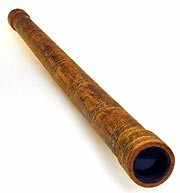
The first recorded and working telescope was made in 1608. This is relatively new technology, and has increased rapidly since then. The first telescope is credited to a man named Hans Lippershey, although there is some speculation about this. Hans Lippershey made a refracting telescope, one of the earlier kinds. A refracting telescope uses a lens as the objective to form the image. This was the first kind of practical telescope.

In 1609, Galileo came out with the next new kind of telescope. It was based off the one Lippershey had made, but had about 3x magnification. Galileo later went on to make a 30x one. This is sort of how science works, someone making an invention, and then someone else taking their idea and making it better. Johannes Kepler did just this, in 1611, when he made a telescope that used a convex lens, unlike Galileo’s concave one.
Into modern times, the Hubble telescope was launched in 1990. It has a 2.4 meter mirror, and can see in the near infrared, near ultraviolet, and visible spectrum. It is still in use today, capturing more and more images. The Hubble space telescope was named after Edwin Hubble.

The age old wanting is for knowledge. What’s out there? How far can we go into the universe? Curiosity has ebbed its way into how we think and perceive the world, and the telescope is helping us understand a few things. There is always more to be discovered, always more missions to send to space, and always more things to see.


Works Cited:
"Hubble Space Telescope." Wikipedia. Wikimedia Foundation, n.d. Web. 16 Feb. 2015. <http://en.wikipedia.org/wiki/Hubble_Space_Telescope>.
"History of the Telescope." Wikipedia. Wikimedia Foundation, n.d. Web. 16 Feb. 2015. <http://en.wikipedia.org/wiki/History_of_the_telescope>.

"Telescope." Wikipedia. Wikimedia Foundation, n.d. Web. 16 Feb. 2015. <http://en.wikipedia.org/wiki/Telescope>.


Friday, February 22, 2013

Johannes Kepler


We learned many things from the Scientific Revolution, including space science. Johannes Kepler was one of the few people that made immense discoveries about space. Kepler discovered laws of planetary motion and how planets rotated around the sun.

Kepler was a German astronomer, mathematician, and astrologer (1571 - 1630). Kepler was also Tycho Brahe’s assistant, and later he asked Kepler to study Mars. Kepler tried to make a negotiation to make a more formal employment, but it turned into an argument which made Kepler move to a city named Prague in April 6, 1600. In June, Brahe and Kepler reached an agreement to give Kepler a better salary.
Kepler also supported the theory of the earth rotates around the sun, or that our solar system was heliocentric. He didn’t agree with Tycho Brahe’s geocentric theories even though he was a student of Brahe. He agreed with Copernicus who came up with the idea of a heliocentric solar system, but modified his idea (orbital path). Later in history, this helped Isaac Newton’s theory of gravity. Gravity was the reason why planets stayed in orbit.

Later in his studies, he observed the planets and discovered these three laws of planetary motion:

His first law states that the orbit of each planet is an ellipse with the Sun at a focus.


His second law is states a line between a planet and the Sun sweeps out equal areas in equal times. Planets travel faster when they are closer to the sun (perihelion), and slower when they are further from the sun (aphelion).

Kepler’s third and last law states that the square of the orbital period of a planet is proportional to the cube of the semi-major axis of its orbit. That means if you know the year of the revolving object, you square the year (yr2) and you cube root yr2 .That will get you the distance to the sun in AU (Astronomical Units). This doesn’t only work for planets; it also works for moons, dwarf planets, satellites, etc. This equation can also be expressed as P2=A3. P represents the orbital period, and A represents the semi-major axis of the orbit (distance to the sun).


In brief, Kepler gave an enormous contribution to the Scientific Revolution. He discovered laws about our solar system, and even helped Isaac Newton create the theory of gravity. Without Kepler, we would know very little about our solar system. We might also think that Nicolaus Copernicus was right and the orbit around the sun was a perfect circle. Kepler cleared things up for us and helped modern science. The Scientific Revolution has influenced modern space science in a wonderful way. All of the scientist worked on theories for a long time and it was then completed. Copernicus gave the correct heliocentric idea, Kepler modified his idea to make the orbits ellipses, and Newton found gravity to explain why the planets are in orbit. These intelligent scientists discovered how our solar system works and now we can look back at their theories for modern science.

Friday, February 15, 2013

The Tragic Story of Évariste Galois


"Ne pleure pas, Alfred ! J'ai besoin de tout mon courage pour mourir à vingt ans!" was the last thing Évariste Galois ever said in his short life. In English, this means, "Don't cry, Alfred! I need all my courage to die at twenty!" These words were spoken to Évariste's brother. Évariste was convinced he would die the next day. In fact, he stayed up all night the night before writing letters, trying to get his ideas out on paper before he perished. So, why was he so sure he would be killed?

Évariste Galois was born in October of 1811 in France. His parents were both highly educated, and his mother homeschooled him until he was 12. When he was 14, he began to take an interest in math. When he was 17, he tried to get into a difficult school, but he failed the oral examination because he did not give enough explanations. He went to another school instead, and the next year he started discovering things about the theory of polynomial equations, which are equations with more than one variable (x, y, z, etc). Unfortunately, in 1829 his father, who was a politician, committed suicide after a dispute with the priest. Afterwards, he tried to enter the same prestigious college again, and failed. He was definitely qualified, and no one knows for sure why he failed. Some say he grew exasperated, and threw something at the examiner, or the examiner couldn't understand how he was getting his answers. Still at the mediocre school, Évariste wrote a letter criticizing his school's director for locking the students in the school during a riot and put in it a magazine. Rather than be expelled, he quit school and joined the national guard. His unit was soon disbanded, though. Soon after, Évariste attended a party where he proposed a toast to the king while holding a dagger near his cup. This was taken as a threat to the king, so he was arrested, but released a couple months after. Then, he wore a uniform that he wasn't supposed to on a parade, and so was arrested again! Évariste kept developing his ideas while in prison, and he was released six months later.

About a month later, Évariste was going to a duel. The circumstances of this duel are uncertain, as there are no clear records of this moment. Some sources claim that the duel was about a woman who he fell in love with. She apparently told him of her life, and this may have caused him to provoke the duel on her behalf. The letters he wrote support this theory. Others say that it was an undercover police agent, or someone opposed to his political views. Whoever it was, Évariste knew he would die the next day.

So, what do people do when they think they're going to die the next day? Well, Évariste thought the answer was writing letters. Apparently, he spent the entire night before the duel writing. He wrote mostly to his friends, but he also sent a letter to a famous mathematician. They outlined his ideas about a new branch of math, which he called group theory. These same ideas had been rejected by the mathematician before, but Évariste knew that his ideas were important, and someone needed to have them before he perished. So, Évariste spent the night before his duel frantically scribbling down everything he could think of that he might have discovered. This begs the question, if someone is in a duel, should they get enough sleep, and maybe win the duel, or write down all their ideas in hopes that someone will decipher them and their life will not have been in vain?

As Évariste thought, he did lose the duel the next day, and was abandoned, wounded, in the dust. Someone found him and took him to a hospital, but he passed away the next day. Eventually, mathematicians looked into the letter he had sent them, and discovered that he had some amazing thoughts. They definitely regretted not taking him seriously when he was alive. In 1843 (11 years later!) Évariste's work was finally published. Évariste Galois had a short, but meaningful, life.


Picture:
http://selunec.deviantart.com/art/Evariste-Galois-189586719

Sunday, February 10, 2013

Galileo, The Father of Modern Science


Galileo, the father of modern observational astronomy, opened up revolutionary frontiers in what would become modern day astronomical study and research.  Our knowledge and understanding of science and astronomy would be unimaginably different
if Galileo had not developed the heliocentric
model of the solar system and validated, through telescopic viewing Venus, many constellations and several moons.  Galileo was a pioneer in the field of astronomy, and while many of his theories were considered controversial in his time, the impact which they have made in modern astronomy cannot be argued.


The heliocentric theory is one of the greatest discoveries Galileo has ever made.  The heliocentric model is a model showing that the Earth and the other planets revolve around a relatively stationary Sun at the center of the Solar System.  The word comes from the Greek words helios "sun" and kentron "center.”  Historically, heliocentrism was opposed to geocentrism, which placed the Earth at the center.  Although Galileo was not the first to support the heliocentric model of the solar system, he was entirely responsible for the idea that the
sun is the center of the universe.  Galileo was responsible for this discovery, but he had nothing but a telescope to validate his findings and it was Galileo’s findings through the telescope which supported heliocentrism stronger than at any other time in history .  Without Galileo’s research, measurement, validation and theory of heliocentric model, our beliefs and philosophies of space and time would be completely different from what they are today.   This is why I believe that Galileo could well possibly be one of the greatest scientists/astronomers the world has ever seen.


Galileo is also responsible for the discovery of Lo, Callisto, Europa and Ganymede, four of Jupiter’s moons.  The four moons were discovered sometime between 1609 and 1610 when Galileo made improvements to his telescope. Galileo’s innovative improvements to the telescope, enabled

him to observe celestial bodies more distinctly than had ever before. Galileo's discovery of Jupiter’s moons showed the importance of the telescope as a tool for astronomers by proving that there were objects in space that could not be seen by the naked eye.   More importantly, the incontrovertible discovery of celestial bodies orbiting something other than the Earth dealt a serious blow to the geocentric theory in which everything orbits around the Earth.  These were incredible discoveries at the time, and more proof of Galileo’s leadership in the research, and science of astronomy.


Part of Galileo’s contribution to astronomy were his many improvements to the mechanical devices utilized in astronomy.  The most important and impactful improvements  developed by Galileo were to the telescope.  Galileo made his first telescope in 1609, modeled after telescopes
produced in other parts of Europe at could magnify objects three times. He created a telescope later that could magnify objects twenty times.  With this telescope, he was able to look at the moon, discover the four satellites of Jupiter, observe a supernova, verify the phases of Venus, and discover sunspots.  These observations and discoveries could never have been made if it weren’t for Galileo’s amazing scientific research and beliefs.


In a time where opposing philosophies created tension in the scientific community, Galileo brought innovation, validation and discovery to his beloved astronomy.  It was his passion which enabled Galileo to persevere, despite the Spanish Inquisition, and bring never before seen technologies and discoveries to support his beliefs.  Galileo, the Father of Modern Observational Astronomy, was a scientist who supported his beliefs by creating new ways to make new discoveries, and, in the end, these discoveries supported all which Galileo believed.


Friday, February 1, 2013

Photography


Niépce
Daguerre
 In 1827, the son of a rich lawyer and one of the many families who had eluded the french revolution created something amazing. An invention that would change the world forever, only to have his glory stolen by a young painter, eager to perfect the works of Nicephore Niépce. In 1829  Niépce shared his secret with Louis Daguerre and the two set off to make world changing discoveries. Meanwhile in England another scientist was working on a creation of his own. William Henry Fox Talbot was trying to make a machine that develop automatic sketches. The creations of these three scientists were crucial in the discovery of negative prints and the entire history of permanent photographic images.
        Nicephore Niépce had been
working for years on the design of a more efficient way to produce permanent photographs. Lithography had risen in popularity in the past decade in his home in france. Niépce noticed how difficult it was to trace pictures and to get the proper tools to create a lasting image. He spent the next years of his life studying ways to create these images automatically. He tried everything . His first idea was to coat pewter (a type of metal) with chemicals and substances that reacted to light. Later incorporating the use of a camera to reflect images, this method called Heliography (sun drawings) created something called superimposed engravings.  Later Niépce experimented with a type of light sensitive asphalt and his camera to create an engraving of the view from his workroom on a piece of glass. This being the first fixed photograph from nature.

A Daguerreotype

Meanwhile Louis Daguerre, a young painter and physicist living near Paris, was working on a similar invention. Daguerre was trying to obtain a method of transferring photographs onto pieces of chemical coated metal and glass. His experiments were very similar to those of Niépce, but none of Daguerre’s had succeeded. In 1829 Niépce shared the details of his secret method with Daguerre and the two joined forces to perfect photography. They worked on the method of Heliography, that  Niépce had invented in 1827, working primarily on shortening the time needed for the photographs to develop and ways to create multiple copies of a single image. Their work continued without prevail until Niépce passed in 1833, leaving behind a life of hard work and debt. Daguerre continued to work on the projects he had began with his late friend. Four years after the passing of his partner, Daguerre produced a method that accomplished all that he had been working on. The daguerreotype had five steps using a silver plate, iodine vapor ( the light sensitive element passed down from the works of Niépce) and the projection of images onto the golden iodized surface. The process could be accomplished in less time than the Heliocentric method and the steps were much easier. The daguerreotype process rose in popularity and Daguerre was honored with great distinction as the inventor of the most efficient process of creating photos, in that time.
  
                                                      
William Fox Talbot                                                                           A Calotype negative

As Daguerre and his invention ruled the world, yet another young scientist was getting his career underway with an incredible invention that would introduce the next era of photography. A graduate of Cambridge university, William Henry Fox Talbot was a 35 year old English scholar. With a good education and strong background, many expected Talbot to continue permanently on his work as a mathematician with several news papers. Instead Talbot went on to create the first negative print on paper. Talbot finished his model in 1835 but took a few years to perfect the method. Although this invention was one of the most advanced of it’s time, the older model created by Daguerre and Niépce created higher quality images, but Talbot’s, Calotype method could produce multiple images from one negative print. Talbot was the first of these inventors to get a patent on his method and publish several of his prints in 1844. This collection of published photographs titled ‘The Pencil of Nature”, was shared around the world and sparked the continued popularity of photography.


Photos and information:
http://www.britannica.com/EBchecked/topic/414651/Nicephore-Niepce
http://en.wikipedia.org/wiki/Nic%C3%A9phore_Ni%C3%A9pce
http://www.photography-museums.com/home-us.html
http://www.photography.com/articles/history/history-of-photography/
http://www.nndb.com/people/142/000083890/
http://www.bbc.co.uk/history/historic_figures/fox_talbot_william_henry.shtmlhttp://www.masters-