
Monday, February 29, 2016
Family Ties
My family is something that changes, bends and folds to fit with the changes of attitudes of my family members. I remember when me and my older sister were like the same person. We both liked playing outside and board games at our house at the beach. Running around and just having fun. My life was amazing then, and it still is amazing now. When I moved from third to fourth grade, my sister was deep in middle school and maybe she didn't wan't to be around me anymore. This is when we started to call each other annoying and intrusive and this is when we really started to gain some hostility about each other. We stayed in this relation for a while with the occasional agreement on what to do but we always fell out of line. We still have this attitude and I hope to change it sometime soon.


Johannes Vermeer
Johannes Vermeer
Ik ben een goed schilder!
Johannes Vermeer was a dutch painter in the 1600’s. Although now a well known painter worldwide, when Vermeer was alive he was heard of but not exactly famous. On the contrary he was fairly poor, and when he died, he left his children and wife in debt. Some people believe that he was poor because he didn’t produce enough paintings, and because he used very expensive materials for his paintings.
Mainly, Vermeer focused most of his paintings on middle class people, and community, mainly painting women. Vermeer is mostly known today for his great care, and use of light in his paintings. Vermeer is now known as one of the greatest painters in dutch history.

One of my Personal favorites, The Milkmaid, is a wonderful example of his care, detail, and work with light. The small arrows show Vermeer’s careful use of light, shading, and light source. The big arrow on top shows his attention to detail, and how long it truly takes to achieve a masterful painting. This also painting portrays Vermeer’s use of domestic life. Just to add to the complexity, the canvas on which The Milkmaid was painted was actually relatively small! It stands at 17 ⅞ in. tall and 16 ⅛ in width. Because of the canvases size, it took an estimated three years to complete this painting.
I feel that Vermeer himself is pretty inspirational because although he lead a harder life, he still painted wonderful paintings and didn’t give up on what he did. I never have had the patience to work on a very detailed piece of art, so learning about him I’m starting to figure out I have a way to go on the path to fame.
Friday, February 26, 2016
The Sad but True Happy Ending
WWI was the reason for the Soviet Revolution. Many Russians lost their lives to the war. The revolution took place because the Russians wanted to overthrow the government who supported the war. There was a lot of poverty in Russia, the government was inefficient, and the war was already going on for three years; the people started to wonder why they were fighting in the war.

As I write this today I am inspired by the bravery of people who were sent to forced labor camps. What does this have to do with me? I was born in 2003, and the Russian Revolution ended in 1918. I am planning to answer that question with this paper.

Many small actions determine who I will be or if I will be. For example, if my great grandpa made a different decision and did not put a hat on a statue I would not be here today, I would have not existed. Everything you do affects the world in some way. That is the same as the Soviet Revolution. Such a huge event it can not be described in a one page essay. Though I will do my best with my family.

The effects on Russia after the revolution were very notable. Russia stretched out and became “the Soviet Union”. The focus on education in the Soviet Union led to a bigger population. The Soviet Union withdrew from WWI, because they saw no reason to keep fighting and dying. The Soviet Union became a socialist state.
Let’s get to my family. My great grandma (Basya) lived in Poland, part of the Russian empire in the early 1900s. Peasants, farmers, and middle class demanded change, they were sick of the poverty, people dying in the war, and the government. The answer was the Soviet Revolution in 1917. The Russian Empire broke in 1917 and Poland becomes a independent country. Russia was advertised as being a safe place for Jews and other religions and a place where everyone worked together. Basya wanted to be a Jewish actress, so she moved to the Soviet Union and applied to an acting school. In 1937 she was put into a forced labor camp, because she was accused of being against the revolution. She was sentenced to 10 years in the forced labor camp. There she met her future husband, Ivan. He was a jokester and put a hat on a statue of Stalin, but the Soviets thought is was a offensive so they put him into a forced labor camp for 5 years. He was given an additional 5 years, because while Ivan and others in the camp worked on a dam, Ivan knew it would not work, and told the officials. After the dam did not work the officials gave Ivan another 5 years in the forced labor camp. After Ivan and Basya got out, they married and had my grandma from my dad’ side.
.
So really I am directly affected by the Soviet Revolution. Without it I would never be in this world. Millions of lives were affected. If you want to know more about the Soviet Revolution be sure to research it. There's a lot material on the internet so try to sift through it.
By Sean Uan-Zo-li
Thursday, February 25, 2016
The Rich (But Not Too Dark) History of Milk Chocolate
 If I asked you what you the meaning of life is, what would your answer be? To the select few, the answer is quite obvious: chocolate. Maybe that’s not quite how the question is actually supposed to be answered, with other answers like 42* or [insert your name here] on the line, but in my opinion, chocolate is pretty much it. I mean, the probability is high that you have experienced that delicious, creamy, smooth taste of chocolate dissolving on your tongue, a sensation that is topped by almost nothing. You’ve had all the way from the low life, extra sweet, almost not-chocolate chocolate that the typical consumer dubs chocolate today, to the expensive, sumptuous chocolate that you generally find on your exotic travels. (Or just in a high quality chocolate shop…) And as a fellow chocolatier, I understand your struggles of lasting a week without this amazing dessert by your side, in any way, shape or form.
  In case you haven’t noticed yet, I am just a little bit of a chocoholic. According to the significant accumulation and consumption of chocolate in my household, and the suspicious chocolate wrappers littering my room, I am a major chocolate connoisseur. My favorite style of chocolate is a really dark milk chocolate, (or a light dark chocolate, if you prefer that terminology). An estimated consumption of chocolate in my normal week is about a quarter of a pound, give or take a couple ounces. Because of this natural affinity for chocolate I have, I believed that I had an obligation to find out some of the rich history of milk chocolate. Hopefully, if you’re reading this blog, you have a similar bond with the delicious entity, so you will enjoy learning the history.
Unless you are the rare person who actually knows how milk chocolate blinked into existence, you are most likely ignorant in the matter. Do you think those wrapped and packaged Hershey bars just fell out of the sky and hit Milton Hershey on the head? I think not. And eating chocolate without knowing these details is like celebrating a goal in soccer without knowing who assisted, which is quite simply unacceptable. Therefore, I believe that it is my duty to enlighten those who love chocolate the way it is today, by acknowledging the brilliant people who shaped this wonderful victual. I would begin the extensive history at its very beginning, with the Aztecs and Mayans, but technically this blog is supposed to be about milk chocolate, so let's fast forward a bit, to when milk chocolate was first brought into the waiting arms of our world.

Around the time that Daniel Peter joined the chocolate market, he had also formed a friendship with Henri Nestlé, who worked as a baby food producer at that point in time. Henri Nestlé had been working with something he called “milky flour” to use as an ingredient in his baby food. (Remember that: “milky flour.” It is quite essential to the creation of milk chocolate.) It was as Nestlé was working with this “milky flour,” that Peter had a light bulb moment. He came up with the idea of uniting milk and chocolate into one delicious whole.
Sadly, his light bulb moment did not tell him how to make the milk chocolate, just that he should. Therefore, Peter spent the next seven years of his life struggling to make his new product. He used much trial-and-error, often experimenting during the day, and researching late into the night, trying to reach a solution to his problems. The principal problem that Peter faced was that the milk and chocolate solids did not combine as smoothly as one might hope. In fact, they didn’t really combine at all. The water in the milk caused the chocolate to fall apart and grow mildew, which simply ruined the batch of perfectly good dark chocolate.
 Eventually, Peter had the idea of using condensed milk in the chocolate. This way worked better, but still had some dicey results. Finally, (although I think that Peter should have reached this conclusion sooner) Daniel Peter decided to give Nestlé’s “milky flour” (completely evaporated milk) a try. He experimented with that idea some, and eventually found the desired result. In 1876, milk chocolate finally emerged into this world. This first product was called “Gala Peter,” with Gala meaning “from the milk,” which is simply a shout-out to the predominant factor in making it special. (If you have survived this long in my brief, not-so-brief, history of milk chocolate, I hope you have gleaned at least a little information on your (should be, if not is your) favorite food.)
Also, in case you couldn’t figure this out, milk chocolate went in multiple different directions after Peter worked his magic, such as ways you probably know very well, like any milk chocolate company you can think of right now. This expansion of the novel idea of milk chocolate spread quickly, aided by the equipment of the second industrial revolution. The machinery enabled milk chocolate of all varieties to be produced quickly and efficiently, leading to the dissemination of milk chocolate all over the world. Milk chocolate has changed drastically since it first opened its eyes, but every piece of milk chocolate can trace its roots back to its ancestor, Gala Peter, the first milk chocolate bar.
Now, the next time you go eat some chocolate, try to honor Daniel Peter and his legacy by savoring every last bite.
*Obviously, according to the Hitchhiker's Guide to the Galaxy and anyone in their right mind, “42” is the true meaning of life (besides chocolate, of course).
Link to Table of Contents
Link to Table of Contents
Sources
There are Lot's of Reasons for the Industrial Revolution, But Mill Girls Were the Ones That Caused it to Start
 The invention of the first power looms started the textile industry and triggered the industrial revolution. The Spinning Jenny, invented in 1764 by James Hargreaves, was one of the very first power looms. Mill girls, also known as factory girls, were the ones that work them. Families hoping to earn more money, would usually be traveling from different farms into an urban society, hoping to get better jobs and wages. So when advertisements went up saying how they wanted girls and women to come work at the mills, many traveled far for the new job offer, leaving families to go work in the mills.
  Girls who left for the mills usually only left because of poverty, which caused many to go desperately in search for good money. Many women and girls who found jobs at the mills, thought working in a factory brought a sense of freedom, earning their own money without the help of parental authority or guardians. Also, boarding houses were provided as places to sleep, as well as a parlor, dining room, and kitchen. Despite all the benefits though, for some, it was compared to the life of a slave. Working for long hours every day, getting a low-paid wage, and living in harsh working conditions made it easy to believe that. I know for myself, that I don’t wake up every day to go to work, but to learn things at school. Working six days a week, mill girls were constantly laboring in the mills for 66 hours a week. Comparing that to my own life, I go to school for nearly half the amount of those hours.
 A sample schedule for the mill girls in Lowell, Massachusetts went like this:
- 4:30 AM the morning bell located in the center of the boarding houses rings for breakfast.
- 5:30 AM work starts, all girls and women heading out to the power looms for their jobs.
- 12:00 PM ring in for lunch with the bell.
- 12:35 PM ring out to commence work.
- 6:30 PM the bell rings so that the mill girls come in for dinner.
 I wake up at 7:00 AM, and go to school for about 7 hours, far less than the mill girls. But the mill girls fit their education into their work schedule, going to church on sundays and taking evening classes at local high schools.
Around my age, which is 13, some mill girls got the desired job of drawing-in-girl. Drawing-in-girls, would make the beams ready in a loom for the weaver, and though this required some skill and nimble hands, this job was not demanding. They were paid by piece, not by the hour, meaning that the drawing-in girls could work at any pace they wanted. If a girl might want to read, than she could read any time she wanted, as long as she got the job done as a drawing-in-girl. The clothes that teens wore at the Mills were somewhat different to what I would wear today. While I will wear jeans and a t-shirt, Mill Girls wore dresses, stockings, shawls, coats, boots, and aprons. Activities at the boarding houses where the mill girls lived were similar to what I might do in my own free time. I’m an avid reader and love playing the piano, and the Mill girls in their own free time, would play the piano, read, or recite poetry from local newspapers or magazines. Mill girls were hard-working, and without their skills on the weave, we wouldn’t even have the tech today to make good quality clothes.
Image Sources: https://cullenshistorycorner.wikispaces.com/file/view/boardinghouses.jpg/127456513/639x479/boardinghouses.jpg
http://ocw.mit.edu/ans7870/11/11.001j/f01/lectureimages/4/image24.html
http://s222.photobucket.com/user/TheAutark/media/LowellMillGirl.jpg.html
http://www.teenagefilm.com/wp-content/uploads/2014/05/FactoryGirlsFeatured.jpg
Video Source:
https://www.youtube.com/watch?v=pkJwOYagvuI
Sources for text:
http://ocw.mit.edu/ans7870/11/11.001j/f01/lectureimages/4/image24.html
http://milltimes.weebly.com/boardinghouse-living.html
The Affects of the Civil War on Modern Day Society
The American Revolution my have created the United States but the Civil War definitely decided what land it would be. It took place from 1861 to 1865, and it's main root cause was to keep or abolish slavery. It was the largest and most destructive, and cost 625,000 lives! That's roughly as many American soldiers that have died in all the wars this country has fought in combined. Although the war started in 1861, the real fighting began in 1862, and went on for three years. Until the spring of 1865 when all the principal Confederate, South, armies surrendered and the North had won. Later on that year the 13th amendment, which put an end to slavery in the U.S, was passed.
 Obviously the Civil War has affected our society today in very clear ways. There are no African American slaves anymore. Without the civil war today someone like me wouldn't be able to go to school, especially one like Catlin Gabel. If there were no civil war there would be no civil rights movement. People like MLK jr, Rosa Parks, Malcolm X, and Andrew Goodman would not have had the liberty to obtain civil rights. Jim Crow laws would have never been passed. Although it changed the world between black and whites there are more affects of the war. Such as medical advances, cultural legacy, and technological advances. Even everyday things such as differently shaped left and right shoes or home delivered mail! I could go on and on about how many different ways the Civil War has shaped the nation, but I want to point out one thing instead. Even though the war had it's very many accomplishments, but it has still not granted us all freedom. We still have a long way to until cross that line of liberty and justice for all. The Civil War definitely sealed the deal though.
-Divine Niyungeko
Sources:
http://www.civilwar.org/
https://en.wikipedia.org/wiki/American_Civil_War#Root_causes
http://www.nytimes.com/2013/07/03/opinion/why-the-civil-war-still-matters.html?_r=0
http://www.aarp.org/politics-society/history/info-06-2011/civil-war-changed-american-life.html
Wednesday, February 24, 2016
Symbols of the Revolution
During the state of nationalism in Europe the countries wanted a symbol, object or language that would truly represent their country. They wanted something that would hold the people together when they face horrific wars, like the war started between the government and the nationalist. The nationalist fought for the independence of their countries, they believed that each country should have its own government instead of having the entire country be ruled by one king.
The American revolution was the first revolution deflecting the European monarchy system. The American revolution was a hard fought battle, full of war and politics. The journey to finding America's independence was such a great battle that it lasted eighteen years. Once the hard fought journey had ended the new country created a seal in honor of their winning their battle. The seal was named The Great Seal because of the honor it holds. The seal represents America's freedom and their courage. The flag in the eagle's mouth says “one out of many” in Latin. The olive branch in the the eagle's left talon stands for peace. The thirteen arrows in his right talon stand for war. The number of arrows, thirteen, stand for the thirteen colonies, at the time. For more information on symbols during the American revolution visit this presentation: https://prezi.com/hp0f6bpft15b/iconic-symbols-of-the-american-revolution/

France took on nationalism. They were one of the first countries to fight, inspiring many other countries to follow in their wake. After the French won their war there was hope for the other countries. During the French nationalism period a symbol of a rooster was made, and is now very important and symbolic to the French culture. The rooster had been used before nationalism in art and furniture but it wasn't truly famous until it was used in the revolution. The French decided to use a rooster because of the play on the Latin words gallus meaning gaul and the French word gallus meaning rooster. If you would like to fing out more about the rooster, or the other French sybols you can visit this cite: http://www.consulfrance-jhb.org/Symbols-of-the-French-Republic

Catlin Gabel, the school I attend, has a original logo of three trees. The three trees stand for lots of things. In my opinion the three trees represent the unity of the people on our campus. You will always have somebody by your side, you just have to look. We dig our roots deep, so we will always stand by. We are tall trees that just keep growing taller and taller, with stronger roots. There is also a more literal meaning of our three tree symbol. We have lots of trees and nature around our campus. To find out more about Catlin Gabel visit: http://www.catlin.edu/page.cfm?p=498

Tuesday, February 23, 2016
Martha Graham and the Rise of Modern Dance
 For centuries, classical ballet was the only dance style that people taught and choreographed. Martha Graham (1894-1991) was one of the pioneers of modern dance, who broke away from the specific, disciplined technique of ballet. She was one of the first dancers to discover and perform with different techniques such as contractions, floorwork, and energy with opposition. Her choreography and approaches at dance are what made modern dance what it is today.
 Graham demonstrated passionate emotions in her choreography, something ballet was unable to do because of its constricted, particular movement. She explored with loose movement in the limbs and spine; spiraling energy and opposition; and expressing emotions through movement. "Ballet…did not say enough, especially when it came to intense drama, to passion," she said. Graham’s innovations are now known as the "Graham Technique," which is used frequently in modern and contemporary dance to convey strong feelings. She greatly impacted dance, and is known still as the "mother of modern dance".
 Martha Graham's creativity has greatly affected me and my dancing. She started something that has been used, altered, and elaborated on, to create entirely new approaches at expressing things through movement. Ballet training is extremely important for all dancers, because it teaches proper technique that is used in all styles, but I’m glad that I can use different movement in contemporary. Contemporary dance lets us portray feelings in a way that we can’t through ballet alone. Martha Graham inspired and influenced many dancers and choreographers, and completely changed dance. Her work has made dance more enjoyable for me, and many other dancers all over the world.

Sources
1. https://onlineonly.christies.com/s/photographs-the-classics/martha-graham-letter-to-the-world-kick-1940-42/12395
2. http://www.victoriaeugenia.com/100urte/laredsocial_temas_danza.html
3. http://moblog.whmsoft.net/related_search.php?keyword=martha+graham+technique&language=english&depth=3
Monday, February 22, 2016
One With the Music
I step on stage and my heart beats at a million miles an hour. As I let my fingers take over, I relax and immerse myself into the song. When I’m playing guitar, I don’t have to worry about anything else, like the colossal amounts of homework due, my next big game, or even the seemingly astronomical crowd staring up at me. It’s like taking a hiatus from the real world, where all your problems melt away into music. All I have to fret about is hitting the right note and staying on beat.

This hidden oasis in the vast desert of reality wouldn’t exist without the modern classical guitar, an acoustic wooden guitar that originated in Western Europe. It belongs to a family of wooden instruments called chordophones. It typically has six strings made of nylon. The design of the modern classical guitar can be attributed to Antonio de Torres, the most influential guitar maker in the 19th century. Francisco Táregga was a guitarist and composer who was considered the father of modern classical guitar playing. He determined many aspects of the modern classical technique and raised the prestige of the guitar in the classical music tradition.

Resources
https://en.wikipedia.org/wiki/Modern_classical_guitar
https://en.wikipedia.org/wiki/History_of_the_classical_guitar
https://en.wikipedia.org/wiki/Classical_guitar
Images
https://lh3.googleusercontent.com/vAqS-e1fIbEwHQNmOl0ZwjR-9UCQYorRYjXD07ePlL1jOokAa-QQHf9Fs6u4aKTdMx8qfOkqbjM9nU9HgjQf4r4NjWWCziyea_8j_h48OF-TDFA587YzBF6oBsieH2cIcU6qw_em
https://lh6.googleusercontent.com/6moRzUclPRssacbxnptPUV40gTQ4_fADx5xrczwLdSCRD1QsIkSZzu1-AGZj8P0g7PkjAaY1KCrANjrIrf4LHWUc71CqwEfDYauHe2nxEA1QcPGBg-SfNk_v1mTTmcjh5849BKHP
Video
https://youtu.be/B43xHBpNUWk
Images
https://lh3.googleusercontent.com/vAqS-e1fIbEwHQNmOl0ZwjR-9UCQYorRYjXD07ePlL1jOokAa-QQHf9Fs6u4aKTdMx8qfOkqbjM9nU9HgjQf4r4NjWWCziyea_8j_h48OF-TDFA587YzBF6oBsieH2cIcU6qw_em
https://lh6.googleusercontent.com/6moRzUclPRssacbxnptPUV40gTQ4_fADx5xrczwLdSCRD1QsIkSZzu1-AGZj8P0g7PkjAaY1KCrANjrIrf4LHWUc71CqwEfDYauHe2nxEA1QcPGBg-SfNk_v1mTTmcjh5849BKHP
Video
https://youtu.be/B43xHBpNUWk
The thermometer: by James Corrick
The Thermometer
In 1724, Gabriel Fahrenheit invented the thermometer. A thermometer is a device that measures the temperature. The thermometer contains mercury inside of a glass tube. The mercury reacts to the temperature and rises or lowers and tell the temperature. People most commonly use Fahrenheit, but a lot of other countries outside of america use Celsius.


The thermometer effects me because it helps we know what weather to prepare for, and what clothes to where. If there was no thermometer, I might where shorts on a snow day, or pants on a hot day, which in most cases is uncomfortable.
sources:
https://en.wikipedia.org/wiki/Thermometer#Types_of_thermometer


The Circular Saw
A lot of people don't realize how fortunate we are to have houses. There are many tools we us in the making of them however one of them, in my opinion is more important than some. The circular saw. You might say that you don't need a circular saw to make a house which is true but can you imagine making a house with a hand saw. Using one in woodshop is hard enough already. The circular saw was invented in 1780 and the Germans are credited for its creation. They were ( And still are) used to cut wood with a astonishing speed that helps build houses and other wooden things much faster. It is a way to cut wood very accurately as well. By simply running a piece of wood over a bladed you now have multiple pieces. INCREDIBLE!!!!! We don't only use circular saws for houses. If we didn't have them, we also wouldn't have Chicken coops, fences and logs for fire and paper. It's blade is extremely sharp and can easily cut you. That is why these days, they have a rail that protects your hands from the blade. So next time you think, " Making a house isn't that hard" think about how hard it would be without a circular saw. And also how hard it is to make a house out of gingerbread much less a full size house made of wood.
http://www.directindustry.com/prod/ceratizit/product-24084-1366309.html
https://en.wikipedia.org/wiki/Circular_saw
hdsupplysolutions.com
Friday, February 19, 2016
Schools
A wagon box is 2 ft. deep, 10 feet long, and 3 ft. wide.
How many bushels of wheat will it hold?
I doubt any of you reading this will be able to answer that question. This was a math question, and it seems like it was much more focusing on practical uses than the type math we learn today. This question doesn’t even mention wheat until the end. So, since I didn’t grow up in 1895, I wouldn’t be able to apply the largeness of the box, toward how many bushels of wheat fit in it. There is no frame of reference in my life that would help me answer just that question. But, people in 1895 would probably have no idea how to answer a question like:
A car trunk is 2 ft. deep, 5 feet long, and 3 ft. wide.
How many laptops will it hold?
 When I think about the difference between schools now and back then, the first thing that comes to mind is the difference in technology. At Catlin Gabel, we sit on chairs that roll around the room, even write on whiteboard tables, sit in front of a computer and have access to nearly endless amounts of information. Back then, instead of computers they had books, instead of whiteboards they had chalkboards and instead of large tables in the classroom, they had personal desks. Even though technology gives us so much more information, but now we nearly only rely on technology. Most of my classmates enjoy having so much technology, but I personally don’t enjoy working so much with a computer and would like to write on paper much more. Computers are very complicated and there's so much that I don’t understand, and can fully use. This technology wasn’t invented until not long ago, and so we just suddenly jumped to using computers over paper. Even using phones is a problem at school. In 1895 that would be absolutely out of the question. Technology helps so much and makes assignments usually much swifter. School now is much more casual, especially here at Catlin Gabel, the teachers are not strict at all, and we can even call them by their first names.
Baroque Music Compared To Modern Day
I have been playing music for most of my life. I started playing classical piano when I was five and then switched interests into jazz piano when I was around ten years old. My interests switched yet again about a year later when I decided to start playing the trumpet. I wanted to stick generally to jazz with the trumpet, but my teacher is pushing me towards playing and trying more classical songs to improve my tone with the long, held out notes.
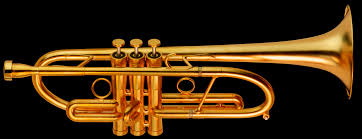
Even though I have been playing music for most of my life, I have been blind to the extremely strong connections between the music I played and music from the Baroque time period. While I was playing piano, I played mostly Bach and Beethoven. Now that I'm playing trumpet baroque is not as easily noticed in jazz, yet it is nearly always there if you look hard enough.
Talking book album- Stevie Wonder: https://www.youtube.com/watch?
Stevie Wonder album
In this whole album would you ever think there would be a style of music from the 1700 based in it? Even though these songs sound modern, jazzy, and new they are all mostly based off of baroque music chords, sounds, and meter.

Even though I have been playing music for most of my life, I have been blind to the extremely strong connections between the music I played and music from the Baroque time period. While I was playing piano, I played mostly Bach and Beethoven. Now that I'm playing trumpet baroque is not as easily noticed in jazz, yet it is nearly always there if you look hard enough.
Talking book album- Stevie Wonder: https://www.youtube.com/watch?
Stevie Wonder album
In this whole album would you ever think there would be a style of music from the 1700 based in it? Even though these songs sound modern, jazzy, and new they are all mostly based off of baroque music chords, sounds, and meter.
Subscribe to:
Posts (Atom)