Showing posts with label Projects. Show all posts

Monday, July 8, 2019

Reinventing a Successful School Project (FAME costs……)


 Introduction

I have blogged for nearly ten years. I had no idea where to begin this year’s FAME reinvention. So, I referred to the two websites that had become my path through the project. Many thanks to Scott Swaaley and Mike Strong of High Tech High for their guidance, materials, and suggestions. This blog substantially follows Scott’s Apocalypto reflection structure. To the extent that successful teaching is built upon the foundation of those who came before, FAME Reinvented was successful in large part due to Scott and Mike’s vision of what a social studies project could be.

FAME Reinvented

This past December, 7th grade parents were invited to an Exhibition in the Creative Arts Center Gallery. On display were four 32” diameter wheels containing 22 wedges that represented a total reinvention of our FAME unit. FAME, Feudal Asia, Medieval Europe, is our medieval project that asks students to dive into China, Japan, the Middle East, & England concurrently. As parents and guests listened to students describe their work, my colleague, Rob van Nood and I realized there was so much more to FAME than the exhibit. We had successfully transformed what had been, by student accounts, an incredibly successful unit into one that blended Tinkering with Social Studies. The finished wheels simply didn’t capture the struggle, the doubt, the failure, and the multitude of other realities we and the students had experienced over the preceding twenty–eight days—each of which taught us many lessons for the future. Here is a modest attempt to capture our thinking and make sense out of the entire Slack discussion that took place during the project.


What We Pitched to Students

Medieval history is highlighted by the inexorable rise of new ideas/theories/inventions/movement of people. In this project, you will examine how the ideas change the way people live, compare your thinking with historical evidence, map significant changes throughout history, then create a narrative and abstract representation of your findings. You will then exhibit your work in the CAC Gallery on December 18. Here’s the short version:  How do new ideas change the way people live?.

Rethinking FAME began last February when Rob and I sketched the entire unit out on the back of an envelope. Seriously, our early discussions revolved around how to merge Rob’s tinkering skills with my project design expertise. As a film festival, FAME had completed its third year. It was clear students were pretty successful filmmakers. Change was in the air. We mulled over using programmable devices such as Spheros, riffing off Tyler Smith’s amazing Samurai Sphero Challenge project. Eventually, we brainstormed a project that would incorporate SAMLab devices, using Blockly coding. Building off Scott Swaaley and Mike Strong’s incredible Apocalypto project, we outlined a project that involved research, design, coding, and historical content. Students would create Pie Pieces that would attach, using Velcro, of course, to wooden frames. The projects would address the question of how new ideas change the way people live. Students would create abstract metaphors to illustrate their thinking.

Over the summer, we met with SamLab’s Morton Hagen who helped us provide more project definition. A general shape began to appear. We began to document our work. We had a rough design for the project. Much like baking bread, we needed to let the ideas rest and rise. The school year began. At Back to School Night, all I could explain to parents is that kids would be doing something new and cool. That was all I knew. Oh, and they were all invited to an Exhibition in the CAC Gallery in December. I barely slept that night fretting about all the details I thought we were missing. I underestimated those details ten–fold.


Doing the Project First

Rob and I teetered at the edge of the “Can we do this?” chasm. Trusting the Apocalyto team, we knew we had to create a “sample” pie piece in order to demonstrate to both kids and us that this project was possible. We realized we needed to create a piece that would not offer an “advantage” to any group. We had to pitch the possible in order to encourage students to be creative, imaginative, and historically accurate. Rob took charge of this part of the project and soon we had a working demo piece that drew oohs and aahs from students. Our pie piece also gave us the necessary credibility with students. We had shown them pie piece parameters. In time, they would go way beyond what we had created. Neither we nor students understood how significant our example was. We would refer to it over and over as the project evolved and students asked repeatedly, “Can we see your example, again?”

Tuning

Rob and I had a wealth of experience with this age and, in particular this group. Rob had been working with the class for three years teaching various programming/tinkering skills. I have tackled projects with 7th graders for many years. We knew the creative process would be messy. Throughout FAME, I consulted colleagues every step of the way. Scaffolding is an absolute must in this type of project. My English, Math, Science, Modern Language, Arts, and PE colleagues each offered advice and counsel along the way. Their wisdom was both invaluable and always served as a reminder that projects of this magnitude radiate far beyond a single classroom or subject. As the project unfolded, Rob and I checked daily with each other, reflecting on successes, failures, and future needs. Mostly, I think we were attempting to keep one another sane in the midst of the chaos and learning that made up our daily surroundings.


Reflections

This project forced Rob and me to rethink content and programming in ways we had never considered. As our understanding evolved, we were able to have even deeper conversations with students. For example, one pie group carefully explained how the compass changed people’s life. We pushed back asking them to explain their thinking. The students came to understand the compass was a crucial tool in Silk Road trade, and that it was trade, not the compass that changed people’s life. I hadn’t encountered this level of analysis in over twenty years of social studies projects.  

Rob and I continually discussed the concept of failure in this project. Would all the pie pieces be complete by the exhibition? How would we counsel students who just couldn’t get all the pieces working? As the exhibition approached, students began looking at ways to simplify their projects. Student focus increased as projects took shape, setbacks became speed bumps to get over. When students approached us with the inevitable “it isn’t working” questions, we asked what had been attempted so far and what students thought should be done next. This led to even deeper content understanding as students puzzled through how to explain their thinking even when the programming wasn’t working or the tinkering solutions required constant fixing.


The Trials and Tribulations of Group Work

FAME is student led. Group Leaders divided kids into research groups with the promise that research groups would not be pie piece groups. Seventh graders are all too familiar with the inequalities that often arise in group work. I coach Group Leaders from the sidelines, but, in the end, I abide by their decisions, even when I might have decided differently. This empowers both leaders and groups. Groups respect their leaders who are always transparent about how decisions are made. For the pie piece groups, the four sets of Group Leaders used four different decision-making strategies to create their groups. Of the subsequent 22 groups, only three ended up requiring major adult intervention. One of those groups managed to work together, the other two did not survive their group experience.


Division of Labor in Student Groups

Similar to Apocalypto, we were concerned about how students would work together. We really didn’t want kids to become specialists. We created 3 roles, builder, designer/artist, and coder. We asked each kid to spend at least two days in each role. While we never followed up in any formal way, we observed kids trying to abide by this guideline. Yes, some kids became the coding experts, others became experts in Carvey (CNC Lathe) use, still others were the vinyl cutter experts. In the middle of the project, we asked kids to self-assess areas of expertise. They created an online knowledge base of experts that groups could consult when help was needed and neither Paul nor Rob were available.

As exhibition time neared, groups began to “finish.” Once a group was “done” kids began helping those who needed a bit more assistance. The whole project evolved from a competitive, our piece is cooler than your piece, to a hey, we can all finish, let’s go! effort. The final night prior to the exhibition was the only night Rob and I decided we needed to stay after school to allow kids more work time. The comradery that afternoon was heart-warming to observe. When we finally turned out the lights, we thought we knew the whereabouts of all 22 wedges. We had no idea….


More Than Tinkering

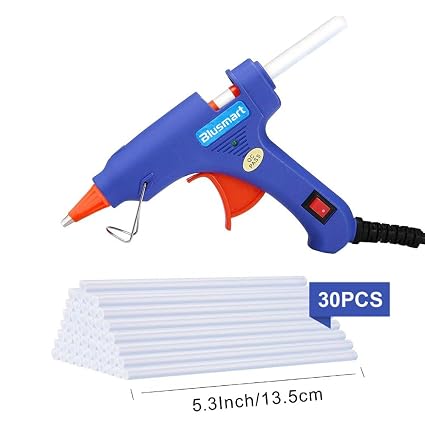
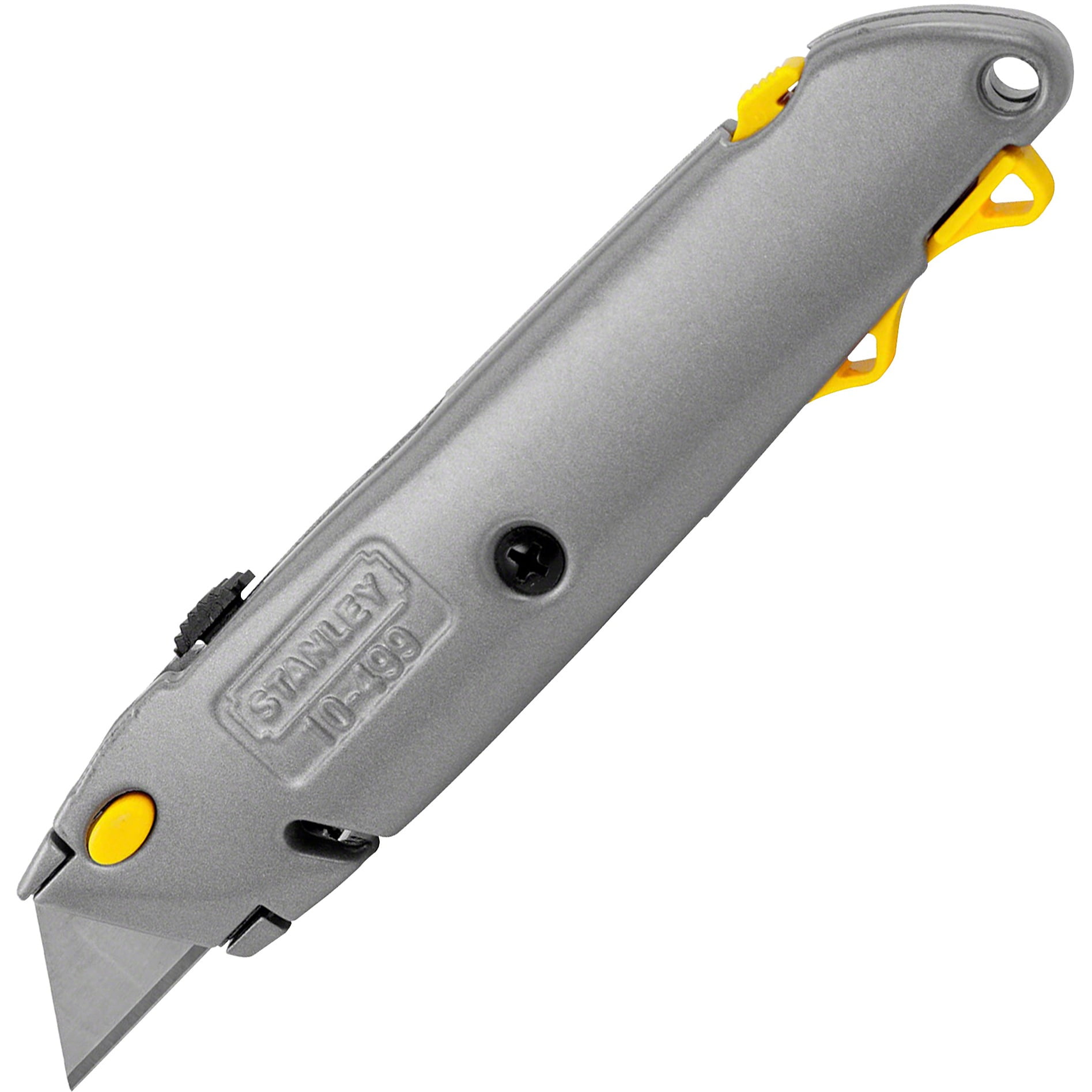
Almost as soon as students read the green sheets explaining the project, they began asking design questions. This opened up whole new avenues of thinking and tools that might be used to help fabricate the final pieces. Pop-Up books provided even more creative impetus than our one example piece. While books have their place, online guidance provided even more thought-provoking options. Rob and I thought we had the necessary infrastructure in place at the beginning of FAME. As groups began designing/creating, we struggled to keep up. Most of our school’s maker equipment, including vinyl cutter, Carvey, drills, glue guns, sandpaper, old file fasteners, utility knives, and the like found their way into student hands. Our creative space began to look like a disheveled Home Depot. Here are a few photos that tell the story far better than I can describe. Exhibition finally arrived, exactly 28 school days after we had begun our adventure. Gaggles of students gathered around their wheels to begin the nerve-wracking process of connecting all the SAMLab devices. Everything worked, with a bit of final tinkering, of course. Students explained their pie pieces to parents and other gathered adults. Kids ably explained not only the design process, they included the content of how new ideas changed the way people lived. We could not have designed a better assessment of all the skills kids acquired, tested, tried on, or experimented with over the course of FAME.


Document, Document, Document

Rob and I kept telling each other we needed to document FAME progress. We used Slack to share with an ever-increasing audience, keep one another informed, and to seek assistance from folks when we ran into technical issues. Slack channels allowed us to share, in real time, successes, failures, speed bumps, and wahoo moments. As I write now, I miss the frenzy of FAME, of kids learning, of adults learning, of both learning together. This is only the beginning of our documentation. More to come……


When Collaboration Works…

At my school, as the sole 7th grade social studies teacher, I have complete control over my curriculum. FAME was different this year in that I shared the space with Rob. He brought his tinkering talent and experimental lens into a project that, previously, had been heavy on arts and humanities. After every meeting, we each had to do lists. We embraced one another’s strengths and bridged our weaknesses. Students benefitted from conversations with both of us as we pushed them in different ways. I pushed content relentlessly while Rob helped kids create ever more elegant solutions and, perhaps more importantly, share those solutions with their peers. The final exhibited wheels were a long way from our initial conversations which was further proof that we remained flexible as kids demonstrated creativity, design revision, unflagging enthusiasm, and willingness to fail over and over again.


No Right Answers (
Full Disclosure: this paragraph has hardly been changed from Scott and Mike’s original. Rob and I arrived at the similar conclusions)

FAME never has a right answer. Each pie piece was one of a kind, as was each theory of how new ideas change the way people live. Our most common answers to student questions were things like: “seems reasonable, try it,” “I have no idea,” or “What have you already tried.” The beauty was that we didn’t know the answers – we were solving everything together. The fact that Rob and I were equally willing to experiment, fail, and try again created a culture of persistence and innovation that modeled what we hoped seventh graders would emulate. They did.

Testing Limits

FAME Reinvented tested (and maybe even exceeded) student limits on this project. Each student has fond memories of what they and their group accomplished. In the end, students bound together to create something that is receiving recognition and they are extremely proud of what they accomplished. We will know students have learned the lessons of FAME the next time they are faced with a project that seems overwhelming or a task that seems impossible. Debbie Allen said, “You want fame? Well, fame costs, and right here is where you start paying. In sweat." FAME Reinvented was worth the sweat and the cost.

Thursday, February 13, 2014

The Guillotine: A diary entry from Charles-Henri-Sanson

January 21st, 1793

      Today King Louis XVI was executed; at my hand, I should mention. I am the royal executioner. My job is to pull the murderous rope that held the blade in the wooden frame, then release it over the neck of the criminal. I've seen many bloody heads roll, but the leader of my country was definitely the most profound. The job of the royal executioner has been in my family since the beginning of the guillotine, and the execution of the first convicted felon by the blade. They call me "The Great Sanson". A name I feel like I have earned. The whooping cheers as I lower the blade fill my heart with joy. If there isn't a crowd, the execution is moved to a crowded, public space because the example of what happens to criminals isn't shown if there aren't many people to see it. The guillotine was invented as a more humane form of capital punishment than hanging. I mean if they didn't I would be out of a job.
   The King's execution was especially difficult, due to the screaming hordes. The very strange thing was that the people happy about the end of the King's reign opposed the very ideals that the guillotine symbolized. During The Storming of The Bastille, you could hear chants about releasing the prisoners. They didn't just want them released only to be executed, but to be free for crimes they weren't guilty of. Of course I'm not against the guillotine, I just think it a bit hypocritical of the hordes of people. Many of the people who attend the executions have an eery unquenchable thirst for blood shed. Even as the man causing blood to be shed daily, I don’t crave it like they do.

Source:
http://www.history.com/news/the-guillotines-first-cut
http://www.youtube.com/watch?v=lo5BBHtn4tM
https://www.mtholyoke.edu/courses/rschwart/hist255/kat_anna/guilitine.html
http://www.history.com/this-day-in-history/king-louis-xvi-executed
http://en.wikipedia.org/wiki/Charles-Henri_Sanson
https://www.mtholyoke.edu/courses/rschwart/hist151/French%20Revolution%20II/album/slides/execution_king_color.jpg
https://blogger.googleusercontent.com/img/b/R29vZ2xl/AVvXsEhb9Iqbe4UaLAE86_U9mbacS574GWUbcVuBgNwdj1A1GZmr3KcU0wTCmh_iyfp6Y5hw1AkGioSDgs1hjnPKhpr0_gdV7Q1aHnS1iQdMFw02sgc_FOQflk3JVB9EbeEyaZaB47B3UdImJAI/s1600/guillotine.gif


Thursday, January 31, 2013

PROCRASTINATING


PROCRASTINATING

By: Andrew H.


Scenario: It’s midnight and you have two hours of work left because you have been procrastinating. You did this because you found the work boring and decided to postpone it while you played video games and ate dinner. Now you have to use the time you kept for sleeping and use it for homework.
You may think that whole one side of the brain is pro procrastinating and the other is con is a bunch of bologna. Though this is true, prefrontal cortex wants to work, limbic system wants to go play MW3. And for future reference the limbic system almost always wins. This is because of the amygdala. You become fearful of the assignment and the limbic system wins!
So there is nothing stop procrastination from happening that you have control over. But to stop procrastinating you really have to realize how addicted you are. When have you procrastinated and for how long. What were the results? That is my strategy for avoiding procrastination; predicting what would happen if I did. If the consequences aren't bad, then procrastinate and have fun with it.

Monday, March 5, 2012

Child Labor During The Industrial Revolution

Child labor was very big during the industrial revolution. Many families were poor at that time, so their only option was to have their children work. 


Even though the children often died in factory accidents or got seriously injured it wasn’t a big deal to the families because they had so many children and it was unlikely that they would live very long either way. Some children would start working at the early age of six or even younger. The young children were too young to work the machines so they worked as assistants to other factory workers.


 The factories these children worked in often treated the children cruelly along with having extremely dangerous working conditions. They worked in factories such as cotton mills, coalmines, and glass factories. Children commonly worked over sixteen hours a day non stop. many people during that time were very against these laws, that there were children being allowed to work. but the owners of the factories didn't care because it made their jobs much easier. In 1833 the factory act was passed stating that the children under nine years old were not allowed to work, and children of ages 9-13 were only allowed to work 12 hours a day, even that still a lot of time, it was definitely an improvement.

Wednesday, February 22, 2012

not to hot, not to cold, jusssst right


Hello,

Im here to talk to you about how to do/pace your self on a project. When you have to get something done what do you do? probably just do it then don't know what to do, sometimes i do that . so you make a plan. what i like to do is look over my assignment, see what needs to be done before others. start easy get the hang then, then collect info/materials for the bigger/harder part. at first i felt really behind because everybody else was way ahead of me, that can be stressful! but going at your own pace is good. if you are to hurry it, you are most likely to miss something!
The hard part is the when you lose motivation, or when someone is pushing your pace a step ahead. You feel so good about your self and you are so confident that you can relax, that's when you know that its time to work Because if you dont start slowly and glide through it it will be a mad rush at the end.its easy for someone like a parent to feel as though they what to help you by pushing you to work and extend your HW time. in the half way reread the assignment, because if you miss some thing small you wont go back and the project wont count.
another thing is that if you are going tho make something spend 1/8 of the time making sure that you have your building materials and other stuff. The point is that you you don't miss a piece, one piece is one fail. another thing that helps me a lot is rewards like a snack or a break to make you want to reach out and grab it.
the most important point is to double check and be satisfied, being satisfied is when you know that your done. if your having problems being satisfied with your work just think how others would evaluate it and fix what is not right. hey, good luck on your project (if your done why are you reading my blog?)
-E.E./kyle

sources
http://goodwinatrego.wikispaces.com/file/view/Garfield-Homework%255B1%255D.jpg/180300229/Garfield-Homework%255B1%255D.jpg

http://ozgekaraoglu.edublogs.org/files/2011/02/homework-cartoon-005-2diqumi.gif

Tuesday, February 21, 2012

Stress Relief

When you are dealing with a lot of work, or in school a big project, it is very important that you get a balance of exercise and or something you enjoy, but also balance your work and do a good job on it. I know from experience that when you have lots of work it is much easier to get work done when you have done something active to get your energy out and you become more productive when you have a clear mind.
If you are ever doing work and after a while of working you realize that you are not being as productive as you were when you first started, its helpful to go for a run, play soccer, or basketball, or grab a tennis racket and hit against your garage, really any kind of exercise. When you exercise you release endorphins in your brain, that make you happy, and also when you feel sad endorphins make it so that you don’t feel the pain. Endorphins also keep people from being depressed. When you exercise on a regular bases it can put you in a better mood, also it is a good way to get rid of the days irritations and stress.
Exercise has many more benefits then just clearing your mind and making you more productive. Some of these things include, a healthier lifestyle, as most people know exercise gets you in good shape, and makes you feel better. When kids are still growing and learning it is very important that they get enough sleep. When you exercise on a regular bases, it will help with any anxiety. Which then can help with getting more sleep. Studies show that kids that get more exercise have less anxiety, stress, are healthier, and are better rested.
When you exercise your brain is releasing what is called endorphins. Endorphins are what causes “runners high.” Runners high are when your body and mind feel good, because it is doing something it enjoys (even if you may not enjoy it). Your body feels happy and more content.
I know that if I go to a sport after school and then go home and do my homework  I find that I am much more consistent and I am able to sit and do my homework and I don't have to take as many breaks or any at all. This is because you are not going from sitting in classes most of the day to going home and sitting and doing homework, you are giving your mind a break, to release built up energy. That is why you may find that when you are active you are more successful in your work, and in your every day life. What doesn't help is trying to listen to you favorite TV show while you are trying to do your work, because it could end up that you just end up watching TV instead of doing your homework, which will just end up with having more stress.


Links
http://www.mayoclinic.com/health/exercise-and-stress/SR00036  

Time Management 101


As a 7th grade student, I know how stressful and busy life can get. Most days after school, I have some commitment- whether it’s theater or dance class. Time management can be very hard, and requires a lot of responsibility. During the Revolutions Project, planning out my schedule is even harder than normal. So far, I am about 2/3 of the way done in the Revolutions Project, and recently we passed the half way point, so I am on a good track. Hopefully, I will be able to maintain my progress!
           
 The Revolutions Project has many little and big pieces to it, all of which are important. However, there are no due dates for the majority of the project, so one has to decide when to do each part. For some people, this is a walk in the park because they are naturally organized and on top of things. For others, though, this amount of responsibility is a huge struggle.
             
One reason why the Revolutions Project is hard for some people is because they are procrastinators. Procrastinators are people who think, I have plenty of time. I will get the things done eventually. The thing is, they think that until the very last day, before the project is due, and then realize that they are in big trouble. Sometimes procrastination is linked with perfectionism, which is a tendency to always want everything of theirs to be perfect, and when people are typically never satisfied with themselves. Procrastination is very common, so one should not worry if this is a common trend. If you know that you are a procrastinator, then you can make more of an effort to not get behind with work.
            
 Staying on top of work is very hard when you don’t have specific due dates for everything. It can be a big struggle because of the responsibility it requires. I believe, though, that working this independently is helpful for me.
             
Earlier in the year, we did a group project. I found myself not contributing as much as I could have because some of the people in my group were all very prepared and helpful. I kind of drafted off of the people in my group because I didn’t need to be on the top of my game- I had them. In the Revolutions project, however, I can prove to myself that I am a hard worker and don’t need other people in order to succeed. Also, the level of responsibility and independence that I have in this project is an awesome way to boost my confidence, while having a fun challenge.
             
Overall, the Revolutions Project is a good opportunity to try new things. For some people it is hard to stay on top of work and make their own schedules, and for others, it is easy. I have learned a lot about myself, and that we all procrastinate some. I also have learned that I don’t need other people to lead the way.


Sources:

http://moneysavingmom.com/wp-content/uploads/2010/10/time_management_101.jpg 


Occupy Protests

As most of you know, there was a protest called Occupy a little bit ago. Although many already know what it is, some do not. Occupy is a protest that argues about people and the economy not being equal. The first movement to have wide media coverage was Occupy Wall street. In a Occupy protest, people go to a place and protest about equal economy and people. The Occupy movement uses the slogan, "we are the 99%" which means that the top 1% of the money earners in the country are controlling the government and not paying their far share of taxes. This movement started this fall of 2011. Some of the famous Occupy protests in 2011 were the Occupy Oakland, Occupy Wall street, Occupy Portland, and manny more even outside of the United States. Occupy Oakland is a famous protest because it was a question of police brutality because of a viral video of a police officer going down a line spraying college protesters with pepper spray. Video found here:  The Occupy protests are also sometimes associated with violence because some of the protests have not been in a peaceful manner. These protests are also controversial because the protesters get out of hand, the police have to come in, and it costs the 99% more money.

 Here is another video about protesters in Portland, Oregon:  Right now I believe that the Occupy movement kind of makes since, but I think that there are many more ways to protest in much more effective ways because it seemed like the protests had a bad look and feel to it. Also in the Portland Occupy movement I think it attracted a lot of drugs and other bad things to the name of Occupy protests. I think on thing they could do is to have a organized group that could protest during the day and walk around the city streets and protest but then they would go home durring the night.

Monday, February 20, 2012

The War of the Revolutions Project


The War of the Revolutions Project.

When Paul first assigned us this project to my class, I was snowed in. I got really scared because I had sent an email to Paul asking what the homework was. His reply was “ read the green sheet”, that’s when I started to panic; because I knew that green sheets were big assignments. He told me where to find it. It was not there. As soon as that happened I called a few of my classmates and asked them where to find it. They said “ oh don’t worry about it you will get it tomorrow.” I calmed down when they said that.
             The next day, Tuesday, I was handed the green sheet. I look over it, and think oh this looks easy and fun.  During class we were told that we had to blog. This was very surprising to me, because I had never blogged before, after we were told that Paul had us draw cards from a deck, and then in random order he set dates for us to blog. After he set the dates, I was thinking, “shoot the day I have to blog is a Monday”. That’s when I realized that it was president’s day. That night I sent my blog proposal to Paul, telling him what I was going to write about in my blog. 

                                                                                   
            Right now in this Revolutions project I have about 10 out of 43 assignments finished. Which right now I am thinking “ Wow that is just pathetic”. I have almost finished the lit packet; I have four down five to go. This project has been difficult/frustrating at times because you have to organize your schedule, and tell yourself I am doing this tonight, and that tomorrow night, but you have to make sure you leave time for other subjects, so you are not slacking off, and just doing cultures.  
            Some of the easier assignments were the stained glass, the proposals, and the movie notes. Paul has now made the movie notes more difficult because he is now having us write a paragraph with a topic sentence that he gives us. Some of us don’t understand the sentence that he gives us, and we also don’t ask him what it means; I am one of them.  Another hard part of the assignment is the Teach a Class. Which I am doing with a friend of mine.
            Working with a partner can be a struggle, because you have to try to split up the work, and then your teacher is asking do you really want to work with them and do you think the work will be even. Personally I think that it is my choice to decide all of that, but my teachers can have some input in what they think. Currently I am doing my Teach a Class on Gertrude Stein. At a previous conference my teacher asked do you really want to do her? My answer would be yes of course because she was a very unique woman. The reason I think that is because she was a Lesbian, which was very risky at the time.                             

            Throughout the weeks we have had this assignment it has been a wonderful challenge, to organize, plan and work at the same time!


Work Periods

                                 
                                 Work Periods

Work periods, useful or not?  Revolutions has many individual projects that require lots of time to complete.  Personally, I think that work periods are useful as it comes closer to the due date on March 16th.  I tend to wait till the last minuet to finish my projects.  Near the beginning, when revolutions was assigned, Work periods were not necessary to complete our work. They were not needed because most of us were not sure on what to do for our presentations, or what order to finish our work in.
Now that we are approaching the due date I think that work periods are extremely helpful.  Now we are past the halfway mark and it feels like the revolutions project it sneaking up behind us.  I think that at least one work period a week is great amount of time to have in order be done with one individual project, plus the daily work that we strive to finish every night.  If we have just one work period a week we can complete many necessary parts of the revolutions project. 
Every week brings new challenges, like a new project in modern language or English to finish on top of the revolutions project.  Completing homework and big presentations from five classes can be a real struggle for me.  I learned from my past projects that I am a huge procrastinator.  With revolutions not setting a due date can be very hard for me to make sure I get all my work in on time. In one work period I can set due dates for every assignment, and then I can complete one of them every night until I have compleated them all.  That’s why work periods are completely useful.

How I Learn


The revolutions project contains many individual projects that students must assign themselves. For many people this is a very difficult, because, like me, they procrastinate. For other students this project is easy because they can just sit down and pound it out. I believe this project is a great learning experience for all students. Through out this blog post I will be sharing some things I have learned about my self and my style of learning, I also hope that this will give others idea’s and inspiration to help them finish with this project.
Firstly, I learned that I am a big procrastinator. I don’t like to do projects that seem boring, long, and hard. For example the LIT packet was a project that I thought I was going to hate, but when I got my first story done I had a change of heart. I realized that after every story completed, a small weight was lifted off my shoulders. Surprisingly I was excited to do more stories.
Secondly I learned that I need to assign myself homework and not just leave things to do in bulk. I cannot stay focused for a long time and I usually get distracted when I do my homework, especially if it is on a computer. This is because I will usually have distractions, like my phone, around my work that will make me loose my concentration. A tip that has helped me is to write little notes in my agenda like “ Do this or you cant watch modern family!” Things like that usually persuade me to get my work done knowing that there is a small award at steak.
        Lastly I realized that through the course of a big project I need to go over my work, thoroughly.  Lots of the time I will rush through work just to get it done and make careless mistakes. I have been checking over my work sense the third grade but I have just now discovered a new trick. It is to read all of my work, typed or hand written, out loud to a family member or myself. This helps me a lot and I catch errors like spelling, grammar, and awkward sentences.
        This project is an amazing project. It has really opened my eyes about how I learn. I am excited for more projects like this in the future. I have learned a lot about my learning skills and how I can motivate my self by giving myself small rewards. I hope that others benefit as much from this project as I did.

Sunday, February 19, 2012

Thomas Edison

The revolutions project revolves (no pun intended) around the industrial revolution and the hight of inventing on a large scale. Some people take the industrial revolution for being all about the invention of mass production, but some extremely important things were invented in this period of time that have nothing to do with large quantities at. Now of course if something is invented, the point is to replicate it and to sell it all over the world, but that is besides the point. One of the most prestigious inventors of this incredible age was Thomas Alva Edison. He is most widely know for inventing the lightbulb, but he had countless other breakthroughs in his lifetime (a total of 1093 patents.)

Thomas Alva Edison was born on  February 11, 1847. He grew up infatuated with science and electricity, so much in fact that his mother forced him to move downstairs because he kept exploding things all around the house. At a very young age, Thomas read the full book, A School Compendium of Natural and Experimental Philosophy. This book was what fueled most of his experiments in his later life and was such an intense book that he was tossed out of his school for asking to complicated questions that the teacher couldn't answer.  (Thomas as a boy below)

Edison had an amazing number of jobs in his youth, the most prevalent problem being that he was always inventing easier ways to do things that corrupted the system of work. He mainly worked for telegraphing companies because he was a whiz at morse code tapping in messages. Most of his patents had to do with things that improved the slow process of telegraphing.

Thomas Edison started his inventing in Newark, New Jersey which would soon become the site for his famous Menlo Park Lab. Edison's first recognizable invention was the telegraph, which was the first device that could successfully record a sound and play it back. This invention started the idea of a telephone which Edison contributed to, though he is usually not recognized for his work in that area. This is the first ever recorded sound.>

Thomas began his work on the lightbulb in his Menlo Park lab and invented the term filament. This is the inside of the lightbulb that actually emits light. Thomas Edison experimented with over 1000 different materials for the filament before finding bamboo which was the first one that actually burned for about 20 minutes. He spent many careful years crafting and perfecting his precious lightbulb and the finished product could burn for as many as 400 hours. When he finished his lightbulb work, he began to produce them and sold them to the Newark city. The people were amazed when the first lights began to color the streets and keep the city from plummeting into darkness at night.

Thomas Alva Edison died on October 18, 1931 and when his funeral was held, the whole world was dark, remembering the man who brought just a little bit more lightness to this world.

Sources:
http://en.wikipedia.org/wiki/Thomas_Edison
A book I read last year that I cannot find on the web

Genius is one percent inspiration, and ninety nine percent perspiration. ~Thomas Alva Edison

Thursday, February 16, 2012

Leap of Faith


Change; it’s inevitable. It’s hard to wrap your head around change, that this current moment will pass by, sweeping away all the excitement, anxiety, and jubilee that accompanies it. It’s easy to live within the box, restrained by the invisible, yet tangible boundaries that restrict, even constrict society and its individuals. Is it possible to live a self-fulfilling life in the box, where life is stagnant and unadventurous. Gary Ryan Blair once said, “Advancement only comes with habitually doing more than you are asked.” This reminded me of something: Change only happens when you think outside the box, when extraordinary becomes your everyday standard. To affect the world around you have to take a leap of faith, shouting “I’ll change the world today, cross over that bridge, and do something that scares me!”... Easier said than done. As people, we’re creatures of habit, and in some sense there’s an order to everything. Even if the days change, they’re all the same in a monotonic weird way. My blog post isn’t going to be an attempt to convince you to take leaps of faith or find that courage deep inside. I’m going to inspire you by writing about my favorite artist, who have already changed the art world in their own way.
Art. When I think of art, I think of painting, music and dance. But, what usually doesn’t cross my mind is its evolution. For example, the art of the 1860s is so drastically different from the art that emerged in the 1880s or 1900s, specifically in painting. It didn’t just change because some random guy with a fancy name said so; it changed itself by inspiring the younger generation to keep the revolution going.
Let’s start in the 1860s; this is when Realism begins, traits being formal lines, staged pieces, somber colors. This, the Salon loved. If you don’t read art history text books just for giggles, and trust me I don’t either, here’s the definition of the Salon: An annual art showcase in France with a jury that was very well respected; kind of like an Oscar for painters of that time. During the domination of Realism, Claude Monet came along.
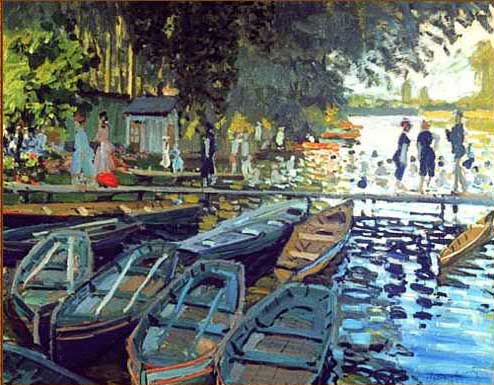
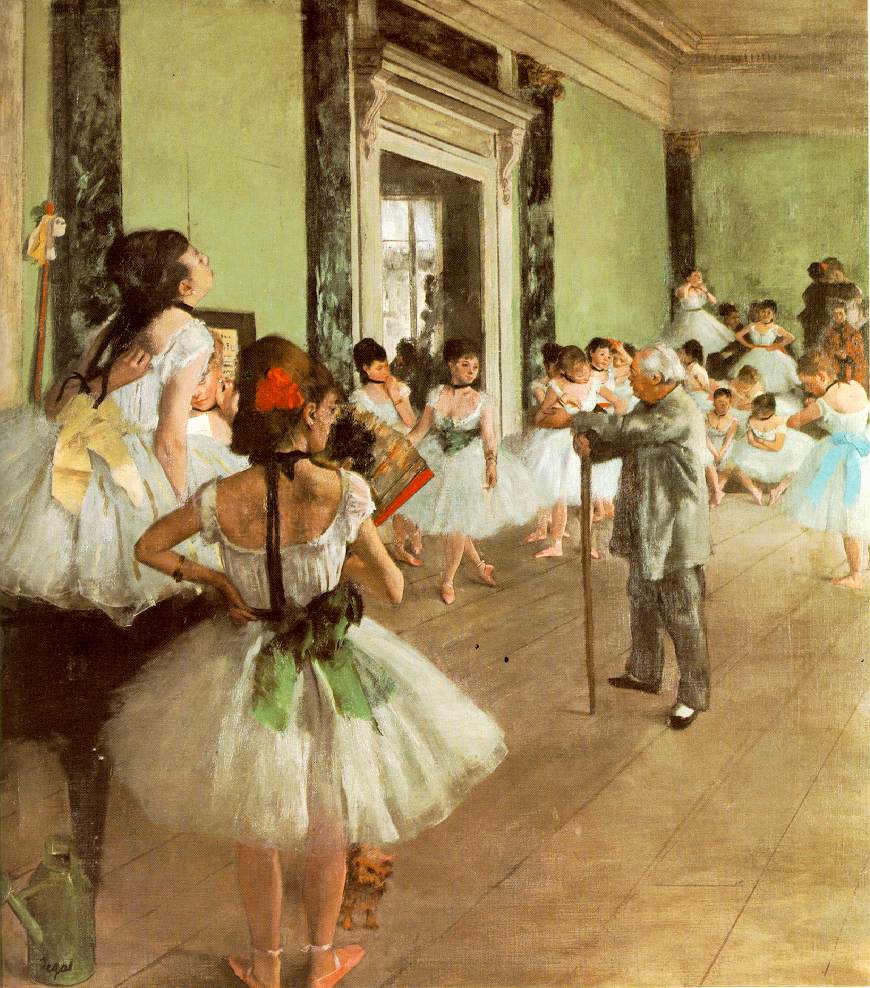
Monet wasn’t your conventional artist. He used bold bright pigments and painted outside, which in that time was unheard of.  Monet, alongside Manet, Degas, Renoir, and others alike, became friends, and abolished the Salon. They created the “Impressionist exhibition” and changed the way art was viewed. Contrary to many Realism artists, Degas painted the dancers on stage or in rehearsal instead of the audience. There’s a beauty to dancers in rehearsal, contradicting the show feel with the makeup and picture perfect artificial look, in rehearsal there’s ease, you screw up, there’s still another shot.
The concept of Impressionistic Art is that moments are fleeting and trying to capture them as fully as possible. In doing so you end up with an almost unfinished quality and undone hasty sense to it.  Another door opened with Impressionism, nudity. In the past, people just didn’t make statues of naked people. It wasn’t social custom, but the Impressionist broke that, especially Rodin. He made sculpture after sculpture of people kissing naked, naked people parts, naked men. Nothing was too crazy, kind of a Lady Gaga of his day.
Bridges: They possess the ability to link one place to another. Post-Impressionism, a bridge between Impressionism and Cubism popularized in the late 19th century, connecting two entirely separate art forms. No one is ever satisfied, and once they are, they quickly become jaded by what had satisfied them just moments earlier. Paul Cezanne was the same way. He could be classified as a later Impressionist but his works don’t have the same look of nature. Cezanne, like Monet and many others before his time, changed art. He took the basic structure of Impressionism and stripped to it’s core: “Instead of painting what you see, paint the geometric shapes that make up what you’re seeing.” The one Impressionistic trait that he did keep was bright colors, not neon but still lively. Cezanne didn’t just paint nature. He also painted still life, similar to Realism, but he went about this in his own unique way. Alongside him were Vincent Van Gogh, a crazed but incredible artist, George-Pierre Seurat, a man with a keen sense of detail that is exhibited in his art and Paul Gauguin, who saw style in Paris and then moved to Martinique, giving the world tropical Post-Impressionism.
Unlike the Impressionist, the Post-Impressionistic artist were not colleagues. They didn’t conform to one style but to many. Seurat, instead of sticking to the quick strokes of Impressionism, made minuscule strokes of color, dawning the inception of Pointillism.
Dr. Seuss once said, “Being crazy isn’t enough.” Van Gogh relates to that, he was a loony and in less than 17 years he painted over 2,100 magnificent pieces. He started painting when he was 20 and shot himself at 37, in his short life, Van Gogh painted from inside his head. He traveled all over Europe, and settled in the south of France, where the bright colors pop in his work. In his later life, Van Gogh began seeing hallucination, his life was thrown into upheaval and he experienced extreme emotional suffering. Despite his pain, Vincent had his ups, and when he was in them, he painted with perfect insanity. Vincent Van Gogh may be considered the lone “insane” painter, but then again, the Cubists can be considered pretty crazy as well.
Pablo Picasso: Everyone knows the name, lionized for his outside the box, abstract strokes, absolutely defining the Cubist time of the 1900s. His art was filled with bold tincture and broad strokes. The public however thought that his work was unrefined and distasteful.  He was one of the most influential artist of the 20th century and an artistic genius to say the least.
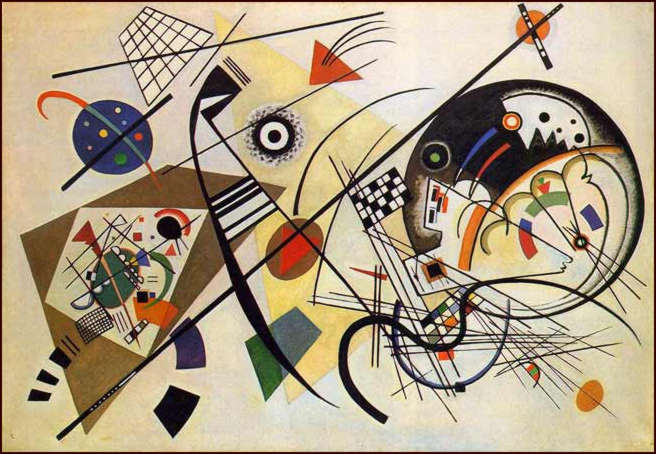
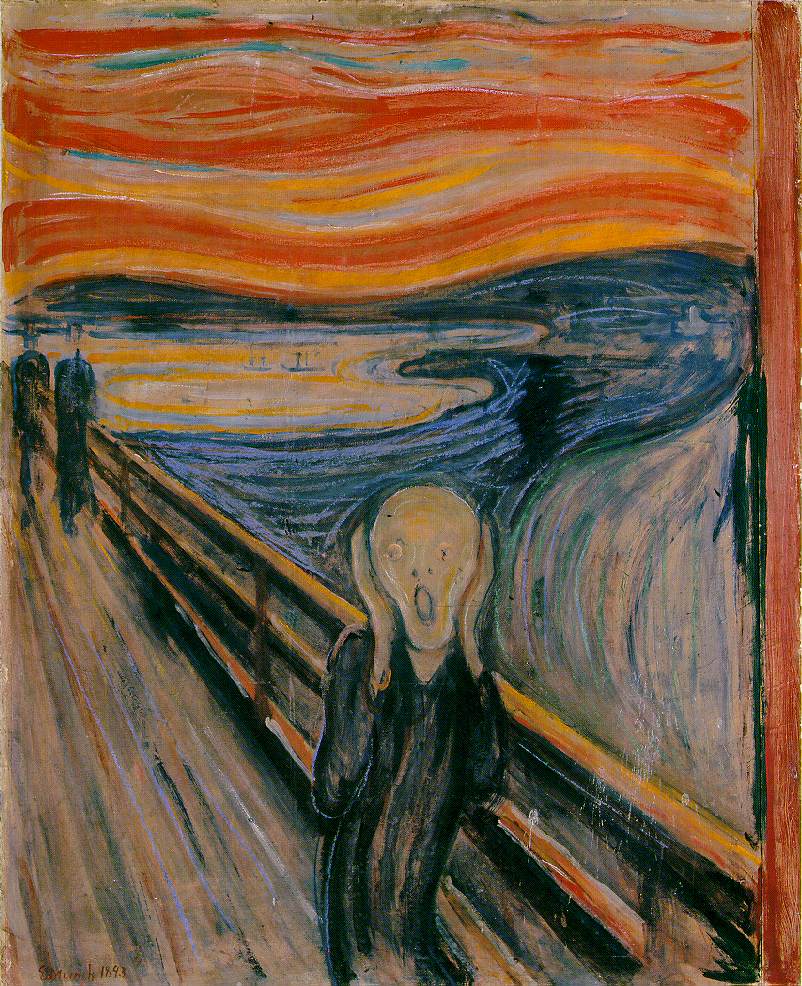
Simultaneously during this period in Germany and Russia, a game-changer emerged: Vassily Kandinsky. His art was proceeding Evard Munch, who commenced Expressionism. Over the years Kandinsky changed, he acquired more wrinkles and he became a predecessor to Abstract Expressionism. His work was simple and organized yet bizarre and free. The formation and proper culture surrounding him in the 1930’s, Kandinsky wowed the world with his brilliance.
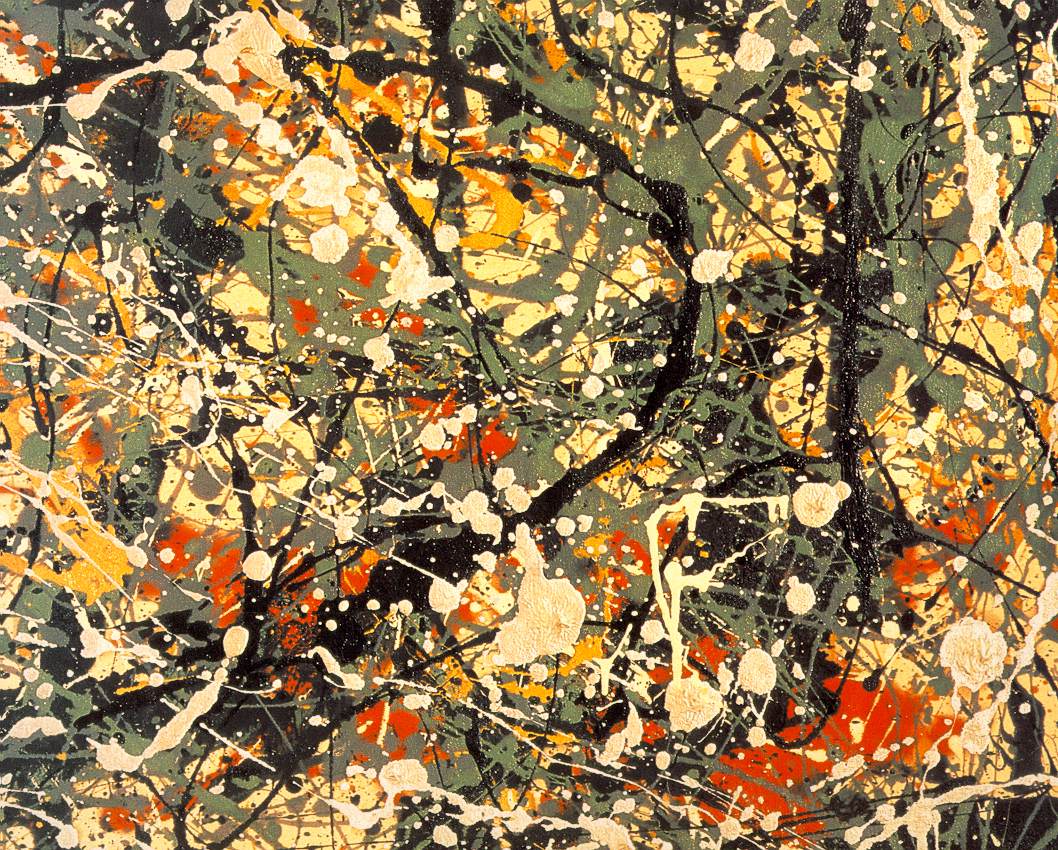
Anger. It’s powerful and crazy. Jackson Pollock was a man filled with anger. His art was all encompassing complete madness, anger as well as insanity. No one had ever just squirted paint everywhere and become so popular or successful. Hans Hoffman, Graham, Gorky and others alike were all influential artists of the Abstract Expressionism time, but not extreme boundary pushers. Robert Richenburg, though not as famous as the others, truly shaped the revolution following. Critics of 9th Street; a New York version of the Salon in the 1960’s, told him that his work wasn’t art but he didn’t make note of that and continued to produce modern works that influenced Pop Art which was the next big revolution.
Pop art, true to it’s name was very media supremacy weighed in and what artist did with that was sincerely gold. Golden Marylin by Andy Warhol, captures the media’s significance with new styles of art. Warhol made art out of Campbell’s soup labels. Roy Lichtenstein and David Hockney were also big contributors to this movement. Lichtenstein drew comics and was wildly popular because of it. Hockney painted with bold simplicity that looks so realistic, that it’s almost Impressionistic.
It’s hard to say what period we’re in now, the ever changing current is so hard to predict or even just see with the naked eye. The beauty lies within, and sometimes in hidden crevices, shunned from the light until one day, it leaps into your face with a leap of faith. Art critics, historians and others alike all have different opinions about where we stand currently, Modernism, Post-Modernism, Multi-media, Stage art, Installation art. I personally don’t want to label the time, I want the time to label itself. Choose it’s own title, identity, a way that the next generation can look to for a little inspiration for their revolution. A revolution that will change the world, again like so many others have before. Over this post, I’ve talked about the people who have inspired the art world, but not about myself. Personally, Kandinsky blows my mind, his out of the box thinking motivates me to try something new, though that fate is very scary I’m not afraid to take that challenge. To change the world you have to be extraordinary, and fully committed to think outside the box and in doing so this current moment will sweep us off our feet and into the next revelation.

Further Reading:


http://en.wikipedia.org/wiki/Abstract_expressionism
http://en.wikipedia.org/wiki/Impressionism
http://www.arthistory.net/
http://www.tate.org.uk/modern/

Sources Sited:


http://en.wikipedia.org/wiki/Abstract_expressionism
http://en.wikipedia.org/wiki/Impressionism


http://static.ddmcdn.com/gif/vincent-van-gogh-paintings-from-arles-1.jpg
http://livelearnloveleave.com/wp-content/uploads/2011/04/47.PabloPicasso-Weeping-Woman-with-Handkerchief-1937.jpg