 Harriet Jane Hanson Robinson, was born on February 8, 1825 and died on December 22, 1911. Harriet, like many other women, wanted to work. She felt an urge to work, she wanted to earn money for herself as an individual and felt it
 would be a valuable experience for her. She also knew that earning the extra money would be of great aid to her mother. In 1834 at the age of ten, Harriet began working as a doffer in the Merrimack Mill in Lowell, Massachusetts. The job of a doffer was to "doff" or replace full bobbins, or reels of thread with empty bobbins. The hours were long and exhausting. The noise of the machinery was deafeningly loud, the belabored levers and the moiling gears were the worst part. Little Harriet was obligated to work from as early as five in the morning and often until seven at night. Harriet worked six days a week and was paid $2, averaging three cents per hour. This was considered a fair amount of money to be paid, especially as women during this time period. The owners of the factories needed cheap labor . As this franchise grew the Lowell company was filled with "Mill girls," as they were called. Earning a customary wage for the first time in their lives was empowering to the Mill girls, it gave them a sense of confidence.
 Harriett arrived in Lowell as a young child. Her mother, widowed in Boston with her four young children, was barely able to feed them, let alone afford to care for herself. With an optimistic outlook as her first priority, she and her family traveled by canal to Lowell. She took a job of managing one of the boarding houses where the Mill girls resided. Compared to the conditions the family was living in while in Boston, this new life would hopefully be much more preponderant. But authentically, that "more preponderant life," never transpired the way she had orchestrated it to. An example of this,when Harriet was 11. The Merrimack Mills took a shot at saving money. In the process, they cut part of the stipend that paid to board homes. This concluded that the people working would need to pay for their rooms and board out their own wages. A vast number of the people working were very enraged when they found out. They considered this a pay cut. There for they held a strike against this act.
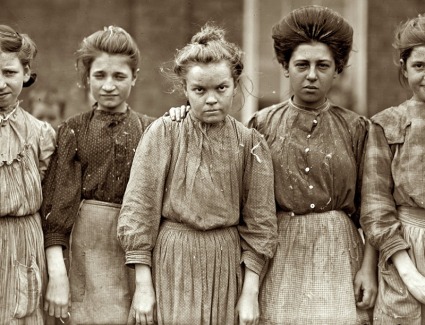
In the cessation, Harriet preached to her co workers her objections to the unfair terms that the company placed them in by having to pay for their room and board. She explained to them that they could do what they felt was right, but she would take a stand. She did in fact proceed to march and by her side were many of her fellow co- workers. The crowd of girls went to fight for what they believed in.
More than 60 years later, Harriet Jane Hanson Robinson described this as the proudest moment of her entire life. Despite the fact that the strike was not a success, she still walked away feeling proud because she fought for what she believed in and never gave up.
Nowadays, things are a lot different. I don't know if I would have ever been able to withstand that kind of work. In comparison to my day, the amount of hours that I spend at school compared to how many they spent working in the mills very different. For example, I spend on average around 7 hours at school, where as these mill girls spent close to 15 hours at work. Not only is this harder having to be there for so long, but I can guarantee ,that they didn't have a lot of free time. At school, we have lots of fun and exciting activities to participate in and even the subjects alone are engaging. There is almost always a new thing waiting for you in each class. On top of that, these kids were younger than I am and had a much more strenuous life on both their bodies and brains. I feel extremely thankful to be so privileged I couldn't possibly ask for anything better.
Work cited:
- "Harriet Hanson Robinson." Wikipedia. Wikimedia Foundation, 12 Feb. 2017. Web. 22 Feb. 2017.
- Harriet Robinson on Lowell Mill girls. Retrieved February 22, 2017, from http://courses.wcupa.edu/johnson/robinson.html
- Harriet Hanson Robinson facts (1983). In . Retrieved from http://biography.yourdictionary.com/harriet-hanson-robinson
- https://upload.wikimedia.org/wikipedia/commons/1/12/Harriet_Hanson_Robinson.png
- http://lowellmillgirls1.weebly.com/uploads/4/3/8/9/4389227/7560943.jpg?425
- http://newenglandhistoricalsociety.com/wp-content/uploads/2013/06/mill-girl.jpg

Thank you for this thoughtful, interesting, and detailed post. I had never heard the story of the "Mill Girls" and I truly appreciate you taking the time to share it. I appreciate how you offer a personal reflection on your privilege at the end of the piece. One question -- what parallels do you see between the situation of the "Mill Girls" and the working conditions of many factory workers (often female) in developing countries (many in South East Asia)? What can be done to universally protect the working conditions of women and young girls and help to ensure all girls have the chance to receive an education (sorry this is kind of a big question!)?
ReplyDeleteBe Happy,
ReplyDeleteThis is a very intriguing post, and it helped me grasp a deeper understanding of the chapter 30 story on the Mill Girls, as the story was quite confusing! I find it inspiring how easily you connected this story to privilege nowadays, primarily how these mill women lived their lives, and how they are connected women today Do you ever believe we will achieve complete equality someday, or at least something closer to it than the mess we have today?
Continue to fight for what you think is just,
-Flexi
Dear Be Happy,
ReplyDeleteI like this post because you took your time to describe the story of the Mill Girls. I like how you added a reflection at the end and say how you feel about it. You compare your life to a mill girls. Once the mill girls started working, could they quit their jobs?
-KB Blogger
Be happy,
ReplyDeleteYour post post is so detailed and sophisticated. I love how you emphasise the point that even though the mill girls failed at their task that they were anything but ashamed to have done what the did. In your post you mentioned the main character having an autobiography,would you ever consider reading it?
Dear Be Happy (:,
ReplyDeleteyour blog was very interesting because it was about one person who had experience as a doffer. Why did you choose to write about Harriet Jane Hanson Robinson? How do you think her story impacted your life today?
I can't imagine what my life would be like if I had to work at a mill! Just thinking about it, 15 hours? No thanks.
aquaSongbird
This comment has been removed by the author.
ReplyDeletehi be happy,
ReplyDeletei love the pictures that you used! i like how you told the story of what work for them was like back then. was it just the girls that had to do stuff like this or did the boys have similar jobs?
-isa
Dear Be happy (:,
ReplyDeleteWhat an interesting blog post! I wonder if they gossiped at the mill!
Thanks!
-Slughater
Hi Be Happy(: ,
ReplyDeleteThis is a very in depth and well written blog post, and an interesting topic especially. Where did you get the idea?
Palace43 :)
Be Happy! (:,
ReplyDeleteThis a great post because it tells an interesting, specific story while it informs you about life of young workers in general. Your images also illustrate your post really well. If you were Hariet at this time, do you think you would of stayed inside to work where it was safe, or taken a big risk to join the strike?
Great job!
-Wangk
Be Happy,
ReplyDeleteNice post. I thought that you did an excellent job explaining the workers felt about the working conditions in the mills and how you compared your life to the life of the mill girls. How did you find out about the workers and there life?
laxandpizzaandbmth
This comment has been removed by the author.
ReplyDeleteHello Be Happy,
ReplyDeleteThis was a great post and i really enjoyed reading it because I think the topic of women working is very interesting. I wonder if employers knew what horrible conditions women were working in?
Keep up the good blogging,
- Rainbow
Hey Be Happy,
ReplyDeleteThis was a really well written post! I loved how you didn't just state the facts, but put some of your opinion too. How could people buy enough food and live in a house with that pay?
Nice post,
Sushi is the best!