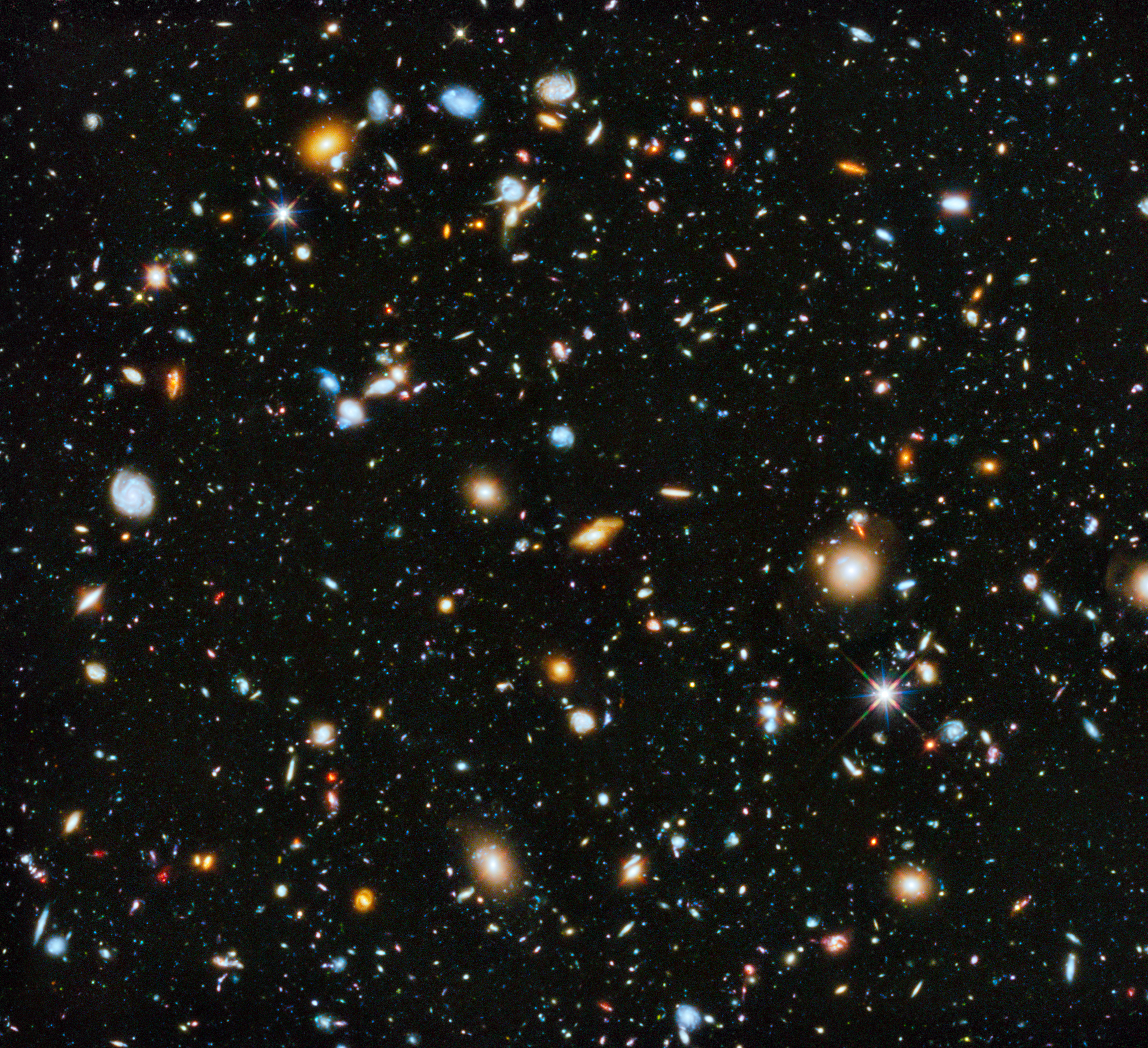
Let's take the hydrogen planet Neptune for example. Neptune is a rather strange and unique name, don't you think? Neptune is actually a Roman name for the Greek sea god Poseidon, who controlled the seas and oceans. Poseidon is the brother of the king of the gods, Zeus, whose Roman name is Jupiter. Most of the planets' names, except for Earth, are named after Roman gods, which are adapted from Greek mythology.
The constellations, too, are derived from Greek lore. The dipper-shaped constellation, Ursa Major, is a big momma bear named Callisto, and her son Arcas, her smaller counterpart, is Ursa Minor. In an attempt to save his beloved Callisto from the wrath of his wife and daughter, Zeus cast her up into the sky as a constellation of a bear, along with their son, Arcas. These constellations, which can be seen glittering brightly in the night sky, are just some of a whole plethora of constellations created and believed in by the Greeks.
In magazines such as Seventeen and J-14, horoscopes are all over the place; practically every issue of these magazines have a page that determines your future that month by your horoscope sign. These, too, are created by the Greeks, and every sign has its own special Greek myth. For example, if you are a Leo, you were born in the months of the Nemean Lion, who was killed, skinned, and worn as a cape by the infamous hero Hercules, and if you are a Scorpio, you were born in the months of the giant scorpion that stung Orion's heel. Quite delightful.
The ancient Greeks have greatly influenced how we see astronomy, and without their earlier discoveries and beliefs, we wouldn't have been able to understand space quite like we do now. To do your part to acknowledge their powerful influence on astronomy, remember that each and every single planet except Earth is called what it is today with the help of the Greeks, and that the stars that shine above you hold great symbolism and character that have built the foundation for our current understanding of space.

Thanks for the creative article. Why do you think that Greek classifications/superstitions relating to astronomy have persisted for so long especially given the technological advancement of society?
ReplyDeleteDear Grace,
DeleteI personally think that the people who named the planets and constellations wanted to leave their culture in the stars and planets, so that people of later generations would be able to appreciate and remember the Greeks' influence on astronomy.
Thank you for commenting!
-Slughater
Slughater,
ReplyDeleteThis is a truly fascinating and relatable post! Don't worry, you aren't the only one questioning the meaning of Jupiter and mixing up the planets' names! It is very satisfying to finally get the answers I have been too scared to ask in science class all these years, and for that, I thank you! Have you ever seen and identified a constellation before? I have seen Orion's Belt a few times in the night sky, and it is completely mesmerizing!
Keep up the good work, and reach for the stars and beyond,
-Flexi
Dear Flexi,
DeleteI've seen the little or the big dipper (see, I still don't know which one), and I tried pointing it out to my cat, but I don't think she understood. :)
Thank you for commenting!
-Slughater
Slughter,
ReplyDeleteOh my gosh, this is very relatable. I always wonder where the heck did they get the names of the planets to! Do you still think that they are some philosophers who still believe that constellations tell the future or mark something bad is going to happen?
Dear Lion,
DeleteYes, I do think that horoscopes and fortune telling is still around. Once, I was looking at horoscopes online, and I found one that matched my sign perfectly! It was so satisfying, and I kept looking for more! It's really fun; you should try it sometime.
Thank you for commenting!
-Slughater
Dear Slughater,
ReplyDeleteThe ancient Greeks were pretty big on astronomy. Your post was very relatable, as I have always wondered where the horoscopes originated! Why do you think the Greeks believed all these stories about the night sky?
It's funny to think that we named all the planets in our solar system after gods, but we named our own planet "dirt". So much for being important.
aquaSongbird
Dear aquaSongbird,
DeleteI'm pretty into Greek mythology, and most of their myths involve people and animals in the night sky.
Thank you for commenting!
-Slughater
Slughater,
ReplyDeleteGreat post! Your really presented this information in a funny and creative way. I didn't know that Ursa Major and Ursa Minor were named after momma bear and her son. Do you have a favorite constellation or planet because of its backstory?
-Wangk
Hey Slughater,
ReplyDeleteNice blog post! I've always been into astronomy, so it's cool to see somebody else do a blog post about it. It's also really interesting to learn about the Greek stories and myths behind the constellations. Why do you think it is that Greek legends have stuck around until now and that some people believe that constellations or other objects in the sky are omens or signs?
Thanks, XC Runner
Hi Slughater,
ReplyDeleteThis is a super creative post! I've always wondered why things are called the way they are (especially planets). I love how your information is laid out and gave the information in a clear way. Is Jupiter named after Zeus because it's the biggest planet?
-ILoveBasketaball
Hey Slughater,
ReplyDeleteThis post explained why things were named what they are. I love this post! The Greeks didn't find Neptune, so why was it named after a Greek god?
Nice post,
Sushi is the best!