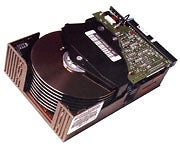


Many of you readers would agree with me that technology is really a revolution. It has changed SO much in the last few years. Take storage for example. In 1991, (26 years ago), a hard drive (Photo on the right) held a grand total of 1 GB. Nowadays, you can get a 10 TB drive (10,000 times more data can be stored) that's half the physical size of the 1GB Drive!
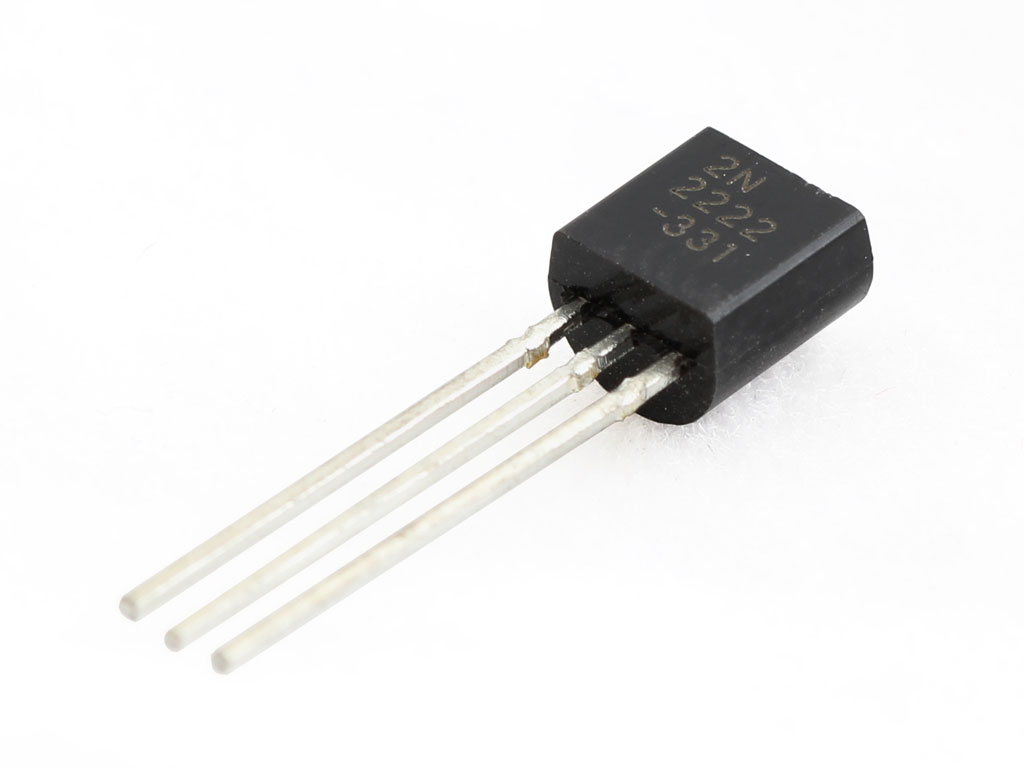
Hard drives are really not that interesting, so I have another example. 70 years ago, in 1947 the first transistor was invented. Transistors are electronic components that direct the flow of electricity. They run your computer, router, microwave, tv, pretty much anything that is more complicated than a lamp. In 1947, a transistor looked like the big clear thing on the top left. Of course one of those isn't in your microwave. The transistor on the bottom right is a modern day version of what the giant transistor was in 1947. One of the transistors on the left would cost about 25 cents today. What about transistors in computers? Is my computer filled with little black components with three wires sticking out? Well, no. The device on the right is a modern-day CPU (Central Processing Unit) In fact this is the one that is in my computer right now. This package, while larger than the single transistor on the right, this component has 1.75 Billion transistors inside! This chip costs around $300, but the number of transistors inside is insane. If you're willing to pay a little (a lot) more, $1700 to be exact, you can purchase the Intel 6950x, a CPU with a whopping 3.4 Billion transistors!
So what? Why does it matter how many odd-looking clear plastic things are in a computer? Why does it matter that they are smaller now? The answer is speed. My old computer had 1.3 Billion transistors, and while not even half a billion might not seem like a huge difference, the new machine feels so much faster. And it really is! In terms of raw speed, measured in Gigahertz (The more GHZ the better) the 0.45 transistor difference makes my current computer 145% faster than the old one. Transistor count doesn't mean everything however, my CPU beats the $1700 one by 25% in raw speed.
Now on to how the technology revolution has affected me. One example of the technology revolution is again, my computer. The 1.3 Billion transistor CPU came out in 2013. I built my current one over winter break, 6 (almost 7) years difference, and the chip is 145% faster? Thats amazing! (Both computers cost roughly the same at the time when I got them) The speed has changed so much in the span of just a few years! Another example of something that has changed a ton in the last few years, is cell phones. The first iPhone was released in 2007. Apple doesn't really like to tell anyone how fast their products are, aside from the possibly false claims about their products being "Light years ahead" (Check out Kamran's article for more on that) They really don't give me a lot of technical details that I can actually compare to their newer devices. One thing that they do give us is the storage capacity. The first iphone came in 4, 8, and 16gb versions. The newest iPhone comes in 32, 128, and 256gb options. If you don't have a reference of what a gb can actually hold, A 2 hour movie or or 345 songs is about 1.5gb.
I sure hope that technology keeps improving as fast as it has, because I sure am excited when the day comes where I can hold 10 Billion transistors in my hand.

Semiconductors in general have revolutionized the world. Transistors, like the one you show made by Bill Shockley and co. in 1947, are only one aspect. The same underlying physics drives the light emitting diode, rapidly becoming the most commonly used light source in the U.S. and much of the world.
ReplyDeleteThe first revolution though was in radio. The transistors you show (both Shockley's the the N92 3-prong packaged BJT "bipolar-junction" transistor) are really _amplifiers_. They replaced the large, delicate vacuum tube amplifiers that had been used until then, making radios and televisions much smaller, and heralding an era of personal entertainment.
The transistors in your CPU are actually of another type, called "field-effect transistors" or FETs, that weren't developed until later, but, remarkably, were conceived of long before the BJT. It wasn't until the mid 1950's that the the JFET, and it's ultimate successor the MOSFET were developed into commercial products. The companies that arose still lead the field today.
Hello,
DeleteSorry for the misinformation. I didn't know that there are different kinds of transistors! I'm just a 12 year old kid who enjoys computers. I completely forgot about LEDs you're totally right! LEDs are much more convenient and energy efficient than older filament bulbs. I've never really thought about what's inside an LED. I just remember that polarity matters. I have a few questions as well. Are vacuum tubes effectivally BJT transistors that don't last very long? (Obviously different technology inside) Also, do FETs and MOSFETs have the same base-emitter-collector pins?
Thanks!
-Nate
NWS,
ReplyDeleteWow! I can tell by your thorough research and detailed writing you are very passionate about computers! I completely agree with you that technology has advanced greatly over the past many years, as it seems there were eight different types of iPhones made in the past ten years! Have you ever considered applying for a computer focused job when the time comes? You have a gift!
Keep up the hard(drive) work,
-Flexi
Hello Flexi_Ally_Kat,
DeleteThanks for commenting! I have thought about a computer-focused job. I think it would be really cool to work for Google.
-NWS
Dear NWS,
ReplyDeleteIn this well written text about computers I can tel you enjoy computers and their hardware.I have noticed that many of our electronic devices have gotten faster and smaller. How do you feel about apples laptops and how (in my opinion) are not getting any different each time they come out with a new one?
-Bobbyblogman
Hello bobbyblogman,
DeleteI totally agree! In my opinion, Apple has been making some changes that consumers aren't liking. Take the USB-C for example. USB-C is fast, thin, and can be plugged in either way, but it hasn't been widely adopted by other companies. (Other companies aren't using it.) Apple's machines also have very slow clock speeds, not much RAM, but many people still use them! They are getting thinner, but that means that the normal USB ports can't be used!
Thanks for reading,
-NWS
-Nate
NWS,
ReplyDeleteWow this is super informative!. So much information packed into one article, yet maintaining a lot of interest to the reader. Great job!
Would you work at intel or apple or Samsung where you all process computer chips?
Nice article!
-Lion
Hey Lion,
DeleteApple actually doesn't make computer chips! It is a very common misconception that Apple seems to support. They seem to want consumers to think they make the chips, but they use Intel processors. :) I think it would be really cool to work for Intel!
-NWS
Hi NWS!
ReplyDeleteThis is awesome and I loved reading about it. I liked how you told us about your old computer and how your new computer is so much more awesome! I find it interesting that your new computer has so many new features such as the speed of it.
- JPLAX
Hey JPLAX,
DeleteI'm glad you enjoyed the article!
-nws
Dear NWS,
ReplyDeleteWhat an amazing blog post! It was really interesting to see how transistors compare over the years, but how price and raw transistor count does not necessarily equal a better computer. Talking about how you could really tell the difference between one PC, really put the whole transistor thing into context. Excellent work!
-Camy
Hi Camy,
DeleteThanks for reading! I feel that fellow technologians (I made that up) don't really stop and think about the work that Intel is doing to make transistors so small.
-NWS
Hi NWS,
ReplyDeleteThis is an excellent entry! I love the way you use the images to compare how technology has changed throughout time. I had no idea that a chip with 4 billion transistors would cost $1700! What is your opinion on the rate that technology is improving at?
Davitts
Hello Davitts,
DeleteI'm glad you enjoyed the post! I'm really happy about how technology has been improving over the years. One thing that I wish could improve faster is the Intel chips themselves. Each year Intel releases a new series of chips, and every time they perform marginally better/faster. The newest series outperforms the previous one by 7%. The changes add up, but in real life, unless you are running tests specifically to determine the speed, just by using the computer a 7% increase isn't noticeable.
-NWS
Hey NWS,
ReplyDeleteYour post was really interesting! I never knew that much about computers. How long did it take you to make your own computer?
-Star :)
Hey Star :),
DeleteThanks for reading! Building a computer really doesn't take that long! Companies to the hard work for you. I built mine in about an hour.
-NWS
Hey NWS,
ReplyDeleteThis blog was super interesting! It was cool how you described the revolution of tech. would you recommend making your own computer, and is it hard?
-Sushi is the best!
Hello Sushi Is the best,
DeleteThanks! I'm glad you enjoyed it! I would totally recommend building your own computer! It may seem hard at first, but if you do a little research it really isn't! Sadly, laptops are very hard if not impossible to build because of the lack of parts available. If you want a desktop, then building one can save you a lot of money. Just Google how to build a computer. :)
-NWS
Hey NWS,
ReplyDeleteI thought this post was really interesting! I love how you share what the technology revolution is and how it affected your life. What do you think will happen in the future regarding speed of computers?
-ILoveBasketball
Hello I love basketball 123,
DeleteThanks! I'm glad you liked it. I think that computers will always get faster and faster. Or at least I hope so!
-NWS
Dear NWS,
ReplyDeletereading your blog post just makes me want to build a PC and hold 1.5 billion transistors in my hand! I love the actual picture comparison at the top as well. I wondered: how many transistors do you think are in the most advanced computer today? I personally don't know much about technology but reading this really put a perspective.
-JT
Hey JT,
DeleteThanks! As far as I know, 3.4 billion is the max. Of course you can put more than one processor in a computer, the most that i've seen is 4.
-NWS
Hey NWS,
ReplyDeleteReally cool post, I loved how engaging this was it really kept me reading. How hard was it to make your own computer.
-Climber
Dear NWS,
ReplyDeleteI really liked reading your blog post, I do not understand how you know so much about this but it is cool do not get me wrong. I was wondering what sparked your interest in this subject?
Sincerely,
LoveAndGelato