Wednesday, February 18, 2015

Moving

Moving


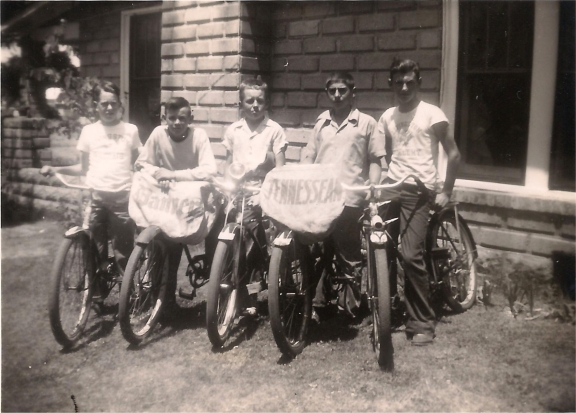
Jobs and new opportunities often lead to moving and change. I should know because for half my life I have lived in 3 states and moved 4 times. Having to adjust to the new environment and culture around me.
In 1820 the industrial revolution started and millions of people moved to big cities like Chicago or New York to seek new jobs and opportunities to support their family.

Tuesday, February 17, 2015

The Wright Brothers

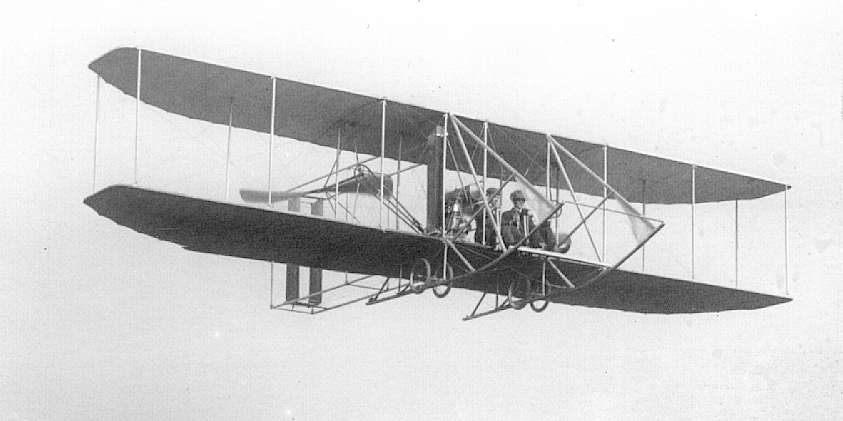
The Wright Brothers had invented the first successful plane on December 17, 1903. An invention that was invented back in the 1900s has had greatly impacted our society today. Today, it has became a norm in our culture to just buy a plane ticket and take off to our destination. Sounds pretty simple....but it wasn't always like this. Before the airplane was invented transportation would take many hours to sometimes even days. People than had to travel by car, ship or train. If someone back then were to travel from Los Angeles to New York city that would approximately be 2400 miles. To travel by car it could easily take about 2-3 days. They would make many stops for gasoline and stay in a hotel or maybe even two before they could finally reach their destination. For a smaller situation like a car ride that would take 6 hours would take approximately only 1 hour to travel by plane. We rely on airplanes to take us where we want and when we want in a short period of time. These are just a few of many examples of how the airplane has impacted this world.

The Airplane allows us to travel for business trips, to visit relatives, and even just go on a nice peaceful vacation with family and friends. Many people including myself have had many complaints on how sometimes it can be a pain to sit in a plane for 6 hours straight but really in reality we don’t realize how lucky we are that we can sit in a plane and reach our destination within hours. During the industrial revolution it would take twice or sometimes even triple the amount of time. So, we can’t be the ones complaining! The airplane has positively affected us and is one of the reasons we can do some of the great things that we do today.
It is really easy for me to make a connection about this topic to my own life. Personally, I love to travel and visit new places. I enjoy visiting new places, and exploring many different things. I have got the great opportunity to fly to many great cities in the US and once even fly out of the country! I have visited San Jose and San Francisco in California a couple of times. Also I have once visited Seattle and even Toronto, Canada! Honestly, I find it very cool to visit new places, learn about different cultures, and meet new people!! Traveling is something for sure that I am very passionate about, and as I get older I really hope to travel to some of the greatest places that this world has to offer.

The Anglo-Zulu War

The Anglo-Zulu War


In the year of 1879, the British empire invaded the Zulu kingdom. They fought against Boers and Zulus. The British wanted to annex the Zulu kingdom but the Zulu leader, Cetshwayo kaMpande, had other ideas. The British numbered about 16,000 the first time they invaded and 25,000 the second time.The Zulus had about 35,000 soldiers. One day, a man named Sir Henry Bartle Frere presented the Zulus with an ultimatum, which resulted in war.

Glass

Cavemen used obsidian glass to make weapons and decorative objects. Manufacturing glass goes all the way back to Eastern Mesopotamia and Egypt in 3000 BC. Fragments of the oldest glass vases were found in Mesopotamia in the 16th century BC.
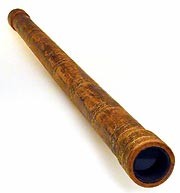
    In the beginning glass making took time and was costly. It was a luxury item only a few people could afford. The discovery of a new technique of making glass called “glass blowing” revolutionized glass making. Glass blowing is when you inflate molten glass with the help of a tube called a “blowpipe”. In its molten state glass is squishy and bendable so it can be manipulated into the desired shape. The molten glass is inflated in a bubble by being blown into by the blowpipe which is being controlled by a glassblower. When this method was first invented clay blowpipes were used. Today glass blowing is widely used. Although its main purpose is with decorative items.

The Telescope


The Telescope


The first recorded and working telescope was made in 1608. This is relatively new technology, and has increased rapidly since then. The first telescope is credited to a man named Hans Lippershey, although there is some speculation about this. Hans Lippershey made a refracting telescope, one of the earlier kinds. A refracting telescope uses a lens as the objective to form the image. This was the first kind of practical telescope.

In 1609, Galileo came out with the next new kind of telescope. It was based off the one Lippershey had made, but had about 3x magnification. Galileo later went on to make a 30x one. This is sort of how science works, someone making an invention, and then someone else taking their idea and making it better. Johannes Kepler did just this, in 1611, when he made a telescope that used a convex lens, unlike Galileo’s concave one.
Into modern times, the Hubble telescope was launched in 1990. It has a 2.4 meter mirror, and can see in the near infrared, near ultraviolet, and visible spectrum. It is still in use today, capturing more and more images. The Hubble space telescope was named after Edwin Hubble.

The age old wanting is for knowledge. What’s out there? How far can we go into the universe? Curiosity has ebbed its way into how we think and perceive the world, and the telescope is helping us understand a few things. There is always more to be discovered, always more missions to send to space, and always more things to see.


Works Cited:
"Hubble Space Telescope." Wikipedia. Wikimedia Foundation, n.d. Web. 16 Feb. 2015. <http://en.wikipedia.org/wiki/Hubble_Space_Telescope>.
"History of the Telescope." Wikipedia. Wikimedia Foundation, n.d. Web. 16 Feb. 2015. <http://en.wikipedia.org/wiki/History_of_the_telescope>.

"Telescope." Wikipedia. Wikimedia Foundation, n.d. Web. 16 Feb. 2015. <http://en.wikipedia.org/wiki/Telescope>.


Monday, February 16, 2015

The Battle of Austerlitz/Battle of Three Emperors
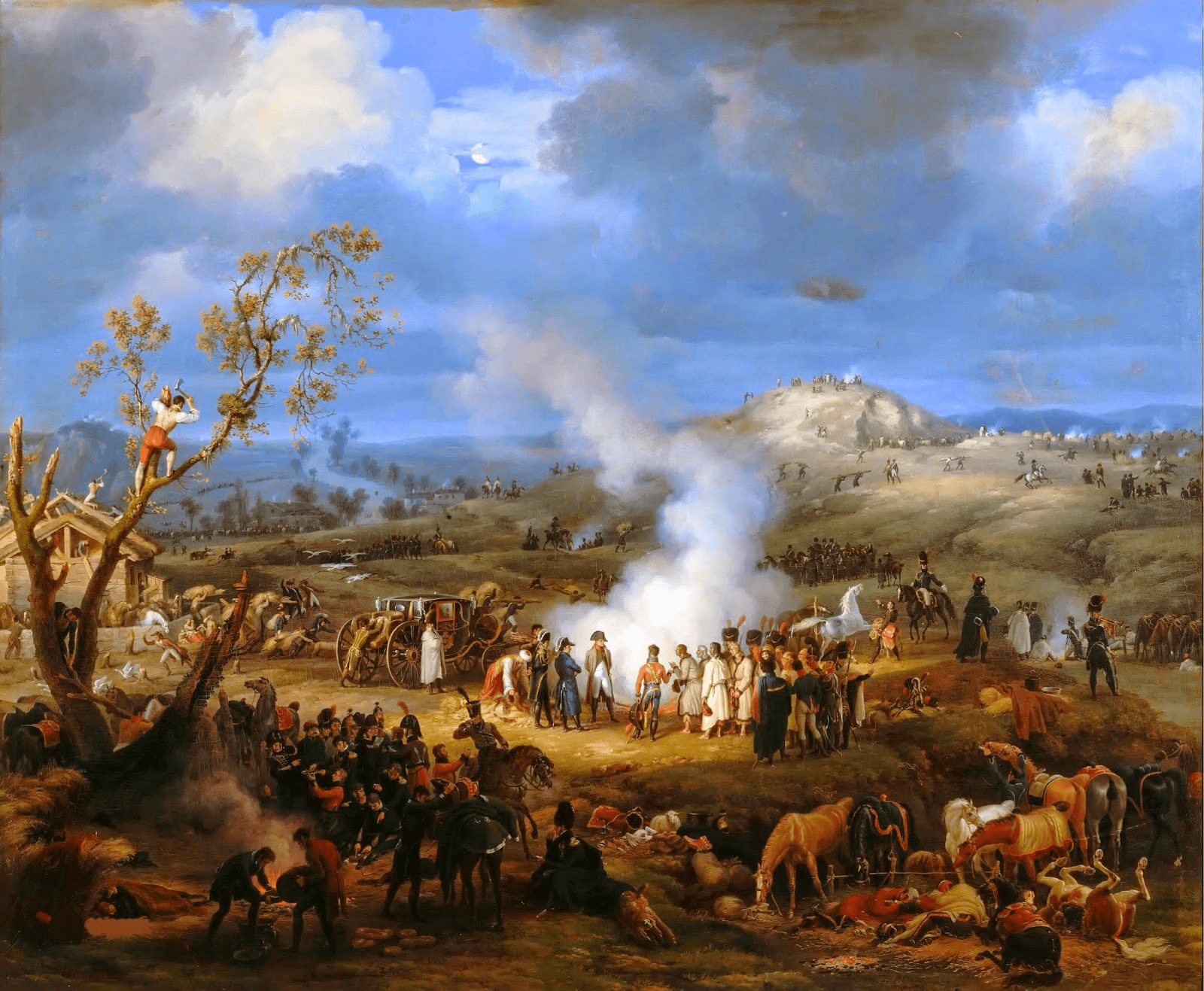
On December 2nd, 1805 near a small town in Austrian Empire called Austerlitz (modern-day Slavkov u Brna in the Czech Republic) a thick fog allowed Napoleon’s army to get in position. When the fog rolled away the Russians saw the French leaving and 25,000 Russian grenadier charged in pursuit.  Napoleon was hoping the Russians would pursue his men. When the Russians were close Napoleon unleashed his hidden troops from behind the hills. The Russians split themselves into two groups making them more vulnerable as their main group was surrounded by French forces.

Before (Beginning of the War)


After (Napoleon’s Move)

The Russian/Austrian army had 85,000 men and lost 36,000.  Napoleon had 73,000 soldiers at the beginning of the battle and lost 9000.Napoleon’s maneuver is called one of the most brilliant maneuvers in history.


http://en.wikipedia.org/wiki/Battle_of_Austerlitz

ADHD is a Pain in the Brain


The human brain. The most complex organ in the body, consisting of many billions of neurons, each sending and receiving tiny messages via a complex web of neural pathways. These little signals travel throughout the entire body, constantly dictating the movement of every organ and muscle. Our brains also control our constant intake and output of knowledge.

Sunday, February 15, 2015

What happened prior to the American Revolution?

Two powerful events that happened prior to the American revolution are the Boston Massacre, and the Boston tea party. The Boston Massacre happened first. During the boston Massacre, five unarmed colonists were killed by the British military. This was a huge deal because there is no reason for for the British, who had the most powerful army in the world at the time, to kill unarmed civilians. This was considered considered one of the most important events that turned colonial sentiment against King George III and British Parliamentary authority.  
The boston tea party happened only a few years later. It all started with the tea act. In the tea act, the british made it so you can only buy british tea, which was taxed. Colonists weren’t very happy, because they didn’t agree with taxation. They wanted to stop all taxation. That started the boston tea party. In the Boston Tea Party Colonists, who were disguised as native Americans attacked 3 ships and destroyed all of the tea. It took nearly three hours for more than colonists to empty the tea into Boston Harbor. The chests held more than 90,000 lbs. (45 tons) of tea, which would cost nearly $1,000,000 dollars today. Both these events were significant to the American revolution, because showed that the relationship between Britain and its colonies was disappearing.


Sources:

Alfred Nobel and Dynamite


          Alfred Nobel was a very peaceful inventor and never intended for his inventions to be used in war. He is the inventor of dynamite, or as some people call it TnT. Alfred Nobel grew up in Sweden and was one of the many sons of Immanuel Nobel who was also an inventor. He used to build bridges and buildings in Sweden. Mining back then was a very gruesome task and took very long amounts of time to mine a mountain or metals. With his understanding of Nitroglycerin and silica, he mixed the two to create a paste. The paste is called dynamite.
          After he invented this tool, he presented it to the mining corporations, which loved it and started using it in mining. Dynamite was originally used to blast rock. Dynamite back then brought a lot bigger boom than gunpowder or any other explosive device used. Dynamite was a huge invention and was used solely in mining. 

          Like lots of inventions created to benefit society, the military became involved. The military took this invention and started using its formula to create bombs and use dynamite as a weapon. This was not what Alfred had in mind. He just wanted dynamite to be used as a mining TOOL, not a war weapon. Alfred felt very guilty and wanted to make up for this catastrophe.
          That's how the Nobel Peace Prize was born. When Alfred died on December 10th, 1896 it stated in his will to put most of his wealth to create 5 prizes. One of them was the peace prize. Many people (including myself) believe that he created the Nobel Peace prize because he felt very guilty for creating a device used to kill many people. The Nobel Peace prize is now the largest and most respected peace prize in the world.
          Alfred Nobel was an amazing intellectual person who believed in peace. He affects my life a lot and his ways of thinking represent mine too. Today in the world people obsess about war, who has the most power, and money. I believe that people should focus more towards peace, arts, and science. In the United States, the military gets involved in too many inventions that were designed NOT for the military, but for whatever they were created for. Sometimes they may be designed for mining, medical research, or delivery services but the military can always find a way to attach a gun and some missiles and use it to kill thousands of people. Some examples include dynamite, nuclear power, and gunpowder.
           It is very unfortunate how the military changes peaceful inventions and always find a way to kill people with it. Alfred Nobel was a very nobel man who believed in peace and I wish there were more people similar to him and not like some of the many horrible Americans in the world who only care about war, oil, and money. There is hope for peace in the world but I think humans are centuries behind such an out there idea like that.

Friday, February 13, 2015

Age Of Enlightenment

Will [Censored]
Paul Monheimer
Cultures 7
Febuary 10, 2015

Age of Enlightenment
         The Age of Enlightenment was a time in from 1650-1780 when people began to emphasize reason, analysis, and individualism rather than authority. In this period people began to work together and abandon the old teachings, coming up with new ideas.
Before this, most people who had new ideas were often exploited, and sometimes even imprisoned. With Philosophers Francis Bacon, Rene Descartes, and Isaac Newton in the lead, western math, science, and astronomy was never the same.
       The Enlightenment gave way to plenty of books, essays, medicines, ideas, ways of doing science, and even wars! Yes, the American Revolution and the French Revolution were all formulated from ideas coming from the age of enlightenment. The Enlightenment affected the way the people think today because it showed that people should think of their own ideas, not only work within the pre-made systems. Here's a pretty cool link to a great resource if you want to continue reading more http://www.history.com/topics/enlightenment.
Sources: http://www.history.com/topics/enlightenment.
http://en.wikipedia.org/wiki/Age_of_Enlightenment
Image Link: http://upload.wikimedia.org/wikipedia/commons/5/5b/Oer-Weimarer_Musenhof.jpg
       

From Ball Gowns to Yoga Pants

Are you a twelve year old girl? What do you think of when you think about clothing? Probably leggings and Birkenstocks, or crop tops and high waisted jeans. Now think of what a twelve year old girl would wear in 1904. That’s right, the ball gowns, the intricate laces, and the ‘voluminous’ sleeves. Clothing has changed so much in 111 years, that if we went out in public wearing one of those fancy ball gowns, well, let’s just say everyone we saw would be a little confused.

Another important change is where we get our clothes. You used to have to sew each piece by hand or get them made at a tailor, “shopping” was a new concept, and hadn’t been fully developed yet. In modern times, you can say “Hey mom will you drop me off at the mall?” and spend 400 dollars at Abercrombie & Fitch. Or you can order things online and have them delivered to your house, and you don’t even have to stand up! Again, a concept that is completely new since 1904.

So let’s say you are a twelve year old girl in 2015, and you wear the ‘trending’ clothes of our time. There are plenty of differences between what you’re wearing now and what you would have worn in 1904. For example, now it is very common for girls to wear pants. In 1904, that was unheard of and very unusual. In current times a common outfit a 7th grade girl would wear to school would be yoga pants and a t-shirt, not all the layers and ruffles that once were common.

I asked some of my friends if they would go out in public in a ball gown. Here are some of my favorite responses:
“No! Everyone would think I was a whacko!” - Emma
“I would look like a zombie princess.” - Catie
“NO! I would look like I should be in a mental institution!! Who the hell wears ball gowns nowadays?” - Jane
“Yasss!! I’m an individual and I have my own style *flips hair* I could twirl down the street!”  - Sophie

I think that these responses are true for most girls that I know. Our society’s norm has changed so that we are much more informal. I also think that we have become less strict with our clothing rules, because it is ok for girls to wear pants, or not wear a billowing skirt for a formal event. I think that these developments are mostly positive, and it allows people to dress freely and true to their personality. In 1904, if you were a tomboy, you still had to wear formal dresses to be accepted. In 2015 you will be accepted no matter what you wear, and I think that’s very important in a diverse nation like ours.
Thursday, February 12, 2015

A Soldier's Best Friend, Then and Now


General_Charles_Lee-with-pomeranian-220x300.jpg


By: Emma

I have always loved dogs, but while I have a dog just for companionship hundreds of soldiers around the world today use dogs not just as loyal friends, but also as brave animals that fight in war. Right now there are many dogs that fight in wars all around the world, but it turns out that more than 200 years ago, in the American Revolution, dogs played a huge part in that war as well. A lot has changed since the American Revolution, but It seems that the loyalty and bravery of dogs in battle have not.
The Revolutionary War started in 1775 and ended in 1783. When most people think of the Revolutionary War they think of battles like Valley Forge, The Boston Tea Party, and brave determined soldiers. I think that everyone should start remembering and honoring the brave dogs that fought tirelessly and selflessly  by the side of soldiers in the Revolutionary War. One of the first soldiers to use dogs in the Revolutionary War was  General George Washington. You may be surprised to learn that Washington was a prolific dog owner. Our first president and commander of the Revolutionaries was a lifelong dog owner, so when Washington went off to fight the Revolutionary War he brought along his beloved hound Sweetlips. George Washington was not the only one who was accompanied by his dog in war, many of Washington’s men also had dogs. Dogs were a very important part of a soldier’s life as they provided companionship in battle, protection against wild animals, and they could also help to hunt food.
The Continental Army was not the only army with dogs. Across the battlefield from the Revolutionaries the British Army also had dogs. At the Siege of Yorktown their was a large British Bulldog that chased the British cannonballs fired over the American trenches. One Soldier on the Continental army wrote “Our officers wished to catch him and oblige him to carry a message from them into the town to his masters, but he looked too formidable for any of us to encounter.” The bulldog might have done it’s job in scaring the rebels but eventually The Americans were victorious at Yorktown and ended the war.
Nowadays, dogs continue to be used  in wars. These war dogs have roles in the army that are nearly are varied as their ancestors that fought in the Revolutionary War, but these dogs usually aren’t used in front-line formations. In 2011, 600 U.S. Military dogs were actively participating in the conflicts in Iraq and Afghanistan. Because these war dogs are not used on the front lines, the army has found other uses for them. Some of these dogs are used for law enforcement; they can inspect baggage, track and capture suspects, and viciously protect their handler. Other dogs are trained to detect drugs even if they are heavily concealed. Military dogs will continue to serve as trackers, search and rescue, scouts, and inspectors. After their time in the war many retired working dogs are often adopted as pets or therapy dogs.
I am in awe of the bravery and tenacity of these amazing military dogs. Dogs played a big part both in the Revolutionary War and wars today in Afghanistan and Iraq. That said,  I do not necessarily believe that war is the answer to conflict. Whenever possible I think that we should try to solve our problems through negotiation rather than violence. Although these war dogs are incredibly heroic in my eyes, I think we need to take these dogs and their soldiers out of the war and let them live peaceful happy lives. We owe that to them.  

All For One, One For All!

       I am sure most of you have read or heard the story of The Three Musketeers by Alexandre Dumas, If not I will give you a brief description of the story (don't worry no spoilers) and give you some insight into where it came from.

First I would like to explain the story. The Three Musketeers was set in the 1700s and was based on a young man named d’Artagnan. He leaves his home and heads toward Paris where he hoped to join The Musketeers Of The Guard. Young d'Artagnan did not actually become part of the guard but his three closest friends did join, Athos, Porthos, and Aramis. They lived by the motto "all for one, one for all!" which came from d'Artagnan. They went on great adventures together across France and all throughout the French Revolution. They were the “dream team” of the French Revolution.
d'Artagnan runs into the Three Musketeers on his way to paris, he offends them and they challenge him to a duel to prove their superiority and excellence. In the first duel d'Artagnan starts to fight Athos when the "police" of the town come to arrest them for illegal dueling. They soon get into a fight and although they are out numbered they still win. After King Louis XIII hears of this battle and that d'Artagnan seriously injured one of his best fighters he enlists him in the King's Guards. This was just the beginning of their journeys ahead. This group goes on to do many great things during the French Revolution.
          This story was and still is a very popular and well known tale from the French Revolution. I sincerely recommend it. It is filled with action, tragedy, and love good for any reader.
Image result for three musketeers

Wikipedia. Wikimedia Foundation, n.d. Web. 13 Feb. 2015.