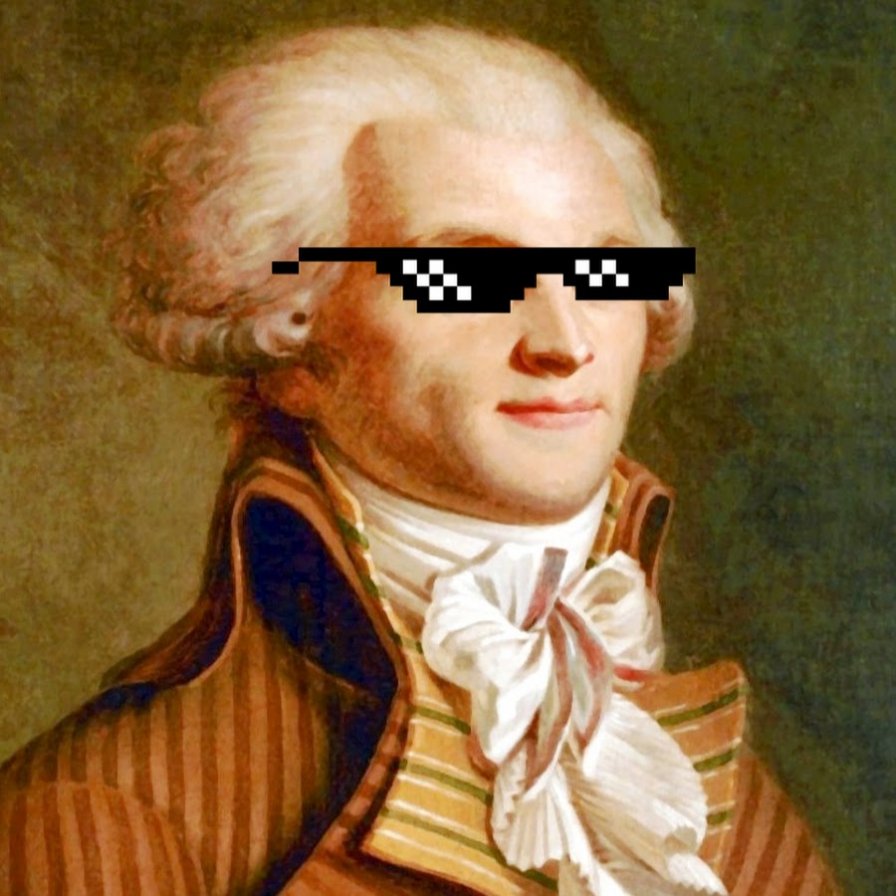
May 5, 1789, would be the day that not only changed his life but every French person alive and to comb. The people of France heard that King Louie the 16th and his spouse Queen Marie Antoinette did not care about their people. There is a popular belief that Marie said (when describing the poor people of France’s hunger) “let them eat cake.” While these exact words were not stated, she implied that she simply did not care whether the common folk of France starved, or not. Upon hearing this, a herd of French commoners, (who were furious), came swarming down to the palace of Versailles. The heard started throwing bricks at the palace. The herd then captured all the nobles and monarchs of France. This was known as the Reign Of Terror.
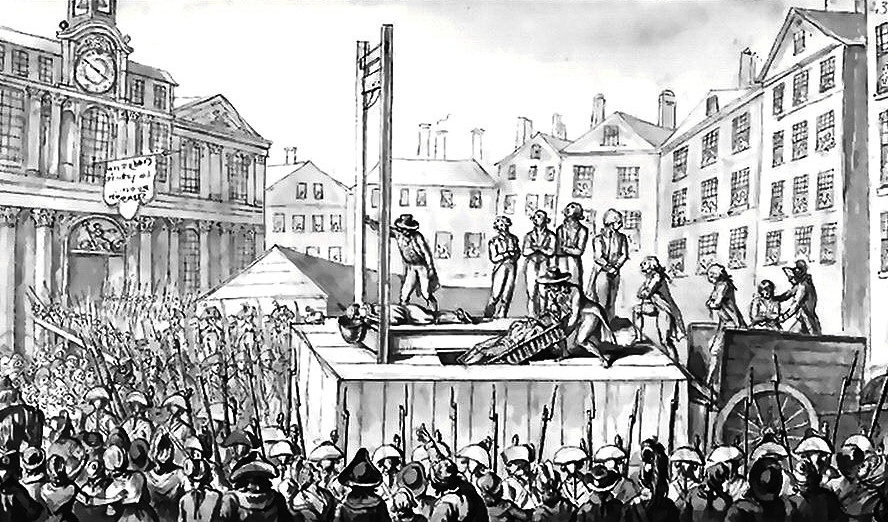
Robespierre had heard of the invention of the guillotine. A weapon that decapitated the victim, using a rope and a large blade. Robespierre decided to use it to kill all the nobles and monarchs.
After the downfall of the monarchy in August 1792, Robespierre was elected the first deputy for Paris to the National Convention. The convention abolished the monarchy, declared France a republic and put the king on trial for treason. All these measures were strongly supported by Robespierre. This set of laws, Among other things, states that all leaders of France must be elected under a fair election. The king was executed in January 1793.
In May 1794, Robespierre insisted that the National Convention create an official religion for France - the cult of the Supreme Being. This was based on the thinking of the philosopher Jean-Jacques Rousseau of whom Robespierre new well.
The intensification of the 'Reign of Terror' and Robespierre's autocracy made him increasingly unpopular. French military successes served to undermine the justification for such ruthlessness and a conspiracy was formed to overthrow Robespierre. On July 27, 1794, Robespierre was arrested after a struggle. The following day Robespierre, wounded from a bullet to the jaw, and twenty-one of his closest supporters were executed at the guillotine.
While Robespierre was ruthless, risky, and corrupt, you can't argue that Maximilien Robespierre is the reason for the modern day Republic of France. His accomplishments will live throughout time.

Hi JDbills99,
ReplyDeleteI really liked how you used a lot of detail to tell the story about the rise and fall of Robespierre. What was your favorite part about Robespierre's story? also, Who was the king of France who got executed in January 1793 for treason
Sincerely, Theawesomeperson
Dear Theawesomeperson,
DeleteThank you for those words.
The king of France who was executed was, Louis the 16th.
Dear JDbills99,
ReplyDeleteI read your blog and I enjoy your careful explanation of Robespierre and his accomplishments. I was wondering if he effected any other rebellions in other countries?
Sincerely,
NWfury
Dear JDbills99,
ReplyDeleteI have never been one to know a lot about history, and to be fair I had not given it that much though until the start of this school year. you managed to make a very educational subject equally, if not more, interesting blog post. How do you want to make a difference in our world when you are a working, tax paying adult?
sincerely, Bubble Tea
Dear JDbills99,
ReplyDeleteI really like the topic you chose. I thought the writing was great. Was Robespierre a hero or a villain?
bilbo the cat
Dear bilbo the cat,
DeleteRobespierre was more of an anti-hero.
By that I mean that he used very evil methods, to accomplish great things.
Dear JDbills99,
ReplyDeleteI thought this was a really nice topic to write about, I liked the story and it was well written. Well done :) I learned a lot from this because I'm not good with history. What inspired you to write this?
Forgot to add my name...sorry.
DeleteKeep up the good work,
PortugueseGrape
JDbills99,
ReplyDeleteThis was an interesting topic and fit in well with revolutions. Well written and full of information. Why did you want to write about this?
MM_Z
Hi ItalianStalian,
ReplyDeleteFirst of all the top picture is very amazing. You included a lot of good information that made this very intersting to read. Where did you read about him?
elephantsandslothsarecool
Dear elephantsandslothsarecool,
DeleteThank you for your words on my blog.
I learned most of the knowledge here from history vault and the New York Times.
-ItalianStallian
hi italianstalian
ReplyDeletei really liked your post and it was very educational and had an interesting topic. you had great information that really supported your post, how did you research and think of this topic?
-gracie :)
Dear gracie,
DeleteThank you for your words on my blog.
I learned most of the knowledge here from history vault and the New York Times.
-ItalianStallian
Hi ItalianStalion,
ReplyDeleteThis was a really informational piece told an interesting story. What inspired you to write this? Are there any situtations that you think realate to this (though maybe not exactly) in real life? Do you think there is a lesson in this story somewhere? Good job!
Smiles,
Cappuccino
Dear ItalianStallion
ReplyDeleteThis was a very informational blog post and I like how you organized it in a manner that was easy to read. I also enjoyed reading it in your own words rather than if I were to look it up on the internet. How and where did you learn so much information of Robespierre?
-Teeny Tiny Fury
This comment has been removed by the author.
DeleteDear Teeny Tiny Fury,
DeleteThank you for your words on my blog.
I learned most of the knowledge here from history vault and the New York Times.
-ItalianStallian
Dear Italicization,
ReplyDeleteI really like how much information you put into your blog post, and how you brushed on multiple different topics. My question is, in you eyes was Robespierre a hero or a villain?
Dear Pinksheep,
DeleteRobespierre was more of an anti-hero.
By that I mean that he used very evil methods, to accomplish great things.
This comment has been removed by the author.
ReplyDelete