So, going to France seems like a good idea!
Thursday, May 7, 2015

Monday, March 30, 2015
Revolutions! Wrap Up & Word Clouds
What have we been doing for the past 58 days? 65 students have completed 3382 assignments. Why? To practice time management, demonstrate the power of differentiation, but most of all to have fun learning about an exceedingly complex time in human history. The unit is Revolutions! All the major revolutions from 1650-1920 are covered. Students chose the order of project completion. Each student was asked to complete 45 assignments, most opted to take on more. Content? Plenty of it including the Civil War, Industrial Revolution, Second Industrial Revolution, French Revolution, American Revolution, Enlightenment, and a wee bit of World War I. Here are a couple of Civil War class poems. Kids posted their poems to a Google Doc that magically became a Word Cloud.


Friday, March 13, 2015
Monday, March 2, 2015
horse to car
In the old days people used to get around by being pulled on in a carriage on by a horse. But that time has passed. Now there are cars, airplanes, trains, and boats. I wonder why all this stuff has changed? I think it is because now that people have come up with faster ways of travel people don't like ridging around on horses anymore. Because it is cooler to have cars. People who own horses are considered farmers.
Sunday, February 22, 2015
Steam locomotives
 The first steam locomotive was Richard Trevithick's unnamed locomotive. it was ahead of its time though and never caught on. the stephenson's rocket, an engine made for the rainhill trials, set the format for all steam engines that followed it.
The biggest change after that to steam locomotives was when 2 sets of driving wheels were added meaning that it had 2 pairs of Pistons and was basically two locomotives that shared a boiler and crew. A example of this is the 4-8-8-4 "big boy" it had 4 front wheels, a set of 8 driving wheels, a set of 8 driving wheels, then 4 rear wheels.

Friday, February 20, 2015
The Passion of a Candy Maker
Candy has been here since the cavemen years where candy was just gooey honey, kind of like a taffy. In 2000 BC Egypt candy started becoming more advanced by adding fruit and nuts to honey. Although, you may ask how did we get from natural honey to factory made chocolate bars? Well it all started when a man named Cortez brought back a chocolate drink from Spain in the late 1700’s.
Thursday, February 19, 2015
The Writer At Heart

So the big question is; how did I get interested in writing? What's so great about it?
As far as I can remember, I always loved to read. Around beginning grades of lower school, I was reading Magic Tree House books and such. By higher grades of lower school, I was reading Percy Jackson books. Now, I read sci-fi books like crazy. I do read other genres too though. I read the Reckoners series, Legend, Hunger Games, Throne of Glass, and so much more. I even did OBOB from 4-7 grade. Reading really inspired me to write. I though it would be fun to try to construct a story of my own.
Wednesday, February 18, 2015
From Horses To Cars
From Horses To Cars
I'm sure you have ridden in a Car before or definitely seen a car? Why did we change from horses to cars, planes, boats etc? When did we change? Transportation helped a civilization thrive and succeed.
 Horses were used in up to the 18 century to get to a destination from another destination
Moving
Moving
Jobs and new opportunities often lead to moving and change. I should know because for half my life I have lived in 3 states and moved 4 times. Having to adjust to the new environment and culture around me.
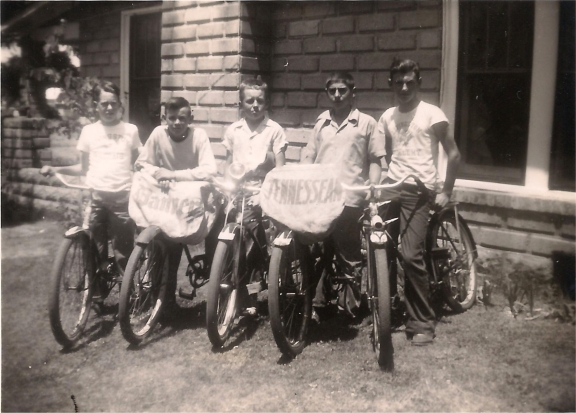 In 1820 the industrial revolution started and millions of people moved to big cities like Chicago or New York to seek new jobs and opportunities to support their family.
Tuesday, February 17, 2015
The Wright Brothers
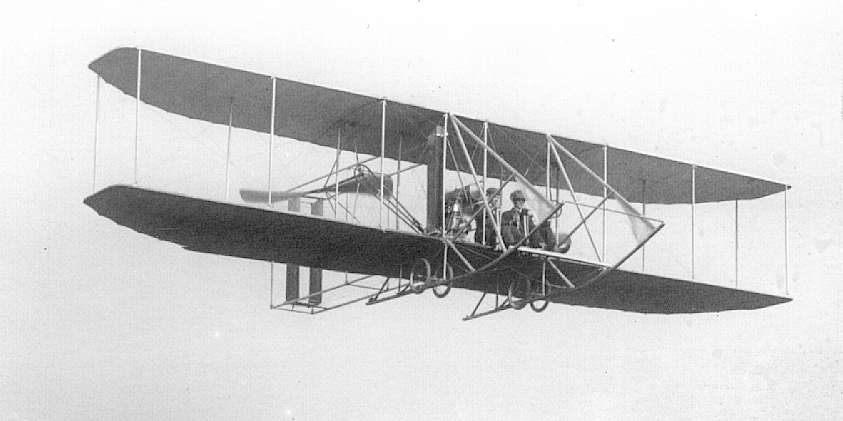 The Wright Brothers had invented the first successful plane on December 17, 1903. An invention that was invented back in the 1900s has had greatly impacted our society today. Today, it has became a norm in our culture to just buy a plane ticket and take off to our destination. Sounds pretty simple....but it wasn't always like this. Before the airplane was invented transportation would take many hours to sometimes even days. People than had to travel by car, ship or train. If someone back then were to travel from Los Angeles to New York city that would approximately be 2400 miles. To travel by car it could easily take about 2-3 days. They would make many stops for gasoline and stay in a hotel or maybe even two before they could finally reach their destination. For a smaller situation like a car ride that would take 6 hours would take approximately only 1 hour to travel by plane. We rely on airplanes to take us where we want and when we want in a short period of time. These are just a few of many examples of how the airplane has impacted this world.
The Airplane allows us to travel for business trips, to visit relatives, and even just go on a nice peaceful vacation with family and friends. Many people including myself have had many complaints on how sometimes it can be a pain to sit in a plane for 6 hours straight but really in reality we don’t realize how lucky we are that we can sit in a plane and reach our destination within hours. During the industrial revolution it would take twice or sometimes even triple the amount of time. So, we can’t be the ones complaining! The airplane has positively affected us and is one of the reasons we can do some of the great things that we do today.
It is really easy for me to make a connection about this topic to my own life. Personally, I love to travel and visit new places. I enjoy visiting new places, and exploring many different things. I have got the great opportunity to fly to many great cities in the US and once even fly out of the country! I have visited San Jose and San Francisco in California a couple of times. Also I have once visited Seattle and even Toronto, Canada! Honestly, I find it very cool to visit new places, learn about different cultures, and meet new people!! Traveling is something for sure that I am very passionate about, and as I get older I really hope to travel to some of the greatest places that this world has to offer.
Sources: http://www.wright-brothers.org/Information_Desk/Just_the_Facts/Airplanes/Wright_Airplane_images/Model%20B/1910_Model%20B_flying.jpg
http://jonnycuddleberry.hubpages.com/hub/Smooth-Jazz-and-Relaxing-Music
http://www.wright-brothers.org/History_Wing/Wright_Story/Inventing_the_Airplane/Inventing_the_Airplane_Intro.htm
https://airandspace.si.edu/exhibitions/wright-brothers/online/fly/1903/
http://www.fusd.net/historyday/2001/Wright_Bros/culture.html
http://jonnycuddleberry.hubpages.com/hub/Smooth-Jazz-and-Relaxing-Music
http://www.wright-brothers.org/History_Wing/Wright_Story/Inventing_the_Airplane/Inventing_the_Airplane_Intro.htm
https://airandspace.si.edu/exhibitions/wright-brothers/online/fly/1903/
http://www.fusd.net/historyday/2001/Wright_Bros/culture.html
The Anglo-Zulu War
The Anglo-Zulu War

 In the year of 1879, the British empire invaded the Zulu kingdom. They fought against Boers and Zulus. The British wanted to annex the Zulu kingdom but the Zulu leader, Cetshwayo kaMpande, had other ideas. The British numbered about 16,000 the first time they invaded and 25,000 the second time.The Zulus had about 35,000 soldiers. One day, a man named Sir Henry Bartle Frere presented the Zulus with an ultimatum, which resulted in war.
Glass
Cavemen used obsidian glass to make weapons and decorative objects. Manufacturing glass goes all the way back to Eastern Mesopotamia and Egypt in 3000 BC. Fragments of the oldest glass vases were found in Mesopotamia in the 16th century BC.
 In the beginning glass making took time and was costly. It was a luxury item only a few people could afford. The discovery of a new technique of making glass called “glass blowing” revolutionized glass making. Glass blowing is when you inflate molten glass with the help of a tube called a “blowpipe”. In its molten state glass is squishy and bendable so it can be manipulated into the desired shape. The molten glass is inflated in a bubble by being blown into by the blowpipe which is being controlled by a glassblower. When this method was first invented clay blowpipes were used. Today glass blowing is widely used. Although its main purpose is with decorative items.
The Telescope
The Telescope
The first recorded and working telescope was made in 1608. This is relatively new technology, and has increased rapidly since then. The first telescope is credited to a man named Hans Lippershey, although there is some speculation about this. Hans Lippershey made a refracting telescope, one of the earlier kinds. A refracting telescope uses a lens as the objective to form the image. This was the first kind of practical telescope.

In 1609, Galileo came out with the next new kind of telescope. It was based off the one Lippershey had made, but had about 3x magnification. Galileo later went on to make a 30x one. This is sort of how science works, someone making an invention, and then someone else taking their idea and making it better. Johannes Kepler did just this, in 1611, when he made a telescope that used a convex lens, unlike Galileo’s concave one.
Into modern times, the Hubble telescope was launched in 1990. It has a 2.4 meter mirror, and can see in the near infrared, near ultraviolet, and visible spectrum. It is still in use today, capturing more and more images. The Hubble space telescope was named after Edwin Hubble.
 The age old wanting is for knowledge. What’s out there? How far can we go into the universe? Curiosity has ebbed its way into how we think and perceive the world, and the telescope is helping us understand a few things. There is always more to be discovered, always more missions to send to space, and always more things to see.
Works Cited:
"Hubble Space Telescope." Wikipedia. Wikimedia Foundation, n.d. Web. 16 Feb. 2015. <http://en.wikipedia.org/wiki/Hubble_Space_Telescope>.
"History of the Telescope." Wikipedia. Wikimedia Foundation, n.d. Web. 16 Feb. 2015. <http://en.wikipedia.org/wiki/History_of_the_telescope>.
"Telescope." Wikipedia. Wikimedia Foundation, n.d. Web. 16 Feb. 2015. <http://en.wikipedia.org/wiki/Telescope>.

Subscribe to:
Posts (Atom)