Monday, March 12, 2012

The Underground Railroad

The Underground Railroad was an organization of quakers that believed differently from the Southern states of the United States of America. It began when people of the country started to lose slaves, and were confused about that- More and more slaves started to go missing, and more and more people joined the organization of quakers. It grew so large that it needed a name, which was come to be The Underground Railroad. The "railroad" part of the word is meant to signify how they moved slaves to and from different "safe houses," which were stations that slaves took breaks at, and traveled to in the night. It was very dangerous though, because if anyone who was with the Underground Railroad was caught, they would have been tortured, prisoned, or even fined up to $1,000. The other part of the word is “underground,” and that signifies how it was secret, and the slave holders didn’t even know that their slaves were being taken until they went to check on them. The southern states of America were bigger in slavery, and disagreed with the northern states, which was also one of the leading causes of the American Civil War. Some people from the Underground Railroad fought in the American Civil War, like Harriet Tubman, who was a very successful woman. Even though she began with the freedom of her own family, she eventually saved over 700 slaves, and possibly even 1000. She was also the first woman to lead an armed military raid, and helped Colonel James Montgomery and his 2nd South Carolina black regiment up the Combahee River, routing out Confederate outposts, destroying stockpiles of cotton, food and weapons, and saving slaves along the way. Harriet Tubman also served as a spy and a nurse in the American Civil War. She was so successful at helping slaves, that she gained a nickname: “Modern Moses.”
Saving slaves was hard work, and they moved at night to avoid people catching them. They had to walk through harsh conditions, or paddle in boats and ride horses if they could find them. They even had to change their appearance, and use their limited money supply, because some people around them would get suspicious of black people with ragged clothing. After getting to a safe house, the safe house keeper would feed them, and give them all of the necessities they needed. The safe house keepers would also send a letter to the next safe house, to make sure that they were ready for the next group of slaves to come there. If you’re wondering if Harriet Tubman was a safe house keeper, you’re wrong. Harriet Tubman was a conductor, which was a person who guided and led slaves to each safe house. Harriet Tubman and other conductors had to go through the same harsh conditions that slaves did, and were risking their lives for others. Even though they only saved a small percentage of all the slaves in the south, they still believed it was important to save the slaves’ lives. They had to travel from southern states on foot or other small vehicle, and go all the way north to Canada. Why not the northern states? It is that, because if slaves and conductors were caught in the northern states, the slave owners will still have the right to take their property back. So Harriet Tubman took many trips back and forth from Canada to the South, and liberated many slaves as well. 
Even though I’ve mentioned Harriet Tubman as the real hero of the Underground Railroad, there were many others risking their lives as well. One of which was Levi Coffin, who helped more than 2,000 slaves. This does not mean he brought them all the way to Canada, but still means he helped them. He was also a conductor, who traveled in and out with all of the slaves.

Thursday, March 8, 2012

The Revolutions Project and The Battle of Bunker Hill

When we first had this assigned to us I thought that it wasn't too much to ask, until the next day when I found out that there were 43 different individual assignments we had to do. Still, at this time I didn't do much work for the project, a week later I started turning in more things like movie notes and stain glass work. It was not until around 3 weeks into the project that I started to get worried, at this point some people were very far in some people had even done there "teach a class". I soon after turned in my lit packet and started working on the Shepard Software and my "Do-Make". Now that we are coming up on the end of the project I have many assignments to still turn in, but I have just enough time to finish the rest of the project.
Now for the interesting part, the battle of Bunker Hill. The battle of Bunker Hill was one of the later battles in the revolutionary war, waged between the British and the Americans. The battle of bunker hill was mainly focused around Breeds hill and some of the nearby hills caught in the crossfire. Charlestown  was hit before the first attack by the british allowing general Robert Pigot to lead a group of infantry soldiers to bombard and flank the americans, but there was a brick wall and when the infantry tried to maneuver the wall they were struck by a barrage of bullets rendering the attempt a failure.
In the second attack the british tried a slightly different route and used their boats to send their men around the hills to possibly reinforce the other attacks on the hill. Sadly they failed and were driven farther back with heavy losses.
In the final attack the Americans on the mainland refused to reinforce the army on the hills which were almost out of ammunition from the other attacks, which allowed the British to attack Breeds Hill with full force. The British attacked with their forces and 400 more men that came late in the battle. The battle of Bunker Hill was great because even though the British won it shows that low ranking people with low military training could fight off the forces of armies of highly trained soldiers.

Tuesday, March 6, 2012

RevBlog

When Paul gave us the green sheet I didn't know what to do. I couldn't figure out what I should do first. If I should do the bigger or smaller stuff first. Now that I realize how the assignment is, you actually get a hold of it. Some of the mini assignments are challenging but I can still get through it. It is so hard making sure I can keep track of all of my movie notes and making sure I turn in the essays and outlines.

       
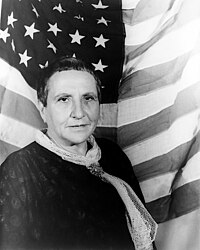
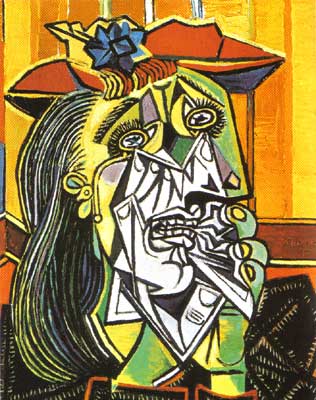
        I am doing my teach-a-class with Ariana. I like being able to just work with one person because it makes me feel independent. FAME was just working with a big group of people and putting all our ideas together to make one big performance. I like the revolutions project better. For my teach-a-class I am teaching the class about Gertude Stein. She was a wonderful person. She was in the revolution of art. She was really good friends with Pablo Picasso.

        The struggles I will have for my do make is the cooking.  I usually do not cook unless it is for a special occasion. Ariana and I are making brownies, and crepes. I look forward to doing this.


https://blogger.googleusercontent.com/img/b/R29vZ2xl/AVvXsEhs6YaphAv1d0Lag2i1tYC0-oM2SMfkFjMZWt53vhjqERWRPmqCUm27aRKLw2IpR1dfATwz8VbnuVfIC_s73-ZiD9E-tLuESVlTaBTMeM9kFDZ9fg5jnFI_hozZHkTNXXCbINsGtJDV0O8/s1600/Books.jpg

http://pablo-picasso.paintings.name/images/picasso-femme-en-pleurs.jpg

http://upload.wikimedia.org/wikipedia/commons/thumb/2/25/Gertrude_Stein_1935-01-04.jpg/200px-Gertrude_Stein_1935-01-04.jpg


(Gertude Stein)                                                                              (one of Pablo Picasso's paintings)

Monday, March 5, 2012

Political Cartoons

Benjamin Franklin's "Join or Die"
Thomas Nast's self portrait
The "Brains"
Right now, I am studying political cartoons, also known as editorial cartoons. They were sometimes used to tell messages to people who could not read. A well known political cartoon is Benjamin Franklin's "Join or Die".  The different parts of the snake symbolize the thirteen colonies. The meaning of "Join or Die" is that all the colonies have to unite against England or they will all perish. A major political cartoonist was Thomas Nast. He was considered to be the father of American Cartoon. He created many cartoons, and a number of them are very famous, such as the "Brains", as shown. The Harper's Weekly, a magazine, was one of the place's where Nast could show his work. There are still political cartoonists today. An example of a modern day political cartoon is Doonesbury. There is also Edison Lee. Another example of  a modern political cartoonist is Jack Ohman. "Revenue Enhancement" is a example of his work. The political cartoons date back very long ago, and still exist today.
Revenue Enhancement


Sources:

  • http://cartoons.osu.edu/nast/images/nast_self_car.jpg
  • http://www.phinallyphilly.com/wp-content/uploads/2009/05/myers160190f9-9161-4f70-beca-072b02c6a77c.jpg
  • http://www.phinallyphilly.com/wp-content/uploads/2009/05/myers160190f9-9161-4f70-beca-072b02c6a77c.jpg
  • http://media.oregonlive.com/ohman_impact/photo/10591126-large.jpg


Social Networking 


I am in the middle of a class project that requires me to spend much time on my computer.  With 43 total assignments, we have to type research and communicate through the Internet and computers. This much computer time is unhelpful for me because I get easily distracted checking my email, Facebook, Skype or YouTube.  These
sites, yet fun, stop me from putting 100% effort into my work. I spend about 2 hours of ‘homework’ a night, or so I think, when really half of that being distracted by Facebook.

When I am really into my homework, then decide to go onto a social networking site, the
thought and interaction suddenly goes away. The sites are a trap, once on, never off. If I
carry on with my homework once I have been on one of these sites, it’s hard to
concentrate when I know that Facebook is just a click away from what I am doing.
It’s nice having homework that can be worksheets or reading books, then I do not have
to run into this trouble, but being in seventh grade at Catlin Gabel with all the electronic
work, this is rare. I am happy when I can get all my work done quickly after concentration
and good work because then, I can go on Facebook and watch TV without any
homework hanging over my head.

It’s nice having homework that can be worksheets or reading books, then I do not have to run into this trouble, but being in seventh grade at Catlin Gabel with all the electronic work, this is rare. I am happy when I can get all my work done quickly after concentration and good work because then, I can go on Facebook and watch TV without any homework hanging over my head.

Most of my nights, after sports games or practices I spend my
time doing homework until I go to sleep. I get bored and watch
TV or do something else, which takes an even longer time to get
my homework finished. A good solution that I have found is
leaving my computer in a different room, when I know all of my
electronic homework is finished. I could also print things I need
to do that are accessible on the computer so I don’t have to run
into any distractions. This way I am not tempted to go on sites
away from my homework.

When I ask my friends about this problem, most of them have mutual feelings about this ‘problem’. They feel like when they tell their parents they are doing ‘homework’, they are usually on the computer doing something other than homework. I don't like when my mom nags me to do my homework when watching TV or having fun on the computer, but now that I think about it, when I listen to her I have finished homework quickly and with more concentration to make the quality of my homework better. I have found that doing homework that doesn't require a computer in another, quieter part of the house helps me get homework done with more effort because I don't have the distractions of my computer in my room. I get stressed easily but I feel this stress comes from doing things at night that are less important than school work and having little time to do the things that really matter. This makes me anxious that I will never get that work in on time or have enough time to do it, like in the Revolutions project.

I like having the freedom to do my own research on the Internet for the Revolutions project and finding out the facts by myself. Older kids that I have talked to have found that having a limited time a night on Facebook is helpful or even deleting it altogether if you are working on a large project that requires much effort, like the Revolutions project can be helpful too.

For me, working on the computer to do homework electronically  can be fun but also can take you away from the work that you are supposed to be doing. This is because of the distractions that social networking sites can cause and are a time-wasting trap.  For the Revolutions project we have a lot of work electronically and this makes it hard for me to get work done when having these sites a click away.

Child Labor During The Industrial Revolution

Child labor was very big during the industrial revolution. Many families were poor at that time, so their only option was to have their children work. 


Even though the children often died in factory accidents or got seriously injured it wasn’t a big deal to the families because they had so many children and it was unlikely that they would live very long either way. Some children would start working at the early age of six or even younger. The young children were too young to work the machines so they worked as assistants to other factory workers.


 The factories these children worked in often treated the children cruelly along with having extremely dangerous working conditions. They worked in factories such as cotton mills, coalmines, and glass factories. Children commonly worked over sixteen hours a day non stop. many people during that time were very against these laws, that there were children being allowed to work. but the owners of the factories didn't care because it made their jobs much easier. In 1833 the factory act was passed stating that the children under nine years old were not allowed to work, and children of ages 9-13 were only allowed to work 12 hours a day, even that still a lot of time, it was definitely an improvement.

Friday, March 2, 2012

just getting started

I have just started my research of the history of the steamboat; I am going to make a power point on the subject. I have held off starting some of my work for u while and I am feeling some of the pain but I think I can get back on top of it. I have started and I am almost done with a diagram of the engine of the first steamboat I found out it is very hard to find information on the internet about how the first steamboat engine works. I have used books and an encyclopedia to find the information I needed I am now almost done and done labeling the parts of the engine.
I have gone about my work by getting the smaller side projects done and the larger side projects done before I start with my report it has worked well but I feel I am in a little bit of trouble with the amount of time I have left, but if I am worried I guess that just means I care. I really am kicking all my effort into high gear, I am really pushing forward through the work I have left to get to my report on the history of the steamboat.
I have had some fun with the whole revolutions project, I have had fun learning about my religion and I liked righting movie notes it was a little annoying but it was still fun. I have always found the beginning of industrialism interesting and I am looking forward to study one of the most revolutionary inventions in the history of the U.S.A.. How ever I did not like to do learn about the European countries  it was dull and not interesting . this project really puts our planning skills to the test and it shows me that I need a little help but can depend on my self.
As I am writing this I am realizing that writing a blog is tedious, it’s a long task but like I said I really need to push through my work and get it done. I liked the lit packet because it really made you focus and understand what you are reading, I was the first person in my class to get the lit packet done and turned in. I am proud I was the fist person in my class to get it done because it made me feel confident in the project and it gave me a bit of a boost in getting more done.
I learned this year  that I am okay at seeing the big picture in what we are studying in school, I have had skills presented to me in this project and skills I have, have been tested a fair amount. I like to read and learn about what impacted the world and what it is today.  I am looking forward to the rest of this project and I am hoping every thing works out in my favor.

Do the Fun Stuff First & Napoleon and The Battle of Waterloo

Perhaps this is just me but when I learn something it sticks in my head better if the subject is interesting to me. When I first saw the that this was a long term project I groaned. I have never been exceptionally good at projects that aren't due the next day. I have before in the past saved a book report to the weekend before it was due, once even the night before it was to be turned in. When I looked over the green sheet one thing hit my eye as the hardest in the packet: The do-make, usually  the do-make is the thing whole projects circle around. I knew, from the very beginning that I wanted to create a website, I had been doing one in art class so I knew the basics. I dreaded memorizing Wikipedia and Biographies to re-phrase it in my own words. I have always heard the name “Napoleon” but I never knew really who it was. When I looked into him I remembered hearing about him and his final battle, so I chose them as my topic(s). The Battle of Waterloo and Napoleon Bonaparte seemed incredibly interesting, so I decided to choose them as my topic.

When I first logged on to Wordpress (a  great blog creator). I was hooked by the number of options for making my blog look outstanding. Then when I pondered on how to go about writing my first post it hit me. Why don’t I past the link into the browser instead of repeating the work I read into different words? That shortcut made it so much easier to enjoy and comprehend the biographies I read. I learned much more than I would have regularly while I sat their re-phrasing it. The battle of Waterloo was amazingly interesting and the movies and game I saw were entertaining to play as well as informative. In one short cartoony movie(Napoleon’s life)I learned the just of Napoleons life. In another game I learned how the tactics of Waterloo took place, and how if chosen differently could have been won by Napoleon(http://www.bbc.co.uk/history/historic_figures/bonaparte_napoleon.shtml). Napoleon was born 1769. At age nine his parents sent him to military school. He joined the winning side of the french revolution, and soon after became captain, then general, and last commander of the french army. He conquered most of Europe until he was handed over to the English by the French and sent tp St. Helena were he remained until his death in 1821 at the age 51. Napoleons final battle, The Battle of Waterloo, versus Wellington and Blucher  was fought in Belgium on the year 1815. The winner was Wellington and Blucher which ended the Napoleonic era.
I recommend at least starting the stuff you find the most interesting and the most fun before you do the boring Shepperd software or the the incomprehensible lit packet. It helps you feel more at ease in this project and makes it feel almost fun, and a pleasure to spend your time on. Make it fun for the first part so you can ease into the other less enjoyable parts. It will go by fast and you will have the bulk of the assignment finished.   (My Website)

Revolutions


Revolutions
The Revolutions project is a predominantly individual project, and so far I have only had limited help from my parents. When the green sheet for the Revolutions project was first handed out, I will admit, it was a little overwhelming in the sense that I had to keep from procrastinating, and manage my time efficiently unlike other projects previous to this one. I feel that this project will be difficult for many people to complete, but so far my initial plan has helped me understand what I must complete by March 16, 2012. During this project we must complete 43 assignments. I see it as completing a Literature Packet, a Do Make, a Blog, movie notes, sheppard software, and we must teach a 20 minute class. Each of these assignments provides a new challenge as they come along. Although not exactly similar in difficulty, at times the less important parts can be more challenging than the other more accentuated parts.
Managing my time will be the most important part of this project. I believe that this project is designed in order to help us keep from procrastinating from future classes and projects. I feel that this project will help, as it is supposed to. For the Do Make project I drew an Italian Gothic Cathedral called Il Tempietto di San Pietro. The Cathedral is in Rome, Italy. Although I drew something, there are many options that people can choose, such as a video, a model etc. I chose to create a drawing, because I feel that drawing is one of my strengths. I completed this project in around 2 or 3 hours. I was very enthusiastic about the Do Make, because I felt, and still do feel, compelled to prove myself in a primarily independent project. Our previous project, Fame (Feudal Asia and Medieval Europe) was a group presentation, with very few individual assignments. I feel as if I have been very on task with Revolutions, considering that I have completed more than half assignments even before the halfway point. If I keep up the pace I think that I will be in good shape. My Do Make was a sketch of a very old cathedral, which just by saying that identifies the uniqueness of it, but his specific cathedral was different. It was the spot of Saint Peter’s crucifying. He was crucified upside down due to the fact of not wanting to dis-honor Jesus Christ, but that is not interesting part. What is interesting, at least to me, is that this cathedral was made in such complicated time, yet the architecture of this temple is so simple. The cathedral has pillars in holding up the second floor. Then there is another set of pillars hold up the round top. The cathedral is very small, and simple when compared to other Italian and French cathedrals, palaces, and temples. I chose this drawing, not because of history, but because of the architectural simplicity that defines, in a sense, the uniqueness of its history.
Another assignment is the Literature Packet, which is a series of nine stories in which we have to answer questions to. Some of the stories are letters, and some complete fiction, Candide. Some pulled out from books, some speeches. It is a wide variety of stories that is trying to help us capture the time period in which we are studying, 1500’s – Early 1900’s.  The Literature packet was very difficult for me to complete. Although not very difficult it is time consuming. When something is not difficult, but time consuming, I subconsciously think of that item in less priority, therefore, the literature packet, to me, is essentially an outline for procrastination. There were many different stories, with much variety. The first two stories in the Literature Packet are almost as different as can be. One is a letter from Blaise Pascal, which is a completely non-fictional scientific letter, and the second story is Candide, which is a completely fictional story. I believe that having such a variety in the different types of stories compels the brain to pay more attention. If I were reading one long story I would read the start very thoroughly, and then read only partially, without paying nearly as much attention as at the start of the story, but when the story is stopped at the peak of my attention span, it becomes much easier to answer the questions with full comprehension. I think that in the literature packet I managed my time very well in the sense of completing the project before the initial due date. Although this assignment proved difficult to manage, I believe that I did a splendid job.
One of the most important projects, if not of highest importance, is the Teach a Class. In a sense this project is very straightforward with only three main aspects of our 20 minute class. The first aspect in which we must complete is an introduction to our topic. This aspect is designed to engage the students of our teaching. The second part of our class is a presentation in which we give the class information. This is the biggest part in the class. It is the aspect in which you must provide your class with knowledge and a well thought understanding of the topic you taught. The third and final aspect of the class we teach is an activity. The activity is designed to engage our students with a sense of still learning. There are many different types of activities that we may use. Some people are giving a test; some are doing a game, as in jeopardy. There is a wide variety of activites that you may do, they may be creative or straightforward. I decided to teach a class on Napoleon Bonaparte. I chose him because of a fascination of mine for both France and Napoleon himself. At times France was at the peak of civilization, they were the luxurious elegant country in which no other country could defeat, and then there was Napoleon. Although Corsican, Napoleon became the emperor of France, and the King of Italy, both at the same time for 8-9 years. Napoleon was one of the first of his time to rise not because of his blood, but because his ability as a General. This is the main reason for my fascination towards Napoleon.
For my introduction I will be talking about the revolutionary times that were occurring as Napoleon was growing up, and joining the army. I will first talk very briefly about what was going on in England, and the revolt against the government to leave to America. Then I will talk about what was going on in France at the time period, which was the French Revolution, and handing the power to the republic, with no more monarchy. My presentation will be a very straightforward PowerPoint. I chose to do a PowerPoint instead of something creative, because I would like the class I am teaching to be full of educational information, without much fun and games. My PowerPoint will accentuate the main areas of Napoleon Bonaparte’s life. The PowerPoint is suppose to supply the class with information, while at the same time give a mildly clear timeline in order for the class to understand the more important events in Napoleon’s life. My activity is a handout sheet that has boxes in which the students, with their table partners, may fill out a timeline of the bigger events in Napoleon’s life. Although not too creative, I feel that it will help the students with understanding the main points and benchmarks in the life of Napoleon Bonaparte.
I did my presentation on Napoleon Bonaparte on February 27, which was a Monday although that is not very important. My Introduction was supposed to help the students understand why Napoleon was so important to France, because of the revolutionary background among which were happening in England and other countries. I feel that it did not come near to what I was hoping it would become, in the sense that it didn’t feel as though it provided my class with enough information, as I would have liked. In my view the power point was the main source of information. I feel that although it didn’t go as fluently as intended it still provided the students with enough information to fill out the interactive worksheet I planned. The activity I planned was designed to get my students thinking about the big picture of Napoleon’s fascinating lifetime. It was a timeline that was supposed to help the students comprehend order of occurrences in Napoleon’s life. Although I didn’t print out enough sheets, because I was under the impression that the students would be working with a table partner, I think that this worksheet helped the students as intended.
Overall I feel that The Revolutions project has been a challenge of multiple different activities and assignments that challenged me to finish on time with quality work. I feel that I have done as intended by Paul. This project has taught me about many different people, objects and other things that has helped me understand the general time period conveyed by the assignments being required.

Computers; Good or Bad?


52 percent of boys and 26 percent of girls reported their average time spent on the computer to be above 42 hours per week. Most teenagers spend 30 hours per week in front of computer screens. Wow, that means about four hours everyday. Many teens are awake sixteen out of twenty-four hours a day. And teenagers go to school for about seven hours everyday, which leaves nine hours for free-time. And if they spend four hours out of nine on the computer, that means that 45% of their free time is on computers. I feel like most people in these ‘studies’ are different from the kids here at Catlin Gabel, or maybe its just me. Because we are a school where work takes priority over social status. Because we are a private school most of us who go here really want to make the most of our education. Not many students here play video games until one in the morning or stay up on Facebook, but some do. And I am guessing that in the Middle School, Here at Catlin, we are very advanced in technology, we have many nice computer carts, smart boards in almost every classroom (if there are on smart boards in the classrooms then there is a projector), but most of all, everything can be done on the computer. Especially homework. I spend about one to three hours on homework every school day. And most of it can be done on the computer. Also, there is also subjects like math, where you have handouts and textbooks that do not involve computers. I feel like once I get on to my computer, it takes at least an hour to get off it.I check emails, look on the web for current events, find the weather, and of course feed my chi-chi pet (a virtual pet that you feed and it grows). Even if my homework is supposed to take one hour, I might get distracted and spend twice as much time as I planned. I don’t even have a social network, which I know are very time consuming. Many people think that more homework on the computer is better, but I believe that less is better. Why? Because it would benefit the kids by taking less time so we wouldn’t get distracted, and the teachers because they  could assign more (I’m sorry fellow classmates). I propose that teachers give less homework on computers, and more on worksheets to prevent loss of time. A teacher may ask, “But it’s your responsibility!” I would reply and tell them about our generation and how some people’s lives are around the computer. I don’t agree that no homework should be on the computers, I just think that it should be more balanced. I was surprised when I saw that ‘52 percent of boys and 26 percent of girls reported their average time spent on the computer to be above 42 hours per week.’ I feel like I spend no more than 12! The crazy thing I heard was that the American Academy of Pediatrics and the Canadian Paediatric Society recommend only using to two hours per day on screens. My analogy is that the more screen time people get, makes them have less time for athletics. And that makes people more overweight. Then they are grumpy because they spend so much time on computers and don’t sleep. That makes the kids sleepy in class, and they would have a shorter attention span for homework at night. My conclusion is that too much homework on the computer can really back stab. I think that we kids at Catlin Gabel are not doing those actions (in my analogy) but sometimes I feel like that nights homework should only take me one hour, but it ends up being about three hours. I think that the ratio of computer homework to homework not on the computer should be about 2-1. But now for me it’s about 4-1. Me and my friends are not video gaming addicts, or people that don’t sleep because they are on Facebook, but I am disappointed because I always get lost in my own world when I am on the Internet. 
https://encrypted-tbn0.google.com/images?q=tbn:ANd9GcSCK6K2ISTuv0seBelXyi72LM-bPhyVdFs5bXk3k-QlKpnJI-PS
data:image/jpeg;base64,/9j/4AAQSkZJRgABAQAAAQABAAD/2wBDAAkGBwgHBgkIBwgKCgkLDRYPDQwMDRsUFRAWIB0iIiAdHx8kKDQsJCYxJx8fLT0tMTU3Ojo6Iys/RD84QzQ5Ojf/2wBDAQoKCg0MDRoPDxo3JR8lNzc3Nzc3Nzc3Nzc3Nzc3Nzc3Nzc3Nzc3Nzc3Nzc3Nzc3Nzc3Nzc3Nzc3Nzc3Nzc3Nzf/wAARCACMAIwDASIAAhEBAxEB/8QAGwAAAQUBAQAAAAAAAAAAAAAABgABAgUHAwT/xABMEAABAgQABgwJCAgHAAAAAAABAAIDBAURBhIhUbHRBxMWMTZBVGGBkaGyFSU1cnN0g5LhIiY3U2Nxk8EUFyRCUmKC0iMyNFWEo/D/xAAaAQACAwEBAAAAAAAAAAAAAAAABAIDBQEG/8QAKREAAgECBAYCAgMAAAAAAAAAAAECAxEEEzJRFCEiMVJxEkEzgQUVof/aAAwDAQACEQMRAD8A3FQixGQmOfEcGsaLlzjYAKTjYXQFW6pFrU6ZeA4tk4ZyW/e/mP5KylTdR2+iE5qKLmdwtlmPMOTgvmHb2MfktP3cZ6l5N01TOUSMIDivfWqsugSUMcWly8kSqPJsyG0DOTdOxoQ+kUOpL7Zf7papyKB1nWlulqnIoHWdaHfCcfMzqS8JR8zOpSyI+KOZj3CLdLVORQOs60t0tU5FA6zrQ74Sj5mdSXhKPmZ1IyI+KDMe4RbpapyKB1nWlulqnIoHWdaHfCUfMzqS8JR8zOpGRHxQZj3CLdLVORQOs60t0tU5FA6zrQ74Sj5mdSXhKPmZ1IyI+KDMe4RbpapyKB1nWlulqnIoPQTrQ74Sj5mdScVONfK1h7EZEfEMx7hJCwuiMcBOyJaM7D+R1ohp9SlajDL5WKHW/wAzTkc37wgWBOwo/wAh4DSeI7xXN7YtOjtnJF5YWG5H/uLmVU8PFrlyZKNRrvzNKG8kvBRqiypyLJhgxXbz2/wuC96SacXZjCd+ZT4VTZlaJHLDZ7xiA5r5EGyeLLSW2O4xjO58yI8PTakN9I1CtRfiSENo3iWjsT2GXR7ZRVfUeKNHdGiF7zcnizBQxlyxksZO2Fu51xksZcsZLGQB1xksZcsZLGQB1xksZcsZdpKXizs1ClpcY0SI6w5uc83H0Lj5K7OpXHhNfGeIcFj4jzvNY25PQFbS+DNXjtB/RhDB+teB2b6N6NSJeky4hwWh0Qj/ABIpGV51cysUhPFu/ShiNBfYAtwOqZGWJKj+t2pI4HVMb0SVP9btSPrJKviqhPJgZFMQ3QI8SDEtjw3FrrHJcFWdPmP0iE6HEykCxvxhV9Xd41nPTv0lKlxC2caM4IWi+cbiy5OwR4FxzL1aZkifkvbjAc4+BRus/wAHzbCsW+rOgLQFnYldYzS0gvsgG1Hb6VqEqof2KF5w0Ip2R4rINDD4jg1u2tFyhKqPDpCCWuBBcMoPMUxhtC9ldXuyuxksZcsZPdOsXOmMldc7pwbIA6XSuud0roA6XRhseSgfFmp1wviAQ2HnOU/l1oMutF2PQBRHuG+6O6/UEvim1SZbRV5hQkkmKyhw80/UJSnwxEnI7ITTvYxyn7hxqtOFtDA/1v8A1P8A7UC4XTkSbr81jklsF21MHEAN/tuqclP08JFxTkxaVZp2R66lHZHqE1GhG8N8Zzmm1rgkqVNd+2w+nQV4br1Uw/tsPp0FONWjYpvdhDg+fnaB9mdAWhrNsHI8N2GghCI0xNqJxRv2sFpKzMTr/Q1R7ATstcGD6ZmlZ9Wnuh06XMNxacZu8f5StB2WuDB9MzSs9rvk6X85vdKawuheyut3ZVwqhMsyFweP5hlXqZVfrIPulVgClZPWFy4ZUYDt8ub97V1bNwHb0ZvSbKjASsu/EAgbFhu3ntP3FXGDFMgVmpmUjxYjGCE5+NDIvcEDjBzoItkRfsVC2Fh9Uid5iqrJxpyaOws5JMNdwVP5ZOdbP7Ve0SkwaNJmWl4kSIwvL7xLXufuAVgkseVWc1aTHVCMeaHTFOmVZMGJzAqSm5uPMvmppr40Rz3BpbYEm/8ACuG4Gn8snOtn9qLklaq9RK1yGXHYwGrTUWVqM1KwbBkGM+GHEXJAJFz1LlSo8aLUoW2RHEZcl8m8U1fHj2petRe8VGjDxjC6dBWzboEvsKMDPpB/47u61a8siwO+kH2Du61a6srF616G6PZgTss8GT6ZmlZ9XPJ0v5ze6VoOyzwZ9szSgCuDxdA85vdKZwmheyqrqZQgJ7JAKQC0LFAwCeycBPZSsRuMArrBKtMwfq5nokB0Zu0uh4jXAHKWm/YqgBKy5KClFxYJtO6NL/WhLW8lx/xWoqwZrjMIKeZyHAdBaIhZiucCcltawuy1rYr4Nv8AWX6As7F4anTp/KK5jNGpKUrMMkxTplmjQDVLZGl5CozMm6nRnmBFdDLhEABsbXXm/WjK/wC1x/xWoHwo4SVX1uL3iqtbMMHRcU2hJ1ppvmdajMCbqEzNNaWiNFfEDSb2uSbLpRh4xhdOgrykL2UbyjC6dBTElaNkVp8wowP+kD2Du61a2skwP+kD2Du61a2sjF616HKPZgVsscGfbM0oArnk6B5ze6VoGyvwa9szSgCt+Tpfzm90pnCaF7Kq2plEE4CQCkAtEWEApWSATgKRwYBSsnTgLtgI2Ws7FvBx/rDtAWUWWr7F3Bx/rDtASWP/AA/suw+sMUydMVijxg+E4+clU9bi94qrIVthNwjqnrcXvFVZC9HDQvRmy1M52Xso48YwunQV5SF7KP5RhdOgol2ZyPcJsDx8/vYO7rVrSybBDh6PQO0NWsrHxmteh2j2YF7K3Br2zNKAK35Ogec3ulH+yqL4N+2ZpQHVG7dSITxlxcR3Ra35pnCaF7K62plCFMKIUwtEVEApBJOApJAIBPZOApAKVjhGy1bYw4OP9YdoCyuy1XYx4Ov9YdoCS/kPw/suw+sL0ydMsMfMKwmHzjqnrcTvFVitMJuEVT9bid4qsIXpYLoXozJamQIXro48YwunQvKV7qIzGnweJjSToXJ6WC7hHghw9HoHaGrWFk+CBxsPCRxQXDsatYWNjPyL0O0dL9g7h3IOqGD0xCYLvAxmjORlGhZnRorJqQdLRRcsBaQeNp3tXQtrjwxGhOhu3iFkeFVBmqPUnTsk07WSSWgXtnyZlLCVUuhv0cqxepA1OSj5SNtbxk/ddxOC4hX0GoSc9C2uaDGE74ccl+YqD6NCflgRyG5iA4da1YztqFHHYpwE4VqKG7lDfd+KkKI7lDfdU1Ujuc+LKsKQCsxRHcob7qkKI7lDfdUlUjuc+LKqy03Y5m5aBQXsjzEKG7b3Gz3gHeCCRRHcob7qXgMnfjN934qrEQhWh8G7E6bcJXsbB4TkeWy34rdabwnIctlvxW61j5oZ+uZ7vxUTRD9cz3fikf6+n5/4X8RLY4YRObEr9Sexwc0zUQgg3BGMVWnIrg0R317fd+KQon8cwLczfitFTjFWuLNNu5TYpcQ1oJJyABX8lAbTpN8WPbHIu/mzBJjafTgXY4dEtnxnfBeZrZuvTLYEuwtgh2Xm5zz8yqqTurvkiUY7BDsZSkSZq01UojcliwHnJudAWoKowZpEOk06HBY2xAynOVcLEr1Myo5fQ9CPxjYS805JQZuGWRWgg8a9KSqJgFV8A4MaI6JBbYnjabFUxwCjg5HROzUtVKSujiKsVZSIOnF/RlQwFmM8Xs1JxgNM54nZqWqJKXF1vI5lQ2Ms3DzWeJ1DUn3ETWeJ2alqSSOLreQZMNjLtxM19p2aktxU19otRSXeLr+RzJhsZacCZr7TsTbiJrPE7NS1NJc4uv5HcmGxlm4eZzxOzUm3CzJ44nZqWqJI4ut5Bkw2M1ksAXOeNuxiAf3nakZ0egy1NYMRjbjesFbp1XOrOep3JKEY9kICySSSrJH/2Q==
http://www.sciencedaily.com/releases/2010/09/100920123552.htm

Thursday, March 1, 2012

History of Photography


Nowadays we are always taking pictures. We like to capture the moments so that we never forget them. We now can post them on social sites like Facebook, Twitter, Instagram and many more. Being a teen especially, I love to take photos. No one thinks anything about snapping a picture on your iPhone or iPod. Sometimes you have to step back and think, “Where did photography first come from?” because it used to be a long, boring process to take just one photo.
The first photo was taken in 1826 by Joseph Niepce. His photographs were taken by on a polished pewter plate covered with a petroleum derivative which he then dissolved in white petroleum.  Bitumen hardens with exposure to light. The unhardened material was then be washed away and the metal plate polished, making a positive image.
This is the first picture ever taken. It’s the view outside the window at Le Gras in France 1825

.
The first portrait picture ever taken

During the Industrial Revolution time, the want for portraits grew in the middle class. More and more people wanted to say that they had their very own picture.In 1847 Count Sergei Lvovich Levitsky designed a camera that improved the ability to focus a camera. Some of the same focusing techniques are still in use today. He also brought up the popular idea to put decorative things in the background of the photo. He worked on the quality of the photo, and putting people into different poses for their photo.
During the mid nineteenth century, photographers started to capture stories and landscape. More and more people wanted to get their picture taken. The prices of the photos were from 50 cents to 10 dollars.Artists started to make art shows of entirely photography. In the first twenty years of photography being around, is when the most development happened. In 1884 George Eastman invented dry gel on paper so the photographer no longer had to carry around plates and toxic chemicals. In July of 1888 Kodak released a camera that people could buy. Now anyone could take a picture.

The advancement of photography began to boom and cameras became easier and easier to use.  They still continue to get better quality. Some cameras are touch screen and on some you can even upload pictures and videos straight to YouTube or Facebook. The invention of photography is a great addition to our modern life.
Sources:
http://www.neatorama.com/2006/08/29/the-wonderful-world-of-early-photography/
http://en.wikipedia.org/wiki/History_of_photography

Progress


Progress

Everything has its ups and downs. Progress just happens to be one of those things. It is double faced. It has the nice cheery face that is the side we see in the moment. The side that shows something new and improved that will make our lives so much easier. But there is a second face. One that most people do not see. The side that causes people to lose jobs and the side that makes some peoples lives much more difficult. It is intended to help us, but sometimes progress has consequences that we didn’t see in the first place.
        Take a laptop for example. Thirty years ago, computers did not exist. In the last thirty years computers have been invented, improved, and come close perfected.  They were invented to help people. Whether it was to take notes, to play games, or to write papers, computers were intended to help people, and make things more fun and faster. Computers seemed to make life easier, more smooth, and faster.
        Not to say that computers aren’t useful. They are. They make things much easier. But did the inventor of computers, Konrad Zuse, realize that he was taking thousands of people’s jobs away from them, leaving the secretary (cutting and pasting the typewritten stuff onto paper) and typewriters jobs behind? Did the ends justify the means?
        For me, yes probably so. I do about 75% of my homework on a computer, this post would almost impossible without a computer. One of the things I most enjoy about computers is how smooth and easy they make everything. I can type two words into the search box and find what I am looking for instead of reading and going through the library for hours. The ends do justify the means for me and my family, but for the families who had their business in typewriting, they have a whole other story to tell.
       This has been happening forever. The cotton gin may be a perfect example of double faced progress. It helped the plantation owners, but was the beginning of slavery in the south.
        Before the cotton gin, cotton farming required hundreds of hours to separate all of seeds from the cotton. In 1794, Eli Whitney revolutionized plantation owners lives. He invented the cotton gin. The cotton gin was a machine that had little teeth that let the cotton through and pushed the seeds out. This machine could generate up to fifty pounds per day of clean cotton. This was the start to not only a huge cotton industry, but also to slavery.
        The second face to the cotton gin was the slavery. You would think that the cotton gin would be a huge relief for the slaves. No more horrible hours of separating the seeds from the cotton, having dry crackling hands from all of the extended work days. The cotton gin made it so that plantation owners and slaves could do four times more work, and for the slaves it was mandatory that there was four times more cotton seedless by the end of the day. The cotton gin made large scale slavery not only possible, but necessary.
Look down at what you are wearing. There is a 99% chance that something you are wearing is cotton. Would you rather that be leather or jean? For me cotton is a huge part of my life, from Q-tips to cotton sweatshirts, to the dirty socks in my hamper, cotton is a huge part of my life that I would not be willing to give up.
In the end, progress ends up to be worth it. From laptops to cotton, progress has changed most people’s lives, including mine.


Sources:

Wikipedia: Eli Whitney, Cotton Gin, Konrad Zuse

Wednesday, February 29, 2012

Josephine and Napoleon

In the late eighteen-hundreds, A beautiful woman by the name of Josephé Rose Tascher la Pagerie who had two children and was not very young was required to be married to Napoleon Bonaparte a very young, not so tall, or handsome man. Josephine refused to marry Napoleon but when Barras threatened to stop providing for her if she didn’t marry him, she agreed immediately. When they got married Napoleon decided not to called her by a name that everyone called her such as, “Rose” and definitely didn’t want to call her, “Josephé Rose Tascher la Pagerie”! Napoleon wanted to be original so he decided on Josephine.
Their love for one another was very complicated. Napoleon Bonaparte her assigned partner, loved her deeply, but she despised of him strongly, thought he was very strange and was weird in the way he showed love. When Napoleon went to Italy, Josephine found her chance and immediately looked for someone new to have a relationship with. At the time Napoleon was sending her many love letters and even tried to get her to come visit him, she just pretended she was pregnant and couldn’t travel. When Napoleon heard about her on a trip away from Paris to get away from him, he was destroyed. His heart was torn to two and said that he would never love another woman the way he had loved Josephine. Soon after Napoleon’s true love betrayed him he was sent on a long trip for other rather important stuff.
 When Napoleon returned, His Wife Josephine had all of sudden finally fallen in love with him. Although he still loved her deeply he new that he could never trust her again. Napoleon had a series of affairs to try and move on from her although he new it would never work. Napoleon later divorced Josephine after finding that Josephine had played him and that they weren’t actually married by bible and married another woman whom he never loved, Marie Louise. He married to become Emperor of France. After 1-2 years of the marriage Napoleon realized his true love was Josephine. He divorced Marie and became a faithful friend to Josephine and her kids, Hortense and Eugene. 
Josephine continued to love Napoleon and when she was dying from a horrible disease called diphtheria, Napoleon’s name was one of the last words she was able to speak. After the tragic death of Josephine, Hortense and Eugene still remained faithful and Napoleon helped take care of Josephine’s beautiful children.