Wednesday, January 27, 2016

On belay? Belay On.


First off, I'm a rock climber. That's one thing that won't change about me. It's been my passion since I was eight years old.
             It all started in August 2013, at a seemingly monotonous summer camp. It was noon, and I was nearly bored to death, we had been swimming all day, and were now in the middle of working on coloring books. I was coloring in a ballerina, which was my current sport. Suddenly, the counselor, Alex, called out: "Who wants to go climbing?" At those words, my little blonde head snapped up. I was tired of coloring a tutu that by now, was so pink it was less of a garment, and more like a deformed pink highlighter. I followed him and the two other boys to the gym, and the rest was history.

This is my story. Every time someone says, why do you climb? I always start with this story.But why is it that I climb? Even I don't really know. I'm not really an adrenaline junkie, but I love the feeling of wind on my face, and nothing but air under my feet. It's amazing how once you get on the wall, you can just forget the world around you, and focus on the route. It's truly an amazing feeling.
           A question I often get is, don't you get scared? The answer is yes. All. The. Time. The trick is not letting the fear get to you. For example, if you're afraid of falling, then don't fall. Use your fear as initiative to get you up the wall. I know this isn't always the case, but it helps to get you to reach your goals. Just yesterday, I was at practice, and I was lead climbing, when my coach told me I had to down climb. It's a form of endurance where you do the route backwards. Thing is, I had never done such a thing on lead before. All I did was take a deep breath, and take it one step at a time. It's that easy.
           Sometimes, it doesn't always work out like that. Climbing is every part as physical as it is mental, and every once in a while, you can get stuck. Just ask anyone who partakes in this sport. It almost always will result in the telling of some trouble they had. That's actually the best part. Because they're so many people who love this sport, you can get help tons of people. Be it a coach that you've known for years, or a random stranger that's willing to lend a hand. I've been to so many gyms in my lifetime, and have not once been denied help. I'm not saying that I always ask for it, but when I do, there's definitely someone willing to give advice.

          I guess that's why. I climb not only for the rush, but because it's such a powerful, graceful, and intense sport. Because the culture that surrounds it is so diverse and has so many devoted participants that it is in a way some kind of religion. One that accepts all people. My religion


From Horse Power to Horsepower


In the 19th century, transportation was a problem. Horse pollution was like the modern pollution we face with cars. Yet everyone relied on equines for their basic needs and for transportation. Living standards skyrocketed from 1800 to 1900. US per capita GDP rose from $1,100 to $4,600 (in 2000 dollars). This meant greater trade, and virtually all goods were, at some point in their journey, transported by horse. In ten major US cities, the number of teamsters rose by a whopping 328 percent between 1870 and 1900, while the human population as a whole rose only 105 percent. So everyone relied on horses, but the pollution was becoming unbearable.
One aspect of horse pollution that contributed to the growing need for a new system was manure. Experts from that time estimated that each horse produced between fifteen and thirty pounds of manure per day. New York and Brooklyn had a combined horse population of between 150,000 and 175,000 horses in 1880. Between three and four million pounds of manure were deposited on city streets and in city stables every day. Each horse also produced about a quart of urine daily, which added up to around 40,000 gallons per day for New York and Brooklyn. Vacant lots across the US were piled high with manure. In New York these sometimes rose to forty and even sixty feet.
Flies were another problem that came with horses. Manure is a favorite breeding ground for flies. It is estimated that three billion flies hatched in horse manure per day in US cities in the year 1900. Flies spread disease and filth. Studies have shown that outbreaks of deadly infectious diseases like typhoid and infant diarrheal diseases in the nineteenth century can be attributed to growth in the fly population.
Horses also are prey animals. Busy city streets provided many opportunities for horses to spook and scare at things. Stampedes and scared horses killed a substantial amount of people. Horse-drawn vehicles were far more fatal than their modern counterparts. In New York in 1900, 200 people were killed by horse-drawn vehicles and horses. This contrasts with 344 automobile deaths in New York in 2003. The fatality rate per capita in the horse era was roughly 75 percent higher than today. Data from Chicago shows that in 1916 there were 16 horse-related fatalities for each 10,000 horse-drawn vehicles; this is nearly seven times the city’s fatality rate per car in 1997.
So horses posed a big problem for the cities of that time. The invention or the automobile could have been said to save the people from the horrible pollution that was crowding the streets of cities. The car was actually not something that caught on very quickly. Like the electric car of today, people thought that horseless carriages were fad, and would pass with time. People would say “get a horse!’ and cartoons depicting people jumping out or the way of horseless carriages started appearing. Maybe we just need another solution like the car to help us overcome our modern day global warming and car smog problems. Our growing world needs growing ideas, so maybe the world’s next big solution could be right around the corner.


Sources:
"From Horses to Horsepower: A Rocky Transition." MNN. N.p., n.d. Web. 21 Jan. 2016.
"Introduction: The Ostrich And The Eagle." America at the Dawn of a Global Age Promise and Peril (n.d.): 1-21. Web.

Morris, By Eric. "From Horse Power to Horsepower." From Horse Power to Horsepower (n.d.): n. pag. Web.

Table of contents

Tuesday, January 26, 2016

Capturing the Superb Moment

I love walking around a gorgeous garden or a colorful town with my camera in my pocket so I can pull it out and snap something flashy at a moment's notice. When I am on a trip, with school or with my family, I usually take multiple photographs. I take pictures of my friends and the greenery around me. I also take shots of buildings and animals scurrying around. I have taken pictures in Portland, Black Butte, Arizona, Canada, Paris, and best of all the Oregon Coast.
I’m not one of those people who spend an hour just trying to get the perfect angle or most magnificent view of the image I want to capture. When I take pictures it’s usually because there is something beautiful that catches my eye or an object that I want to be able to show my friends and family who aren’t with me to share the moment. So, I don’t wait for the perfect time but alternatively the perfect time finds me.

I have a small charcoal Lumix camera that I carry around whenever I am someplace new, and I have gotten so used to taking pictures with it that if I used anything else I probably wouldn’t know how to go about it. When I am home from my trip or I fill up the space on my camera, I upload the pictures to my laptop and there I can fix up the little mistakes. I don’t do big fixes but sometimes I enhance the picture, crop, or straighten it depending on what it looks like. My great grandmother gave me the camera about two years ago for Christmas and I have been joyfully taking pictures with it ever since even though some pictures can be blurry because I am always moving around.


I really like taking pictures at the beach in particular and that might be because I think the beach is the most beautiful place on earth, but I also think it’s because I can capture the ideal image at the right moment. I also love how the sun hits the water making a sparkling effect and the bubbles that are on the waves when they break. The tropical feel and sandy taste make it feel like a dream and preserving that moment makes it one to come back to.
When I went to Paris, I grasped some great images and beautiful scenes because it is such a lovely place to visit, and taking pictures was fantastic because I could show my family and friends back at home. I loved taking pictures when we went up the Eiffel Tower because I had the whole view of the city and the pictures look fabulous when they were taken from higher above. I also liked visiting all the gardens and I loved taking pictures while riding on a boat on the Seine river.

New Team, New Life

So far this year, I've already joined a new soccer team. My first game with them will be in Las Vegas. After that, I'll be traveling to Dallas for another tournament. It's already more traveling than I did with my old team. Playing with the best team in the state is scary, but they are all normal kids.

Soccer thrills me. I love the feeling of adrenaline running through my body. I love running. It makes me feel free and wild. When I play soccer, it gives me a goal. It makes me want to score, to not let any goals in, to win.

Scoring goals used to be a thing for me. I once scored four goals in a game! I was the leading scorer for the season. After that season, I started feeling down. I wasn't very excited when we won or sad when we lost. I didn't try hard because I hated my team. I blamed everything on my teammates. Even when I played badly, everyone said "good job!" That made me mad. I wanted people to be honest to me. I didn't want them to lie to me. I wanted to quit but then the opportunity came up and I sprang. I started playing more. It was more fun and I started to get the wild feeling again. I started getting better, and I started loving soccer again.

 I have always been more of an active guy.  I hate it when I am stuck in one place for more than two hours.

I started practicing with them in September. Finally, all this hard work is going to pay off! Believe it or not, this team is actually easier to play with! My old team was never open, and I felt like I had to do everything. My parents said I regressed while playing with my old team. I can tell I'm getting better every time I go play with my new team. I was embarrassed when I said I played for my old club but now when people ask what team I play for, I can answer with pride.

This is truly a new life.

Monday, January 25, 2016

The Younger One

I have lived my entire life with an older sister. From the moment I was born until now and forever, I will be the younger one. Being the youngest of two has it's benefits such as  getting to do almost exactly what I want and being able to control my sister because I could get her in trouble. However, it also has some downsides like not getting all the attention, (more when I was younger) or having to share just about everything. Yet still, not having a sibling of some kind would just get boring eventually because until you were old enough to actually have friends, you wouldn't have anyone to do anything with or talk to.
For my parents, raising a boy and a girl with little age difference is interesting. They try to not insert traditional gender roles(girls wear dresses and like dolls, boys like cars and guns) in their parenting. My sister never really had a Tomboy phase and always liked dolls and dresses. But although I liked to play with trucks, cars and other "boy things", because I was younger and kinda did what my sister did, I was happy and willing to dress up with my sister. When I was younger I would model after my sister because she was the older one and knew more and so on. Also, my dad has always been extremely protective of me and my sister but he says he has always noticed himself being more rough and tumble with me--more than he ever did with my sister. By dad wanted a boy and a girl, but a girl first because he was worried about a big brother being overprotective and not letting the baby sister express herself. But he was still excited for both me and my sister.
I've loved growing up with my sister and always will. And for anyone else who has a sibling, you should cherish it.
  

Backlink


The Large Shoes to fil

The Large Shoes to Fill

(This is the Catlin Gabel Middle School)
Isabel (my older sister) has always been a great role model. From sports to school she is a very good leader. She is a top notch student that almost all teachers like. Temperament wise she is shyer and more calm. I am the second born wild child that is loud and rambunctious. Don’t get me wrong, I am a very good student, but I tend to be more of a handful than my relaxed sister.


Many siblings are like the Hatfield and the McCoys, battling and feuding over the smallest things, but I have always been very close to my sister. Maybe it is because we are 3 years apart, or maybe we are just a better fit than other siblings. Although not always.
I have gone through many of the same classes as her, with almost all of the same teachers. When I made the transition over from Lower to Middle school, I was greeted by many "Isabel fans”.
I like the way I can have instant teacher allies without even moving a muscle, but  it can be worrisome. I feel that sometimes the people who are "Isabel fans” are not really judging me for who I am, but for who she is.” I have many stories about these experiences, many of what I am not going to tell, but I would like to share one particularly interesting moment in which I am judged by who my sister was.
    The first story takes place in 5th grade. My class was taking a tour of the middle school. There were two teachers that looked vaguely familiar. Both 6th grade teachers. We were walking to our on campus apple orchard. I asked one of them a question, and the first turned to the other and whispered, “Did you know that is Isabel Larson’s younger sister?” I was filled with pride that they recognized me, but looking back I realized that they were only judging me by my sister. They didn’t know me. They didn’t know if I was a horrible, rotten, monster child. They had no idea. 
      Even though I have an older sister, I have learned how to form my own identity. It is not like the inequalities that I am learning in math called the OR statements. It is more like the ANDs. I can be my own person AND be my sister's sister. Although I am related to her, I am not her, I can be my own person in the middle school and in life. 


https://s-media-cache-ak0.pinimg.com/originals/73/75/10/737510ca37fce7bda6cc4628611f33a8.jpg

Sunday, November 1, 2015

1st FAME essay

For your first FAME essay, please write on one of the following:

What distinguishes one culture from another?
How are religion and culture connected?
What are the consequences of technology?

This essay should follow the form in the 1st FAME essay organizer.  Christa and I will also be available for help should you need it.  After you draft your essay, please copy and paste it into Wordle.  Use the Wordle graphic as one of the 3 graphics in your blog post.  Don't forget to cite the sources you use.  Or, you could just post your Bibliography page you created in NoodleTools and link to it.  You may write on any aspect of your FAME culture, not just your GRAPES.  You may also draw on your knowledge of modern American culture.

This is an opportunity for you to share your thinking about your research.  Feel free to have fun with the writing.  Essay, graphics, links, and citations should be posted to your blog by 11:11, Wednesday, November 11.


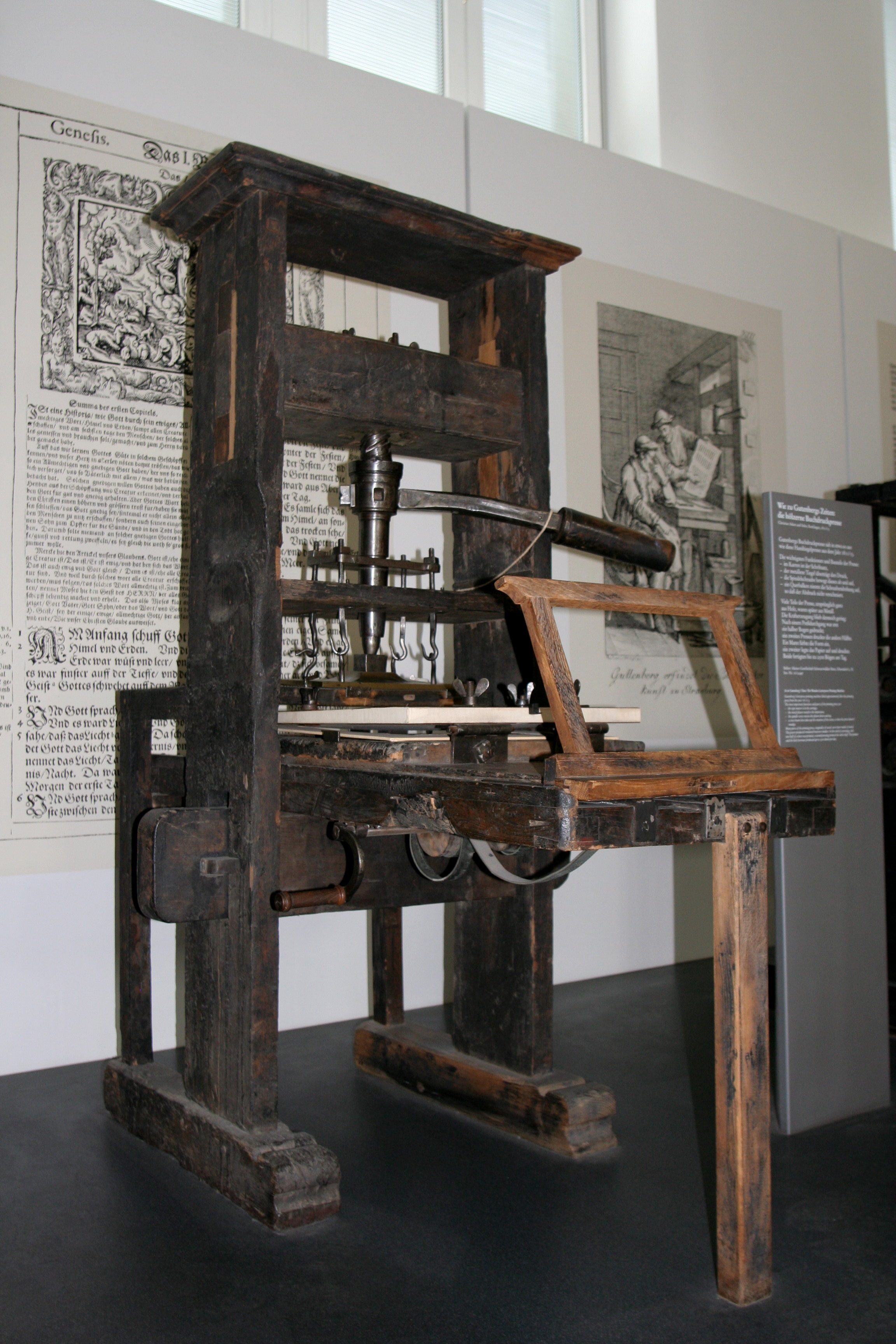
Handtiegelpresse. Digital image. N.p., n.d. Web. 4 Nov. 2013. <http://upload.wikimedia.org/wikipedia/commons/1/17/Handtiegelpresse_von_1811.jpg>.
Small Isfahan Tile. jpg file. 
     http://www.islamicstudies.harvard.edu/wp-content/uploads/2013/09/small-Isfahan-tile.jpg 
Stracovsky, Roy. FAME Essay #1. N.p., n.d. Web. 4 Nov. 2013.

Wednesday, September 23, 2015

Backyard ecosystem

Describe your backyard ecosystem.  Remember to include land (slope, flat, etc.),water, animals (yes, the yucky bugs are important,) plants, and climate.  Use the following labels:  cultures, g&he, geography,maps,ecosystem

Here is an example to get you started.....

My back yard has a very gradual slope and most of the water collects at the bottom. We don't have an irrigation system because we get plenty of water and if we don't we use our hose. In my yard we have many plants in our yard such as raspberries, black berries, strawberries, peas, beans, squash, and tomatoes. We also have many trees, our non-fruit bearing are a maple tree and about 30 arborvitae. Our fruit bearing trees are Asian pears and 2 persimmon trees. I don't have many animals at my house mainly just blue jays, robins, guarder snakes, squirrels, and little tiny birds I can't identify. One very special time we had a red tailed hawk in one of the persimmon trees. Sometimes on summer nights we can hear frog croaking in our back yard and occasionally we find them in our rain barrel. Our climate is Marine West Coast.
 Image:  https://www.finegardening.com/app/uploads/sites/finegardening.com/files/images/spotlight-collection/4-17-2014-walters-1.jpg

Wednesday, August 5, 2015

Keyboard or Pen wasn’t the Question


It isn’t often I tackle “prevailing wisdom,” but this is one of those moments. While Pam Mueller and Daniel Oppenheimer certainly created a catchy title, The Pen is Mightier than the Keyboard, they omitted an extremely important fact–that note taking is an art to be taught and practiced. Maggy McGloin, writing in the HarvardBusiness Review, is perpetuating the omission, and, since the Harvard Business Review carries a certain cachet, I’m prepared to begin my journey. Thanks to Alfie Kohn for giving me the courage to speak. I was a huge fan and ardent practitioner of assigning homework to middle school students. After reading and thinking about Kohn’s work, I no longer assign nightly homework, opting instead to allow my students time to pursue their own hobbies and interests. But, I digress.

Mueller and Oppenheimer discovered that students who take notes on laptops often engage in mindless transcription. I have no doubt this is true. Learning to take notes requires practice and frequent reminders from instructors, teachers, and coaches. Educators already know we need to teach how to highlight material in texts. Left to their own devices, younger students develop the habit of highlighting anything they don’t know. They often try using different colors of highlighters for different pieces of information. Students tell me they use blue for new vocabulary, yellow for new facts, pink for new dates, etc. While their texts are quite colorful at the end, students don’t really absorb material and have no clue how to use the highlighted passages to study for quizzes or tests. Sports coaches give near constant feedback to athletes beginning in middle school. High school and college coaches continue this practice. How many high school teachers or college professors review individual student notes prior to midterms or unit exams?

Note taking sheet
Learning to take notes requires the same focus and attention as learning to highlight text. Teachers use strategies such as the New AmericanLecture, Cornell Notes, and a host of others to help students learn how to take notes effectively. I find that I have to continually remind students to use organizers when taking notes. In middle school, I often give students organizers that have three bullets in each of four boxes. Students are instructed not to exceed three bullets.  Other times, I will use up to five bullets. The point is that students need note taking parameters. Left to their own devices, I agree with Mueller and Oppenheimer, students will mindlessly transcribe.

Part of my curriculum involves students taking notes while viewing videos. In order to reduce the temptation to transcribe the video, I send the students a link to a video transcript. They immediately understand they do not need to retype the transcript. It is available to them anytime they need it. Teaching note taking requires the same skills as teaching any other concept. Students need an introduction, opportunity to practice, and some form of feedback loop.

The question Mueller, Oppenheimer, and McGloin should have asked their college students is what note taking method they used and why they chose it. When I ask seventh graders this question, many reply they have no organized method, they just write bullets. I teach at least three methods of taking notes in my class. We begin with Cornell, outline, and mind mapping (mapping.)  I review which methods helped students and by the end of the year, I ask them to choose the method they have found the most helpful.
Students do not automatically remember these methods from year to year or class to class or even unit to unit within the same class. The temptation to revert to a new bullet for every note and mindlessly transcribe is often too great to resist. The reason note taking methods, even just longhand, work is that students have to mentally analyze and evaluate information prior to writing/typing it. Every teacher from middle school to university needs to instruct and remind students how to take useful notes.

Taking notes on a laptop is far more useful than longhand if taught and practiced correctly. Laptop notes can be annotated, tagged, re-used, shared with study groups, and, when cited correctly, become the basis for research articles, class papers, and essays. Electronic notes also encourage reorganizing, further research, etc., that both enhance and extend learning. Part of my teaching note taking methods involves students coming to class with at least three questions generated from their notes. These become the basis for a quick review/discussion. Muller’s and Oppenheimer’s study do not indicate any follow up other than a quiz.


Longhand notes might work well in the short term, either for a unit or a single class. Electronic notes will last longer and be far more useful provided students are taught/reminded that there has to be a method to their note taking. Mindless transcription is not a method, just as mindless text highlighting is not actively reading. Students should be explicitly coached how to take notes and encouraged to use the methods they have learned.  Pam Mueller agrees and, in a follow up interview, concludes, “Ultimately, the take-home message is that people should be more aware of how they are choosing to take notes, both in terms of the medium and the strategy.”  The question isn’t pixel or pen. It is which note taking method will help me learn and retain this material?


Image sources:
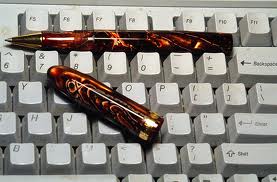
Keyboard & Pen
Nifty Notes
What's so Simple about Note-Taking
Keyboard toolbox


Thursday, May 7, 2015

Monday, March 30, 2015

Revolutions! Wrap Up & Word Clouds

What have we been doing for the past 58 days?  65 students have completed 3382 assignments.  Why?  To practice time management, demonstrate the power of differentiation, but most of all to have fun learning about an exceedingly complex time in human history. The unit is Revolutions!  All the major revolutions from 1650-1920 are covered.  Students chose the order of project completion.  Each student was asked to complete 45 assignments, most opted to take on more.  Content?  Plenty of it including the Civil War, Industrial Revolution, Second Industrial Revolution, French Revolution, American Revolution, Enlightenment, and a wee bit of World War I.  Here are a couple of Civil War class poems.  Kids posted their poems to a Google Doc that magically became a Word Cloud.


Monday, March 2, 2015

horse to car

In the old days people used to get around by being pulled on in a carriage on by a horse. But that time has passed. Now there are cars, airplanes, trains, and boats. I wonder why all this stuff has changed? I think it is because now that people have come up with faster ways of travel people don't like ridging around on horses anymore.  Because it is cooler to have cars. People who own horses are considered farmers.