James Watt
An influential innovator of the 18th and 19th centuries
Without the steam engine where would we be today? The steam engine is, in the minds of many people, the most important innovation of the industrial revolution. The original function of the steam engine was simply to pump water out of the mines. But as time progressed, so did the steam engine. As early as the 19th century use of the steam engine spread to mills, locomotives, and even boats. Each of these things were extremely influential to the industrial revolution. Without James Watt, the improvements to the engine may never have been made. Watt revolutionized the steam engine which caused the use of the engine to spread to other industries allowing the industrial revolution to begin.
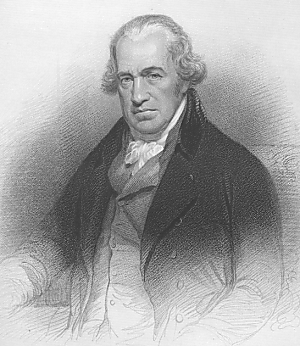 |
| James Watt |
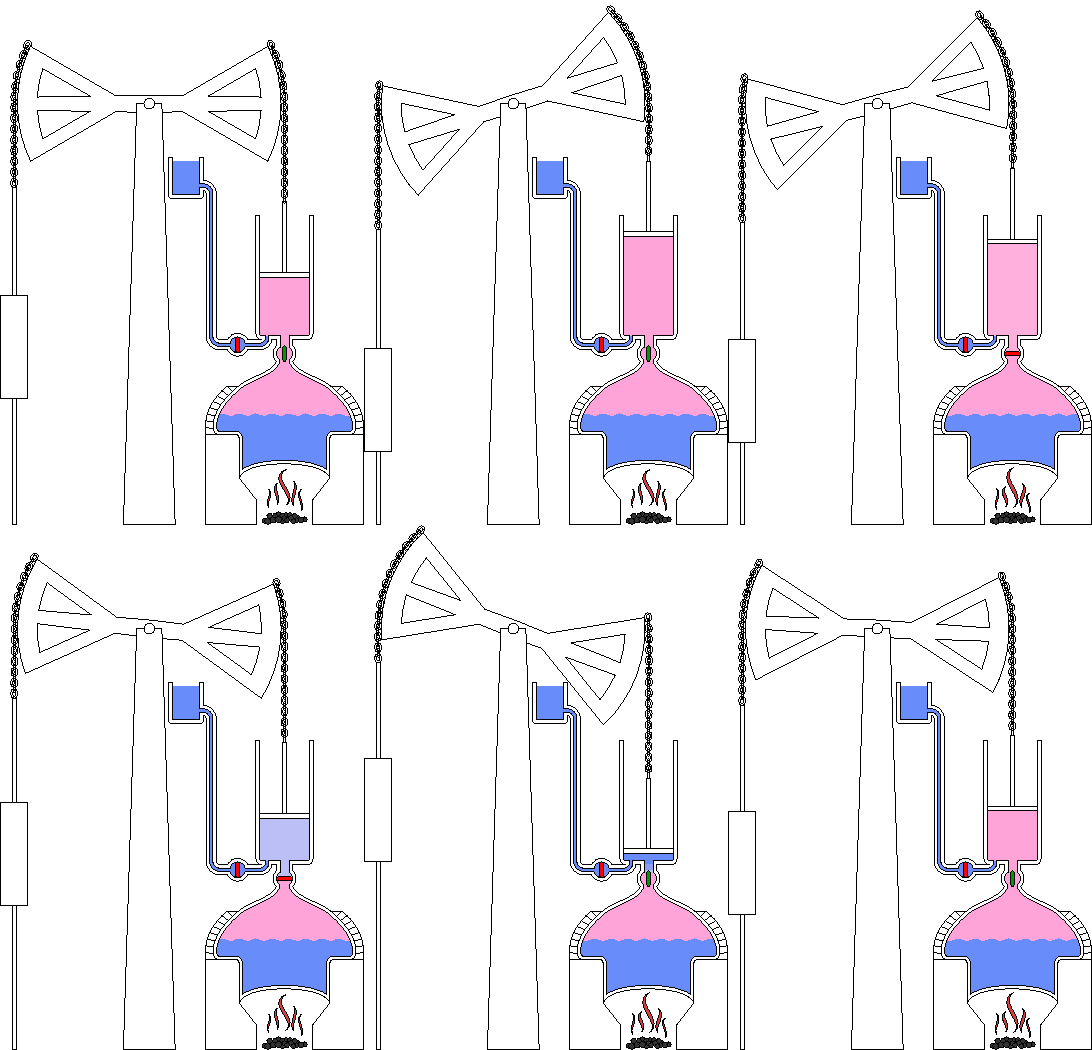 |
| Animation of a Newcomen steam engine. |
The first working steam engine was invented in 1712. This engine was called the Newcomen steam engine. In 1764, Watt was given a model Newcomen engine to repair. The problem the Newcomen engine had was that it consumed too much steam while doing its job. After examining the engine, Watt realized that the reason this engine consumed so much steam was because it cooled down to condense the steam after every stroke, and then reheated. Watt needed to find a way to condense the steam without cooling the main cylinder. He contemplated this issue for months and he finally concluded that he would design a separate, smaller cylinder connected to the main one. This second cylinder was meant for steam condensation. Having the two chambers connected allowed for less loss of heat. The steam would enter the first cylinder through an inlet valve; then the piston, propelled by atmospheric pressure, would push the steam out of the main cylinder and into the smaller, condensing chamber. This allowed the first cylinder to remain hot which prevented huge losses of steam.
 |
| Watt's separate condenser (left). |
Following Watt’s successful invention of the separate condensing chamber, he decided he would attempt to build a full scale steam engine. He met a man by the name of John Roebuck, with whom Watt later formed a partnership. Roebuck agreed to back the production of a full scale steam engine. For a duration of four years Watt worked on constructing a full scale steam engine. Finally, Watt was able to get a full scale engine to work well enough for a patent. Watt and Roebuck were granted this patent in 1769. Roebuck offered to pay off all the debt in exchange for two thirds of the money that the engine made. Watt agreed to this because there was massive debt due to all the trial and error involved with the creation of the newly patented steam engine. Roebuck also helped Watt one more time before their partnership was over. He indirectly introduced Watt to Matthew Boulton, with whom Watt would later form one of the most significant duos of all time.
 |
| The Watt Steam Engine. |
Boulton recognized the potential of the newly patented steam engine and attempted to acquire Roebuck’s rights to the engine. However, Boulton could not come to a deal with Roebuck and was unsuccessful in acquiring the rights. Later in March of 1773, Roebuck was in desperate need of cash. Boulton acquired Roebuck’s rights to the engine in that same year. The partnership of Boulton and Watt worked out much better than Watt’s partnership with Roebuck because Boulton hired craftsmen who were experienced and accomplished, which is something Watt had lacked in his partnership with Roebuck. In March of 1776, the Bentley Mining Company started the first Boulton-Watt steam engine. The Bentley Mining Company had taken a risk in removing a widely-used Newcomen engine and replacing it with a brand new Boulton-Watt engine. The new engine was a huge success. Emptying a pit 57 feet deep of water in less than an hour. This success caused the demand for Boulton-Watt engines to increase significantly. In 1795, Boulton and Watt opened the Soho Foundry to manufacture the engines. By 1800, 84 British cotton mills used Boulton-Watt engines.
Watt retired in 1800 and his partnership and patent also expired. The partnership was transferred to the sons of these historic figures. Even though Watt was supposedly retired, he continued to invent things to his deathbed. In 1816, Watt took a trip on a famous steamboat called the Comet, which was a product of his inventions. He died at age 83, on August 19th, 1819 at his home in Handsworth, Birmingham, England.
 |
| The steam locomotive. |
James Watt was one of reasons the industrial revolution began. His improvements to the steam engine allowed use of the engine to spread to other industries. The industry that benefited from the steam engine most significantly was the locomotive industry. Steam locomotives were one of the most important innovations of the industrial revolution. The steam locomotive was the primary source of transportation for goods. Steam locomotives are considered the biggest leap in transportation technology in history. Without steam locomotives, factories were not supplied with the materials they needed to manufacture their products. And without steam power, factories were not as efficient. The steam locomotive allowed the industrial revolution to take place.
Steam power also had a profound effect on the expansion of factories in the industrial revolution. Before Watt made the improvements to the steam engine, factories had to be located by rivers in order to power their machinery. The steam engine made it possible for factories to be located away from rivers because they provided an alternate source of power. Steam also provided a consistent source of power for factories, unlike water power which provided an inconsistent source of power due to floods, droughts, and other similar occurrences. Overall, factories were able to produce more goods at a more consistent level due to the implementation of the steam engine.
Without James Watt, would the improvements to the steam engine ever have been made? And without the steam engine, would the industrial revolution ever have happened? James Watt improved and adapted the steam engine so it could be used efficiently in multiple industries. Without those industries, the industrial revolution never would have progressed. James Watt was the reason the industrial revolution began. Without James Watt, we never would have evolved from our old ways of life. Important Dates:
1712 ~ Newcomen Engine Patented
1736 ~ James Watt Born
1755 ~ James Watt Trained in London
1764 ~ James Watt Discovers Problem with Newcomen Engine
1765 ~ James Watt Discovers Separate Condenser
1769 ~ John Roebuck and James Watt Patent the Engine
1774 ~ Boulton Acquires Roebuck's Patent Rights
1776 ~ The First Boulton-Watt Engine is Installed by the Bentley Mining Company
1800 ~ James Watt Retires at Age 64
1819 ~ James Watt dies, age 83
To Learn More:
Sources:
http://www.bbc.co.uk/history/historic_figures/watt_james.shtml
http://en.wikipedia.org/wiki/James_Watt
http://en.wikipedia.org/wiki/Watt_steam_engine
http://en.wikipedia.org/wiki/Steam_power_during_the_Industrial_Revolution
http://www.egr.msu.edu/~lira/supp/steam/wattbio.html
http://www.ideafinder.com/history/inventors/watt.htm
http://www.livescience.com/2612-steam-engine-changed-world.html
http://www.youtube.com/watch?v=UGplcD9BULY
http://upload.wikimedia.org/wikipedia/commons/thumb/5/5c/Watt_steam_pumping_engine.JPG/300px-Watt_steam_pumping_engine.JPG
http://sketchup.google.com/3dwarehouse/details?mid=8843bc6f5126a01c4f2cd07c828bc865&prevstart=0
http://en.wikipedia.org/wiki/Steam_locomotive
http://en.wikipedia.org/wiki/James_Watt
http://en.wikipedia.org/wiki/Watt_steam_engine
http://en.wikipedia.org/wiki/Steam_power_during_the_Industrial_Revolution
http://www.egr.msu.edu/~lira/supp/steam/wattbio.html
http://www.ideafinder.com/history/inventors/watt.htm
http://www.livescience.com/2612-steam-engine-changed-world.html
http://www.youtube.com/watch?v=UGplcD9BULY
http://upload.wikimedia.org/wikipedia/commons/thumb/5/5c/Watt_steam_pumping_engine.JPG/300px-Watt_steam_pumping_engine.JPG
http://sketchup.google.com/3dwarehouse/details?mid=8843bc6f5126a01c4f2cd07c828bc865&prevstart=0
http://en.wikipedia.org/wiki/Steam_locomotive

Kyle I thought that you did a great job being the first blog and setting an example/idea of a blog post for the rest of the class. Your blog had lots of information and great pictures. I really enjoyed reading your blog
ReplyDeleteCool animation and photos!
ReplyDeleteThanks guys! I really enjoyed writing this post because it provided so much opportunity for detail. The visuals were an especially important part of this post because they illustrated what I wrote about, and, in some cases, the processes of the steam engine. If anyone wants/needs more info just comment on the post. Thanks for your feedback.
ReplyDeleteKyle,
ReplyDeleteThis is a really nice piece of writing. All of it I enjoyed reading. The visual helped display the image that you tried to portray. I really liked the moving image, that was a really nice addition to your blog post. The writing shows how much you know about James Watt. Overall Great Blog Post!!!!!!!
Kyle,
ReplyDeleteI liked how your post was spread out, especially with the loop example of the Newcomen Engine. I liked how you gave very nicely formatted sources at the end, and the important dates category was very informative. How you ran through his life while talking about his achievements is very cool too. Maybe could you give us a bit of information about Newcomen, and how he created his steam engine? Overall nice work though.
Sincerely,
Liam
Kyle,
ReplyDeleteThis is an great post. I like the animation and I think it is very complete. You should think about putting this on wikipedia.
- /\
Kyle,
ReplyDeleteI love how there is the different sections. If I need to learn something more, or get interested (I am, your post was captivating!), than I can just go to the "Learn More" and the "Sources"!
This was great!
Roy